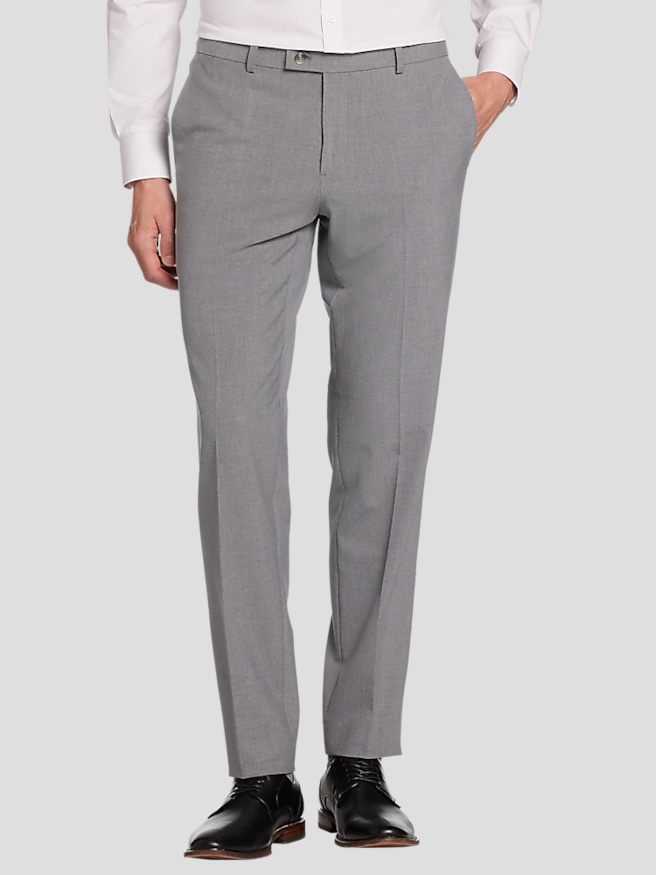
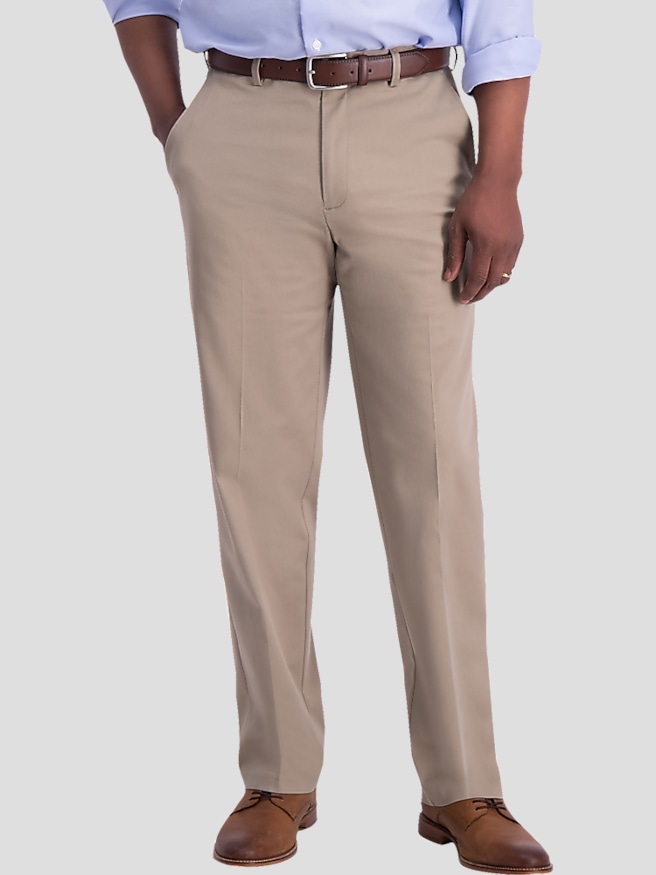
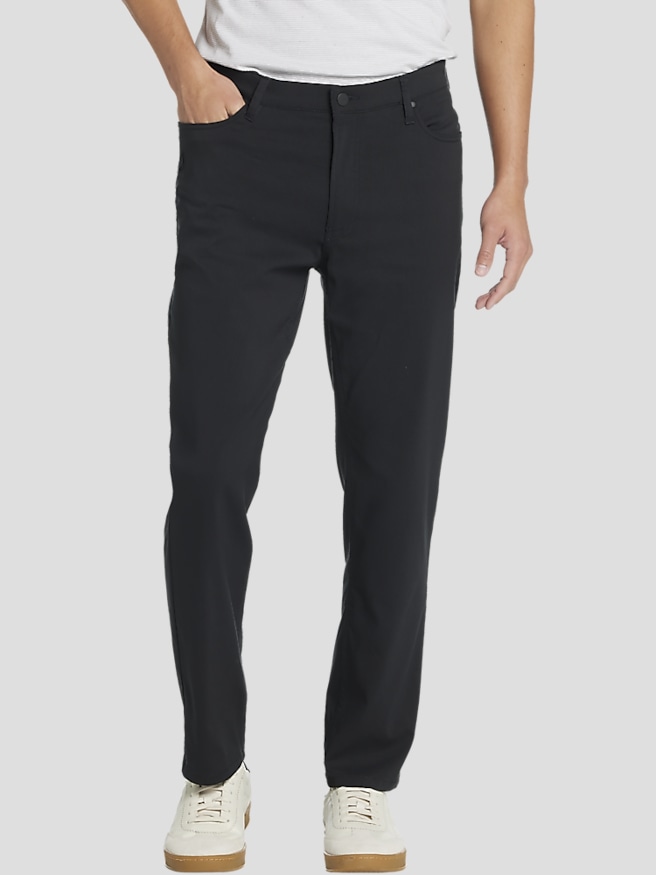
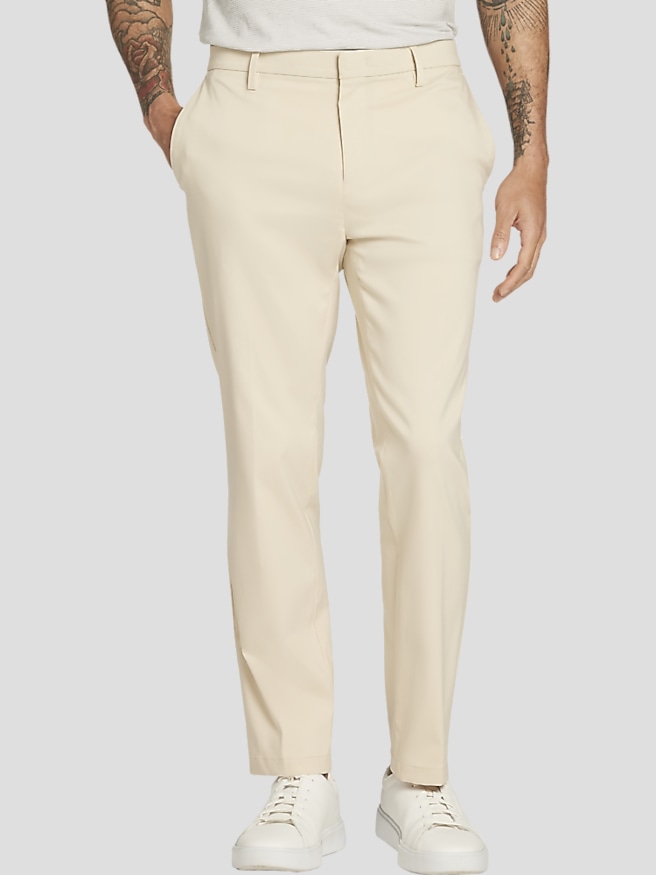
Men's casual tapered pants combine comfortable room through the seat and thighs with a leg that gradually narrows toward the ankle. That shape creates a clean outline without requiring a close fit from waist to hem, making tapered pants a practical choice for everyday outfits that need a little more structure than sweats. The taper describes the shape of the leg, not the entire fit: some cuts have a generous upper leg, while others sit closer through the hips and thighs. Compared with straight-leg pants, which maintain a more consistent width below the knee, a tapered leg draws inward and leaves less fabric around the shoe. Compared with skinny pants, a relaxed tapered cut generally provides more space above the knee while keeping the lower leg neat. Men's Slim Fit Tapered Pants are another consideration for someone who prefers a closer overall silhouette, though the exact proportions depend on the cut. For casual wear, the most useful fit is one that stays comfortable through ordinary movement: sitting at a desk, climbing stairs, getting into a car, or bending to tie a shoe. A waistband should sit securely without digging in, and the front pockets should lie reasonably flat rather than pull open. Horizontal tension lines across the thighs or pulling around the fly can indicate that more room is needed. Rise also changes the feel of the pants. A mid-rise fit often works comfortably with both tucked and untucked shirts, while a higher rise places the waistband farther up the torso. Inseam matters just as much as waist size because excess length can collect at the ankle and obscure the taper. A hem that meets the top of a sneaker or rests lightly on a loafer keeps the leg line visible. The goal is a balanced fit, with enough ease for movement and a lower leg that looks intentional rather than tight.
Fabric determines much of how casual tapered pants feel, drape, and hold up to repeated wear. Cotton twill has a familiar texture and enough body to give the leg some definition, making it a natural fit for chinos and other everyday styles. A smoother cotton weave can look slightly more polished, while a washed finish tends to feel more relaxed. Corduroy adds visible texture through its raised ribs, with finer cords generally creating a subtler effect than wider ones. Stretch blends add flexibility, but the amount of stretch alone does not determine comfort; fabric weight, weave, recovery, and the cut all play a part. A pair that stretches easily but does not recover well may become loose at the knees or seat after several hours. Blends containing synthetic fibers can help with shape retention or wrinkle resistance, although performance varies by construction and finish. Pocket placement deserves attention, too. Deep front pockets can be useful for daily essentials, while bulky contents may interrupt the clean line of a narrower leg. Secure stitching at pocket corners, a smoothly operating closure, and even seams are worthwhile construction details because these areas experience frequent stress. Care should follow the garment's label rather than assumptions based on appearance. For machine-washable fabrics, turning pants inside out and washing with similar colors can help limit surface abrasion and color transfer. Avoiding unnecessary heat may help reduce shrinkage and protect stretch fibers when the care label permits lower-temperature drying. Removing pants promptly after drying, then smoothing the legs and hanging or folding them neatly, can reduce stubborn creases. Some fabrics benefit from light pressing, but the correct iron setting depends on their fiber content. With suitable care, a well-constructed tapered pair can remain a dependable part of a regular clothing rotation rather than something reserved for occasional wear.
The appeal of casual tapered pants is their range across everyday settings. A pair in navy, charcoal, olive, or tan can anchor an outfit for a casual office, a lunch reservation, a museum visit, or an evening with friends. Neutral colors are easy to repeat without making every outfit look identical: a plain T-shirt and clean sneakers create a relaxed combination, while an Oxford shirt and leather loafers bring the same general silhouette closer to business casual. Workplace expectations still matter, since a tidy casual outfit is not a substitute for a required suit or more formal dress code. For a balanced look, the proportions above the waistband should relate to the narrower leg below it. A regular-fit polo or an untucked button-front shirt that ends around the middle of the fly usually leaves the taper visible without overwhelming it. A roomier overshirt can also work, particularly when the layer underneath has a cleaner fit. Footwear changes the impression at the hem: low-profile sneakers keep the ankle area streamlined, while substantial shoes may need a slightly wider leg opening so the fabric falls naturally. Pants should not catch tightly on the top of the shoe with every step. A small cuff can emphasize a casual finish on some fabrics, but repeated thick rolls may add bulk and shorten the visible leg line. For travel days, comfort at the waistband and through the thighs often matters more than an especially narrow opening. For a gift, a familiar waist size, inseam, and preferred rise provide a better starting point than appearance alone. Someone who already enjoys chinos but dislikes extra fabric around the ankles may appreciate this shape. Ultimately, the strongest everyday choice is a pair that suits the wearer's routine, works with familiar shoes and shirts, and keeps its shape without restricting ordinary movement.