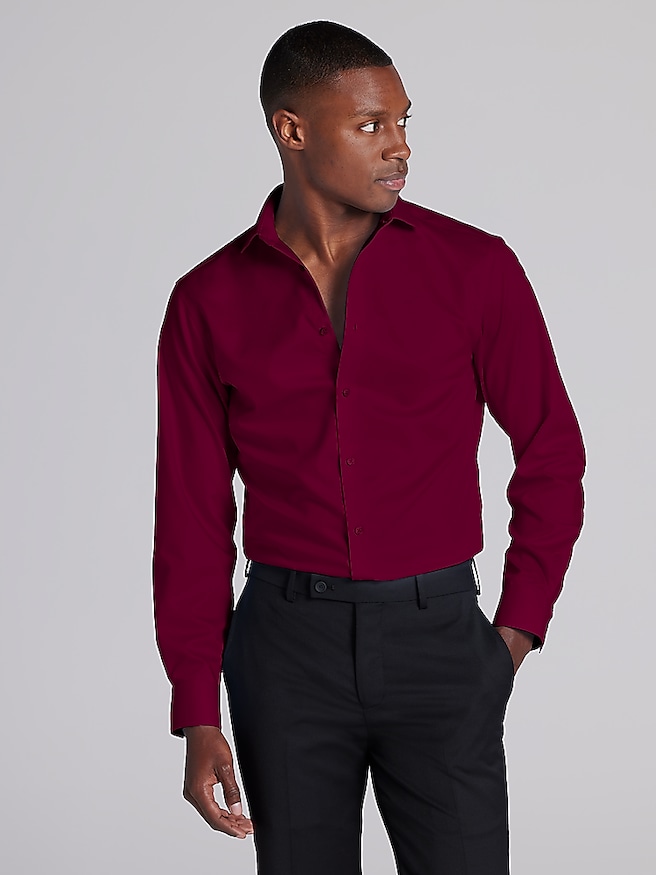
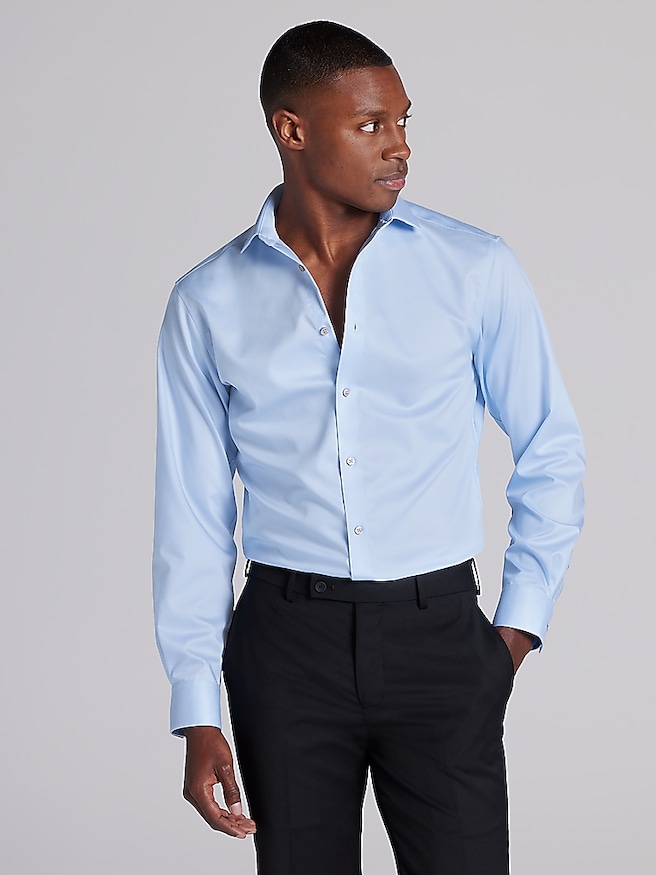
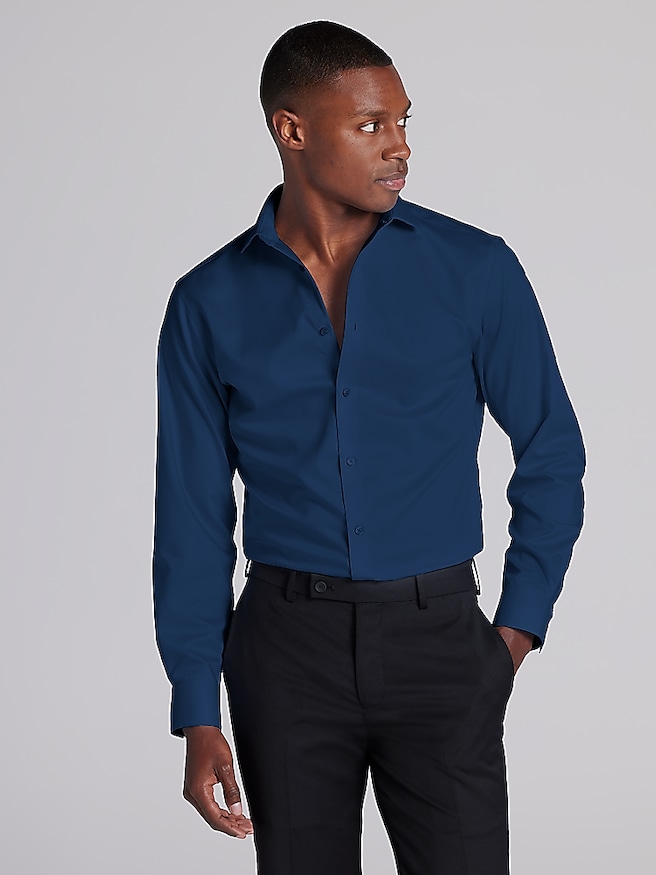
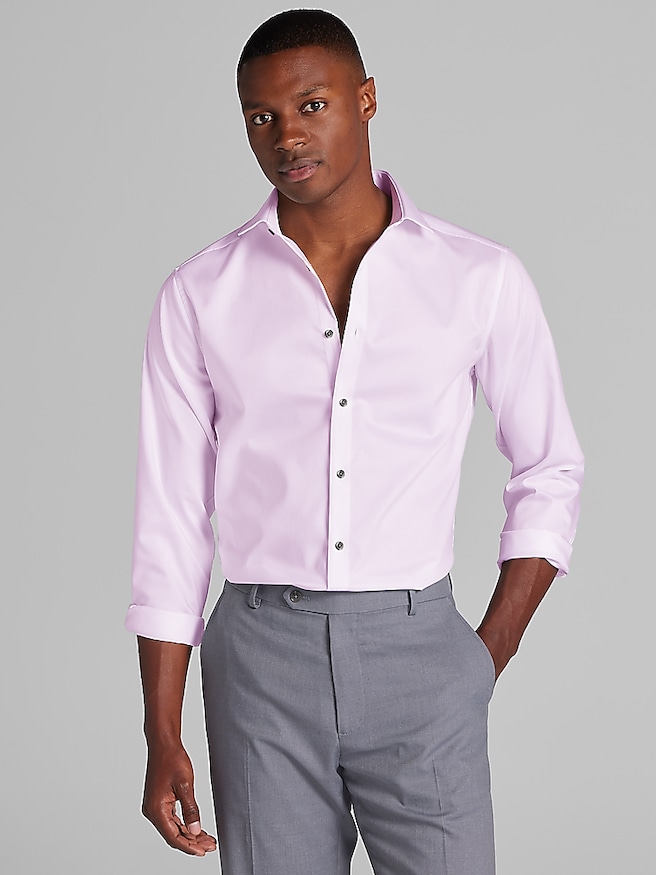
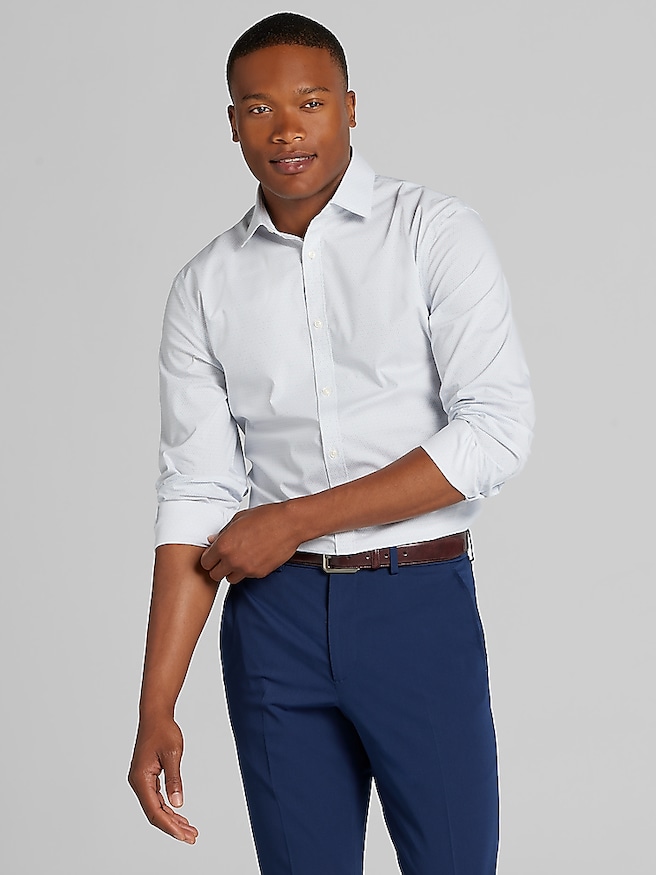
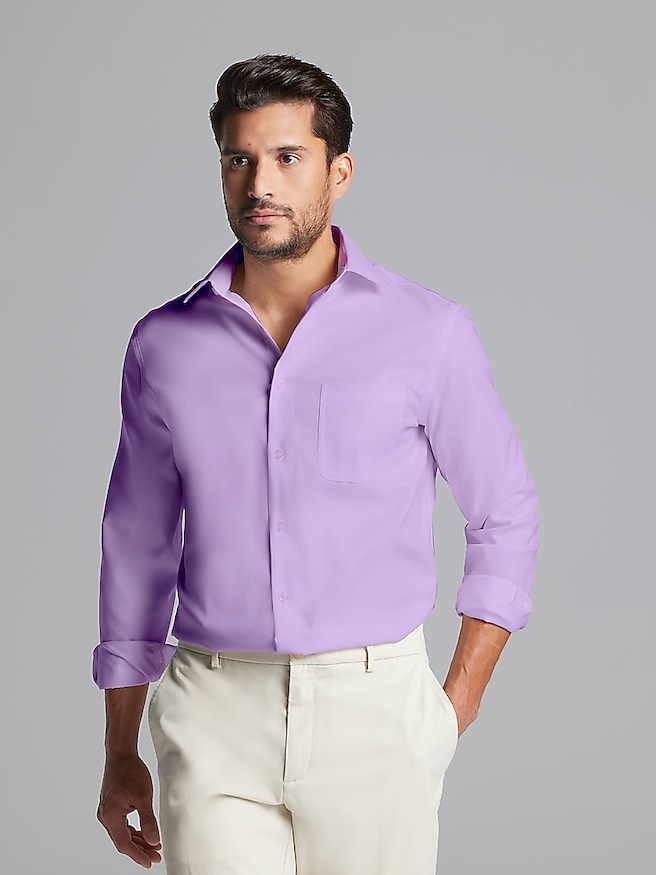
A well-chosen men’s shirt brings shape and purpose to an outfit, whether it sits beneath a business suit or stands on its own with dark jeans. Dress shirts, polos, and casual tees each serve a distinct role, but the qualities that make them useful overlap: comfortable fabric, balanced proportions, and a finish suited to the occasion. A woven dress shirt creates a crisp foundation for presentations, wedding receptions, and evenings that call for a jacket. White and pale blue are versatile companions to navy or charcoal tailoring, while deeper shades create a quieter, more relaxed look for dinner. Fine stripes and small checks add interest without overwhelming a patterned tie or textured sport coat. Fit makes just as much difference as color. A shoulder seam that falls near the edge of the shoulder helps sleeves hang neatly, and a button placket that lies flat keeps the front from pulling when seated. Slim cuts generally follow the torso more closely; more relaxed cuts leave extra space through the chest and waist. Neither should restrict reaching forward, driving, or taking a jacket off. For a shirt worn with a tie, the collar should close comfortably without a pronounced gap or pressure against the neck. A spread collar leaves room for a fuller knot, while a point collar creates a narrower frame. Beneath a suit jacket, a small visible edge of shirt cuff gives the outfit a considered finish. Length matters, too: a dress shirt needs enough fabric below the waistband to remain tucked through a full day, while a shirt intended for untucked wear usually has a shorter, more balanced hem. These details are particularly noticeable during ordinary moments, from leaning across a conference table to sitting through a long celebration. The strongest everyday choices look composed while allowing the wearer to move naturally, rather than demanding constant adjustment.
Fabric determines how a shirt feels against the skin, how it drapes, and how comfortably it layers during the cooler months. Cotton is widely used for its softness and breathability, though weave and weight can make two cotton shirts feel quite distinct. Poplin typically has a smooth surface and a relatively crisp appearance, making it a natural match for tailored clothing. Twill has a subtle diagonal structure and often a slightly fuller hand, while an Oxford weave brings visible texture that works especially well in less formal settings. A small amount of stretch can add ease across the shoulders and elbows, but stretch is most useful when the underlying cut already fits well. Blended fabrics may offer benefits such as improved shape retention or easier wrinkle management; the exact performance depends on the fiber mix, construction, and finishing treatment. Polos bridge the space between dress shirts and tees, pairing a defined collar with the flexibility of a knit. Cotton piqué has a lightly textured surface, whereas jersey usually feels smoother and drapes more softly. Either can complement chinos for a casual office or sit beneath an unstructured jacket for dinner with friends. A polo collar should rest neatly, and its sleeves should allow movement without flaring excessively at the opening. Tees provide an even simpler foundation, particularly under overshirts, cardigans, and casual jackets. A clean neckline and fabric with enough substance to hang smoothly can make a plain tee feel intentional rather than like an afterthought. Color can connect these layers: a cream shirt softens a dark outfit, gray works easily with denim, and muted blue complements earthy outerwear. A broader selection of men's stylish shirts can help connect tailored and casual wardrobe choices. Across these categories, the most useful shirts suit the wearer’s actual routine, whether that means an office commute, frequent travel, or weekends that move from errands to a restaurant without a complete outfit change.
Long-term satisfaction depends on construction and care as much as the first impression in a fitting room. Even stitching, securely attached buttons, neatly finished seams, and a collar that sits evenly are useful signs of careful assembly. On woven shirts, areas such as cuffs, collar edges, and buttonholes receive repeated friction, so they deserve attention when assessing how a garment may hold up. With knits, the neckline, sleeve edges, and hem should recover their shape without looking stretched or wavy. Fabric weight alone does not establish quality: a lightweight shirt can be well made, while a heavier fabric may simply serve a warmer or more casual purpose. Care should always follow the garment label, particularly for blended fibers, stretch fabrics, decorative finishes, and styles that call for professional cleaning. When machine washing is permitted, similar colors, a suitable wash cycle, and measured detergent help protect the fabric’s appearance. Prompt attention to collar marks and food spots can prevent everyday wear from becoming a lasting reminder of lunch. Excessive dryer heat may contribute to shrinkage or damage elastic fibers, so the recommended drying method matters. A woven shirt that can be ironed often responds well to pressing while slightly damp, using the temperature appropriate for its fibers. Removable collar stays should come out before washing or pressing. Hanging woven shirts with room between them helps preserve a smooth finish, while folding softer knits can keep hangers from distorting the shoulders. These habits support a wardrobe built around repeated wear, not just special appearances. Shirts also make practical gifts for someone starting a new role, celebrating a graduation, or refining an everyday wardrobe. Knowing the recipient’s usual size, preferred fit, and comfort with patterns is more useful than guessing at a dramatic style change. A familiar silhouette in a versatile color often becomes the shirt reached for before an important meeting, a family dinner, or a relaxed evening out. Comfortable proportions, thoughtful fabric choices, and manageable care requirements give that shirt a lasting place in the rotation.