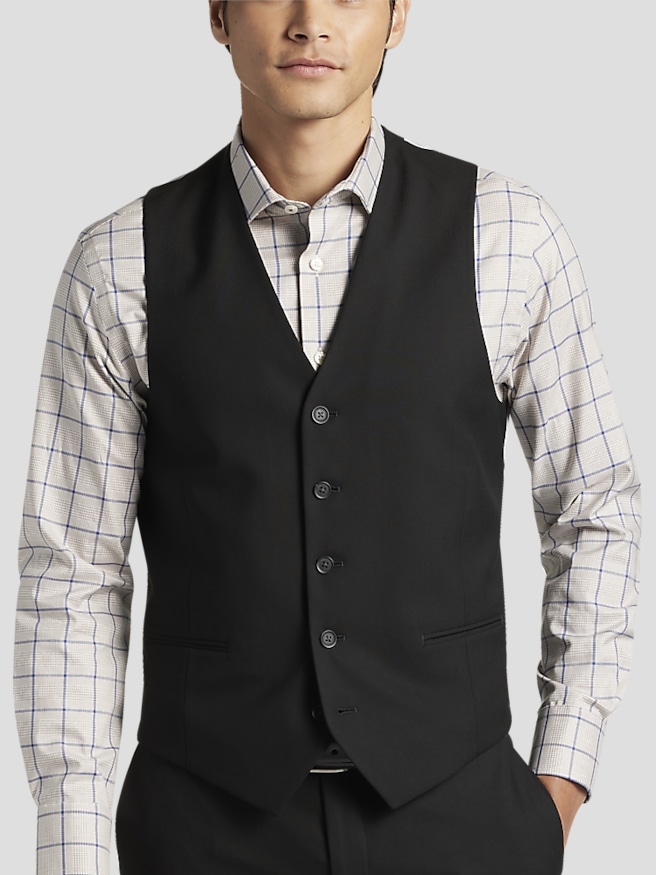
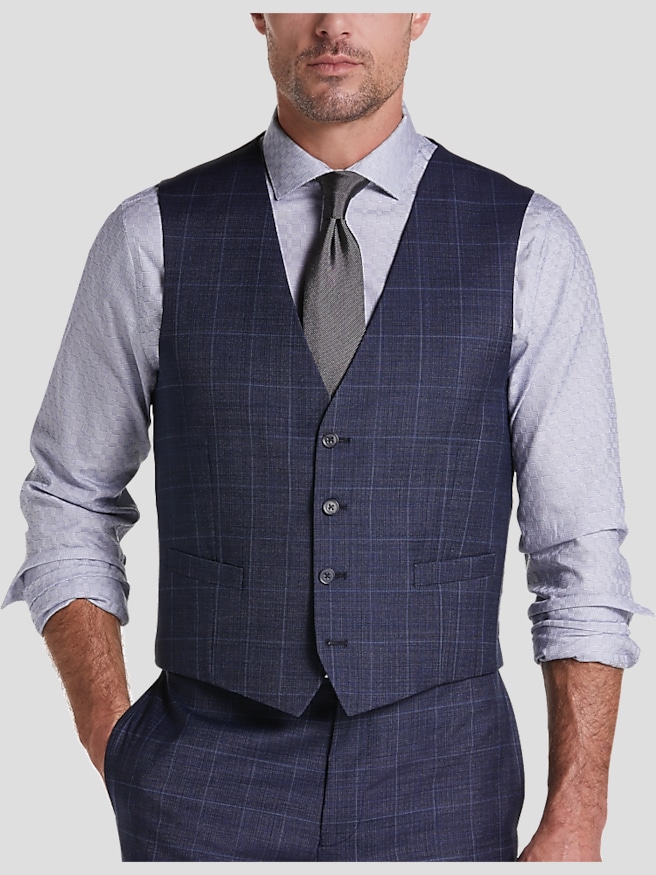
Men's blue vests bring depth and structure to an outfit, whether worn as part of a three-piece suit or as a separate layer over a button-down shirt. The category spans tailored waistcoats with button fronts, softer knit styles, and casual zip-front designs, with each construction creating a distinct look. Navy tends to read as understated and businesslike, mid-blue offers visible color without overwhelming a neutral outfit, and royal blue makes a stronger statement for celebrations and coordinated attire. Light blue has a softer effect, especially alongside pale shirts and gray trousers. Shade is only part of the picture: a smooth blue fabric can appear crisp and formal, while a textured weave gives the same color more dimension. Wool is valued in tailored vests for its drape, resilience, and ability to release some wrinkles between wears. Wool blends can balance those qualities with added strength or easier maintenance, depending on their composition. Cotton often has a matte appearance that suits less formal combinations, although it may show creases more readily. Polyester and other synthetic fibers can contribute abrasion resistance and shape retention, while a small amount of stretch may make movement more comfortable. A subtle herringbone, fine check, or bird's-eye weave adds interest without relying on a bright color or bold pattern. Satin and other lustrous finishes reflect more light and tend to look dressier, making the overall effect noticeably distinct from a matte suiting fabric. The back panel also influences how a vest looks when a jacket comes off: some tailored styles have a contrasting lining-style back, while others continue the main fabric around the body. Neither approach automatically determines quality, but each changes the character of the garment. A blue vest intended to complete a suit benefits from close coordination in fabric and shade; a separate vest can use deliberate contrast to look equally considered.
Fit gives a men's blue vest much of its polish. A tailored waistcoat should follow the torso without pulling into horizontal lines across the chest or causing the buttonholes to gape. The shoulder sections should lie flat, and the armholes should allow comfortable movement without exposing excessive shirt fabric at the sides. Length matters just as much as width: the front generally needs to cover the trouser waistband so a strip of shirt does not interrupt the outfit when standing. Higher-rise dress trousers often work especially well with traditional waistcoat proportions, while lower-rise trousers can create a gap even when the vest fits correctly through the chest. Slim fits sit closer to the body; classic or regular fits generally leave more room, though those labels vary by maker. A back adjuster can refine the shape through the waist, but it cannot correct shoulders that are too wide or a front that is too short. Buttoning conventions depend on the design, with the lowest button of many traditional single-breasted waistcoats left undone. Pocket placement, the depth of the neckline, and the shape of the front points all affect the finished silhouette. A higher neckline shows more of the vest beneath a jacket, while a lower opening gives a shirt and tie more visual space. Neat seams, secure buttons, smooth lining, and well-finished pocket openings are useful signs of careful construction. Durability also depends on how the fabric and fit handle everyday wear; constant strain at the buttons can shorten the life of an otherwise sturdy garment. Care should follow the garment label rather than a general rule for all blue vests. Some tailored fabrics require professional cleaning, while certain casual constructions allow washing. Gentle brushing where appropriate, prompt attention to spills, and storage on a suitable hanger help preserve the surface and shape. Pressing with the recommended setting helps prevent shine, flattened texture, or damage to the lining.
The usefulness of a blue vest becomes clear in everyday combinations. In an office setting, a navy waistcoat over a white or pale blue dress shirt creates a defined silhouette even without a jacket, provided that level of dress fits the workplace. With a matching suit, it adds continuity through the torso and keeps the outfit looking complete when the jacket is removed for a meeting or dinner. As a separate, a mid-blue vest can sit comfortably between a white shirt and charcoal trousers, with dark brown leather shoes adding a rich contrast. Navy trousers and a navy vest need particular attention: near-matching shades or unrelated textures can look accidental, whereas an exact suit match or a clearly contrasting combination appears more intentional. For weddings, blue offers room for both coordination and individual expression. A groom's vest might match the suit for a unified look, while a wedding party can share a blue tone without every accessory repeating it. The event's dress code still sets the direction; a casual textured waistcoat and a lustrous formal vest serve distinct purposes. With a tuxedo, the vest's neckline, fabric, and proportions should complement the formal ensemble rather than rely on color alone. Accessories can stay restrained when the blue is vivid: a white shirt, a quiet tie pattern, and a pocket square that picks up a secondary color are often enough. Those drawn to distinctive tailoring details can also explore Men's Designer Vests for a broader view of vest styling. As a gift, a blue vest is most personal when its shade and formality reflect how the recipient already dresses. Chest measurements, preferred fit, and the trousers or suit it will accompany matter more than guessing from a shirt size alone. Whether intended for regular business wear, a milestone dinner, or a wedding, a well-proportioned blue vest adds definition without needing to dominate the outfit.