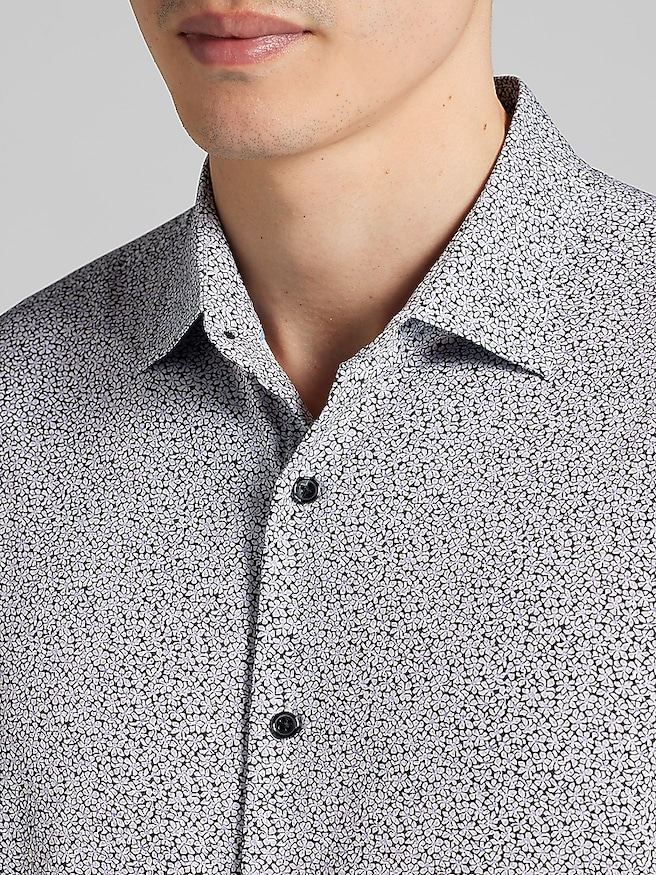
Men's blue short-sleeve shirts bring a versatile color to everyday styles, from simple T-shirts and knit polos to button-front shirts with traditional or open camp collars. The differences matter in daily wear: a crewneck T-shirt has an easy, understated look, a polo adds the structure of a collar without a full button front, and a woven shirt can feel relaxed or polished depending on its fabric, pattern, and cut. Blue works across that range because it pairs naturally with familiar wardrobe staples. Navy looks crisp against stone chinos, medium blue complements gray trousers, and pale blue gives dark denim a clear contrast. For a softer take on the color family, Men's Light and Baby Blue Shirts offer another way to build combinations around neutral pants and accessories. Solid colors keep the emphasis on texture and fit, while stripes, small checks, and restrained prints add detail without making an outfit difficult to coordinate. A navy polo with flat-front chinos suits a casual office that permits short sleeves; a blue camp-collar shirt with clean jeans feels at home at a restaurant or a backyard gathering. A small-scale pattern can also give a simple outfit a point of interest when the rest of the look stays quiet. The shade of blue affects the overall impression as much as the shirt style does. Deep blues tend to look more understated, brighter blues create a stronger focal point, and muted blues blend easily with olive, tan, and charcoal. Short sleeves leave the forearms uncovered and keep the silhouette uncomplicated, but they do not make every shirt interchangeable. Collar shape, hem length, fabric texture, and pocket placement all help determine whether a shirt reads as sporty, relaxed, or neatly put together. That variety makes this category useful for everyday dressing, travel, casual celebrations, and workplaces with a relaxed dress code.
Fabric and construction explain much of how a blue short-sleeve shirt feels, hangs, and holds up to repeated wear. Cotton is a familiar choice for its softness and absorbency, though a smooth cotton jersey feels different from a textured piqué knit or a crisp woven cotton. Jersey has a flexible drape that suits T-shirts and softer polos; piqué has a subtly raised surface that adds visual texture and helps a collar feel less dressy than a woven shirt collar. Linen has a distinct texture and develops natural creasing, giving button-front styles an intentionally relaxed appearance. Cotton-linen blends can balance that character with a somewhat smoother hand, while fabrics containing polyester or other synthetic fibers may offer wrinkle resistance or quicker drying, depending on their construction. A small amount of elastane can add stretch, but stretch should support a comfortable fit rather than compensate for a shirt that is too tight. Across fabrics, the shoulder seams should generally sit near the shoulder edge, the chest should allow comfortable movement, and the buttons should lie flat without pulling. Slim fits follow the torso more closely, while classic and relaxed fits leave additional room through the body. Fit names vary, so garment measurements and the way a shirt moves are more useful than the label alone. Reaching for a shelf or sitting at a desk should not make the fabric strain across the back or the placket open at the chest. Sleeve openings should feel comfortable around the upper arms, with enough space to bend the elbows easily. A hem intended for untucked wear usually looks balanced when it covers the waistband without extending so far that it overwhelms the pants. Details such as even stitching, secure buttons, neatly finished seams, and a collar that lies flat contribute to a shirt's appearance and durability. Fabric weight matters as well: a finer knit may drape closely, while a more substantial knit or woven fabric can create a firmer outline.
The most useful men's blue short-sleeve shirts work with the clothing already worn regularly. A solid blue polo can anchor a rotation of khaki, gray, and navy pants, with enough contrast between the shirt and trousers to keep the combination distinct. A blue button-front shirt with a straight hem looks natural untucked with chinos, while a longer, curved hem may work better tucked in, depending on the design. Short-sleeve shirts generally belong in casual and business-casual settings rather than occasions that call for formal dress, and workplace expectations still matter even when an outfit looks neat. Clean sneakers, loafers, or simple leather shoes can each change the impression without requiring a different shirt. On a trip, a blue shirt that coordinates with more than one pair of pants can make packing more straightforward, especially when its care requirements suit the itinerary. Those care requirements also influence everyday practicality. The care label should take priority, since cotton, linen, stretch blends, and performance fabrics can need different washing and drying methods. Washing similar colors together helps limit dye transfer, and avoiding unnecessary heat can reduce the risk of shrinkage or damage to stretch fibers. Promptly removing a shirt from the washer or dryer can help limit set-in wrinkles; woven styles may need ironing or steaming if the label permits it. Collars, underarms, and cuffs deserve attention before washing, since residue can build up in frequently worn areas. Rotating shirts and treating small stains promptly can help preserve their appearance over time. As a gift, a blue short-sleeve shirt is a practical option for a father, brother, partner, or graduate whose size and preferences are known. A familiar fit, a comfortable fabric, and a shade that works with the recipient's usual pants are more meaningful than an unusual detail. Whether worn for a routine workday or a casual dinner, a well-fitting blue shirt earns its place through comfort, easy coordination, and dependable wear.