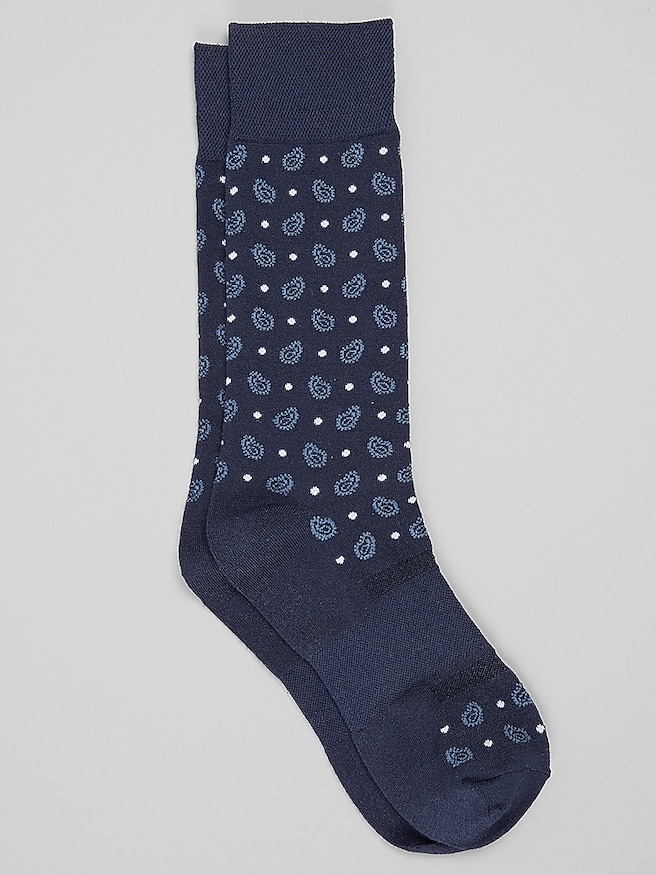
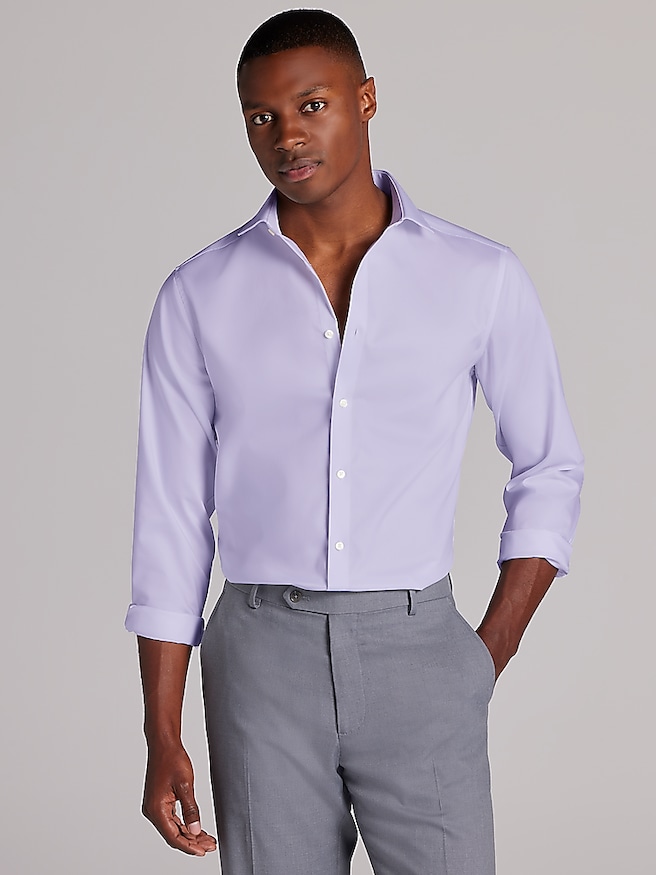
Men’s blue dress socks bring a considered finish to tailored clothing, adding depth and personality in the small space between a trouser hem and a shoe. Blue is especially versatile because it can sit quietly within a dark outfit or introduce a measured contrast without looking out of place. Deep navy creates a nearly continuous line beneath navy trousers, while medium blue gives gray tailoring a little more definition. Lighter blues make a more noticeable statement, particularly when a seated position reveals a few inches of sock above polished leather shoes. With charcoal trousers and black oxfords, a dark blue sock offers subtle color without interrupting the formality of the outfit. With brown leather shoes and a blue suit, the same shade helps connect the separate elements into a cohesive look. Solid colors have a clean, understated character, while fine stripes, small dots, and restrained geometric patterns add interest that becomes visible in motion. The scale of a pattern matters as much as its color: a tiny repeating motif generally reads more quietly than a broad stripe or a large contrasting shape. Coordinating socks with trousers often produces the smoothest visual line, though picking up a secondary color from a tie or pocket square can feel equally intentional. An exact match is not necessary; related shades usually look more relaxed than several accessories in precisely the same blue. For outfits built around men’s blue dress shirts, socks in a deeper shade can echo the shirt without making every element compete for attention. The result suits office days, interviews, wedding receptions, and dinners where tailored clothing feels appropriate. Even when most of the sock remains covered, its color and texture contribute to the impression of a finished outfit, especially when crossing a leg in a meeting or stepping up to greet someone.
Material and construction shape how dress socks feel through a full day, not just how they look when first pulled on. Cotton is valued for its soft hand and familiar feel, although the performance of a cotton sock depends on the complete fiber blend and knit. Wool, including fine merino wool, can help manage moisture and resist odors, making it useful for extended wear. Nylon or polyester may contribute strength, shape retention, or moisture management, while a small amount of elastane provides stretch and recovery. No single fiber tells the whole story: yarn quality, knit density, reinforcement, and finishing all affect comfort and durability. A fine-gauge knit usually slips neatly into close-fitting dress shoes and maintains a refined appearance beneath tailored trousers. A thicker knit can feel more substantial underfoot, but it also takes up more room inside the shoe. That distinction becomes noticeable across the toes and over the instep, where extra fabric may make an otherwise comfortable shoe feel tight. Smooth toe seams can reduce the chance of rubbing, and well-shaped heels help the fabric settle into place rather than bunch beneath the foot. Reinforced heels and toes may add resilience in areas that receive repeated friction. Fit deserves the same attention as fabric. A sock that is too short through the foot can pull against the toes and place tension on the heel, while excess length can create folds inside a shoe. Size guidance based on shoe size provides a useful starting point, with foot width and calf shape also influencing the feel. The cuff should hold securely without pinching or leaving an uncomfortable band of pressure. Mid-calf dress socks offer familiar coverage for everyday tailoring, while over-the-calf lengths provide additional coverage when trousers rise during sitting or movement. For someone who spends hours at a desk before heading straight to an event, staying in place can be just as important as softness. A comfortable pair should allow natural movement and keep its shape without repeated adjustment, whether the day involves a presentation, a commute, or several hours of standing and conversation.
The appeal of blue dress socks extends beyond formal outfits. A subdued navy pair works with chinos, a tucked-in shirt, and loafers, giving business casual clothing the same attention to detail as a suit. A small pattern can lend character to an otherwise plain combination, while a solid shade keeps the focus on an interesting jacket weave or a patterned tie. For weddings and other dress occasions, the level of contrast can follow the overall mood: dark, discreet socks complement traditional tailoring, while a clearer blue can add a personal touch to a less formal outfit. They can also make a practical gift for a graduate preparing for interviews, a partner who wears dress shoes regularly, or a parent who appreciates useful wardrobe staples. Shoe size, preferred sock height, and sensitivity to particular fibers are helpful details when choosing a gift intended for frequent use. Long-term wear depends partly on care, and the fiber content and care label should determine the washing routine. Turning socks inside out can help expose the areas that collect perspiration and skin oils while limiting abrasion on the outer surface. Washing with similar colors helps protect the appearance of blue shades, and avoiding unnecessarily harsh treatment can preserve both the knit and its stretch. Some fibers and constructions require a gentle cycle or air drying; high dryer heat can be hard on elastic components and may contribute to shrinkage. Allowing socks to dry fully before putting them away supports freshness, while rotating several pairs gives each pair a break between wears. Smooth shoe linings and properly fitted footwear also help reduce rubbing at the heel and toe. When stored flat or folded loosely rather than stretched tightly into a ball, cuffs are less likely to remain under tension. These small habits support the qualities that make dress socks worth reaching for: dependable coverage, comfortable movement, a neat fit inside the shoe, and blue tones that work easily across a tailored wardrobe.