Men’s blue and white dress shoes combine the polish of traditional dress footwear with a contrast that gives tailored clothing a more expressive finish. The category includes two-tone spectator shoes, wingtip designs, and oxfords, as well as streamlined styles that use white trim or a white sole against a blue upper. Spectator shoes are defined by contrasting sections of color or material, often placing blue at the toe, heel, and lacing panels against a white background. Wingtips have a pointed toe overlay that extends along the sides, while brogue detailing refers to the decorative perforations that trace seams and edges. These features can appear together, but not every two-tone shoe is a wingtip, and not every wingtip has the same level of ornament. An oxford’s closed lacing construction gives it a neat, compact appearance; a derby’s open lacing creates a slightly more relaxed look and can offer more adjustment over the instep. Color changes the impression just as much as construction. Navy and white feels crisp and grounded, while royal blue and white creates a brighter focal point. A slim leather sole tends to emphasize traditional tailoring, whereas a substantial white rubber sole brings a more casual character, even when the upper has classic dress shoe details. That range makes blue and white footwear relevant to wedding guests, graduates, performers, and anyone who enjoys a distinctive finishing touch for a celebration. A two-tone pair can also suit a creative workplace where expressive clothing fits the setting. For conservative business occasions, understated contrast is usually easier to integrate than a bold spectator pattern. These shoes are not automatically a substitute for traditional black footwear at a strict black-tie event; the dress code still sets the boundaries. Their strongest role is often with a suit or separates when the occasion welcomes personality without giving up a polished appearance.
Materials, proportions, and fit determine how well that visual appeal translates into a full day of wear. Smooth leather gives blue and white panels a clean finish and, with appropriate care, can soften and develop creasing that follows the foot. Suede brings a softer, more textured surface, although pale suede generally requires extra attention around dirt and moisture. Synthetic uppers can deliver a consistent color and finish, but their flexibility, breathability, and cleaning requirements vary by construction. A leather lining can help manage moisture, while other linings may emphasize softness or ease of maintenance; neither replaces the need for a comfortable fit. The heel should feel secure without pinching, the ball of the foot should sit near the shoe’s natural flex point, and the toes need room to rest without pressing against the front or sides. An elongated toe can look sleek beneath tailored trousers, but the extra length at the tip does not necessarily mean there is more usable space across the forefoot. Someone with a higher instep may appreciate adjustable lacing, while a broader foot may need a wider size rather than simply a longer shoe. Trying dress shoes with the socks intended for the occasion makes the fit assessment more useful, especially when cooler weather calls for a slightly heavier sock. For a wedding that moves from a ceremony to dinner and dancing, underfoot cushioning, a stable heel, and a flexible forefoot deserve as much attention as the color combination. Leather soles offer a traditional profile, while rubber soles can provide useful cushioning and traction, depending on the tread and surface. Neither should be assumed to prevent slipping on a wet entrance or polished floor. Even stitching, securely attached soles, and neatly finished panel edges are practical signs to examine when assessing construction. Goodyear-welted and some stitched constructions may allow resoling, depending on the shoe’s condition and a cobbler’s assessment. A thoughtful gift choice also accounts for the recipient’s usual size, width, dress habits, and comfort preferences, rather than relying on appearance alone.
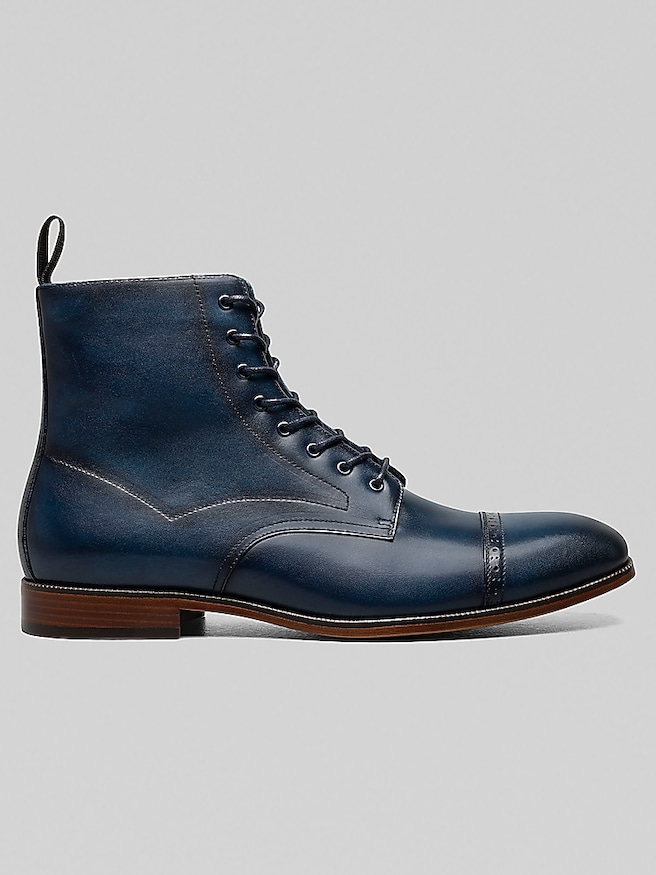
Styling blue and white dress shoes works best when the rest of the outfit gives the contrast room to stand out. Navy trousers and a white shirt echo the footwear without making every accessory match, while a medium-gray suit creates a quieter backdrop for more decorative broguing. With a blue suit, the shoes do not have to match the fabric exactly; a clear, intentional contrast often looks better than two shades that almost align. A restrained pocket square or patterned tie can repeat a little blue, but several competing patterns may draw attention away from the tailoring. Trouser hems should fall cleanly instead of gathering heavily over the vamp, particularly when the shoe’s two-tone panels are part of its appeal. Dark blue socks create continuity with navy trousers, while a subtle pattern can bridge the colors without introducing another strong accent. During the cooler months, textured wool trousers and a structured jacket can balance the crispness of white detailing. For outfits that call for more ankle coverage, Men's Blue Dress Boots offer a related direction for tailored dressing. Keeping two-tone footwear looking sharp takes care that respects each material and color. Remove loose dust with a soft brush or cloth before applying a cleaner, and follow the manufacturer’s care directions rather than treating all blue and white surfaces alike. Colored cream or polish can stain an adjacent white panel, so use separate applicators and work carefully along the seams. Test any treatment in an inconspicuous area first; even a neutral product can alter a pale or textured finish. Suede generally calls for a suede brush and material-specific cleaner rather than conventional leather polish. After damp conditions, blot surface moisture and let shoes dry naturally away from direct heat. Cedar shoe trees can help absorb residual moisture and support the shape, and rotating footwear allows time to dry between outings. Addressing worn heel edges or separating soles early can help prevent more extensive damage. With suitable care and thoughtful outfit pairings, blue and white dress shoes can remain a distinctive part of a tailored wardrobe well beyond a single celebration.