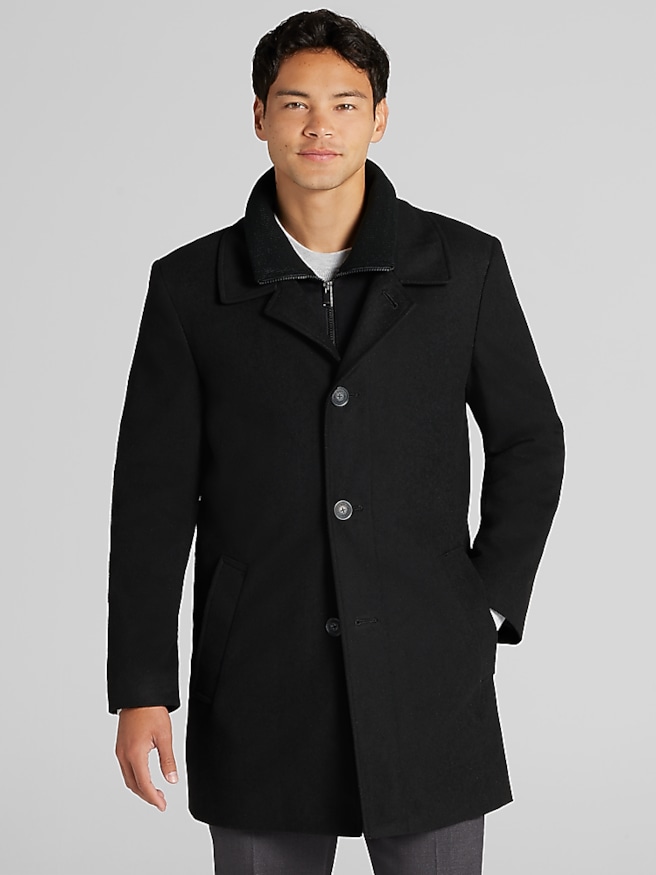
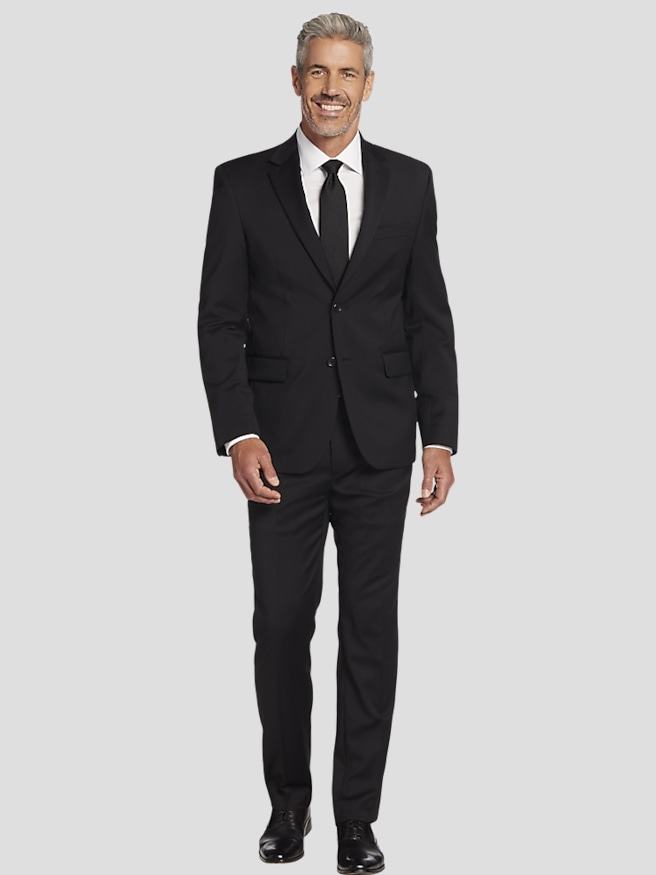
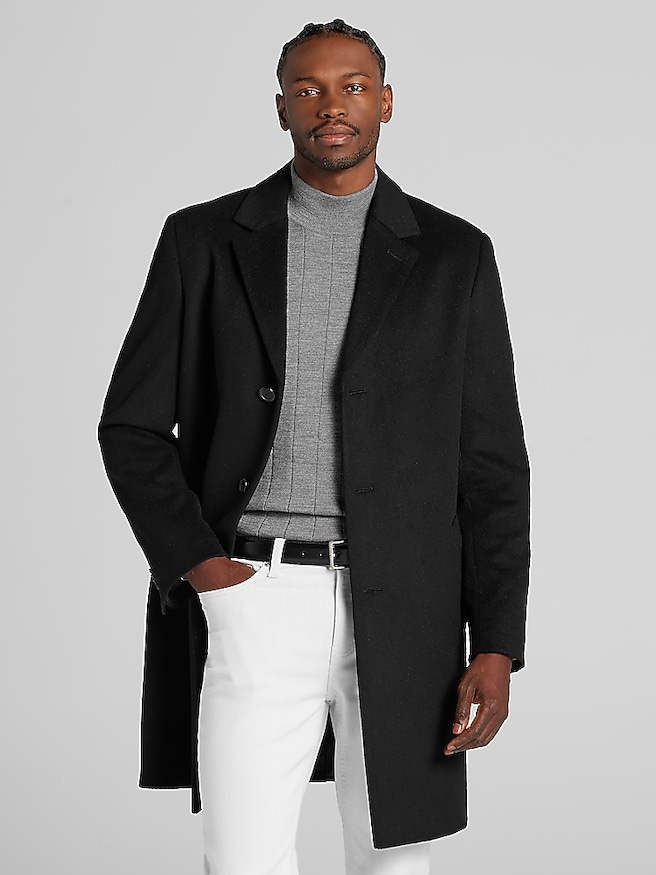
Men’s black wool coats bring a clean, substantial outer layer to wardrobes built around tailoring, knitwear, and everyday essentials. Black creates an uninterrupted silhouette over a charcoal suit, adds definition to gray trousers and a cream sweater, and looks equally natural with dark denim and leather boots. The fabric gives that simplicity depth: a softly brushed surface absorbs light, while a smoother finish makes lapels, seams, and the line of the shoulders more distinct. Wool is valued for its insulating qualities, breathability, and ability to hold a shaped silhouette, though warmth depends on fabric weight, weave, lining, coverage, and the clothing underneath. A wool percentage alone does not tell the whole story. Pure wool can deliver a rich hand and graceful drape, while wool blends may incorporate fibers selected for softness, strength, or a particular surface texture. Cashmere can add softness; nylon may contribute abrasion resistance. Neither a blend nor an all-wool label guarantees better performance without considering the complete construction. Closely woven wool cloth generally feels more substantial and can help limit drafts, but a wool coat should not be assumed to be waterproof. Within the category, a single-breasted topcoat has a straightforward front that works easily over business clothing, while a double-breasted design creates more overlap and a stronger visual presence. A peacoat has a shorter, broader shape with roots in naval outerwear. Longer overcoats provide additional coverage and a flowing line, especially over a suit jacket. These distinctions matter in ordinary settings: walking from a train platform to an office, arriving at a formal dinner, or stepping outside between wedding venues. A black wool coat can serve all of those occasions without requiring a separate approach to color coordination. Its character comes less from decoration than from the balance of fabric, proportion, and finishing, making it a useful foundation for both understated and more dressed-up looks.
The fit of a men’s black wool coat depends on what it needs to cover. A coat worn mainly over a dress shirt and fine-gauge sweater can sit closer to the body than one intended for a structured suit jacket or thick knitwear. Enough space through the shoulders, upper back, and chest allows those layers to sit smoothly without creating a bulky outline. Shoulder seams should follow the intended shape of the design, and the collar should rest comfortably rather than stand away from the neck or press against it. With the front fastened, pulling around the buttons or tight folds across the back can signal insufficient room. Excess fabric is not automatically more comfortable, either; an overly broad shoulder or loose torso can make a tailored coat feel cumbersome. Trying the coat over the layers it will actually accompany gives a more useful impression than judging it over a thin shirt alone. Reaching forward, sitting down, and bending the arms reveal restrictions that may not be obvious while standing still. Sleeve length should accommodate the clothing beneath without leaving the hands swallowed by fabric. Coat length also changes both appearance and function. A hem above the knee allows easier movement on stairs and in a car, while a longer cut adds coverage and a more formal sweep. When paired with a suit, the outer layer generally looks most deliberate when it covers the jacket hem. Details help determine daily comfort: a back vent allows movement, a smooth lining helps sleeves slide over tailoring, and accessible pockets provide a comfortable place for gloved hands. Secure buttons, neatly finished buttonholes, even seams, and a lining that does not pull are useful signs of careful construction. Notch lapels tend to feel restrained, while peak lapels introduce a sharper dress emphasis. The strongest choice is not necessarily the most elaborate; it is the coat whose proportions and practical features suit the wearer’s routine.
Care has a direct effect on how a black wool coat looks over time. Dark fabric can make pale lint, pet hair, and surface dust especially noticeable, so gentle brushing with a suitable clothing brush helps preserve a clean appearance between professional cleanings. A broad, supportive hanger helps maintain the shoulder shape, and enough closet space prevents lapels and sleeves from being crushed. After wear, allowing the coat to air in a ventilated space before enclosing it helps release moisture and odors. If it becomes damp, air-drying away from radiators or other direct heat protects the fabric and structure. Care instructions take priority because shell fibers, linings, interlinings, and trims may require different treatment. Many tailored wool coats call for professional dry cleaning rather than machine washing; unnecessary cleaning can also be avoided by addressing light surface debris promptly and following label guidance. A spill is best blotted gently rather than rubbed into the cloth. Pilling can occur where fabric repeatedly rubs, such as beneath a shoulder strap or along the sides, and careful treatment appropriate to the fabric helps manage it without damaging the surface. Before extended storage, a clean, thoroughly dry coat belongs in a breathable garment bag with appropriate protection against fabric pests. These habits support durability, but everyday use matters too: overfilled pockets can distort the front, and repeatedly carrying a heavy bag on one shoulder can create localized wear. For someone commuting in tailored clothing, a black wool coat can become a dependable part of the workday; for someone who dresses formally less often, it provides a composed outer layer for ceremonies, dinners, and important gatherings. It can also make a thoughtful gift for a graduate beginning an office role or a partner building a lasting wardrobe, provided size and layering preferences are understood. The appeal of Mens Luxury Wool Coats rests in those same details: pleasing fabric, balanced proportions, and considered finishing. A well-chosen black wool coat brings those qualities together in a piece that feels purposeful each time it leaves the closet.