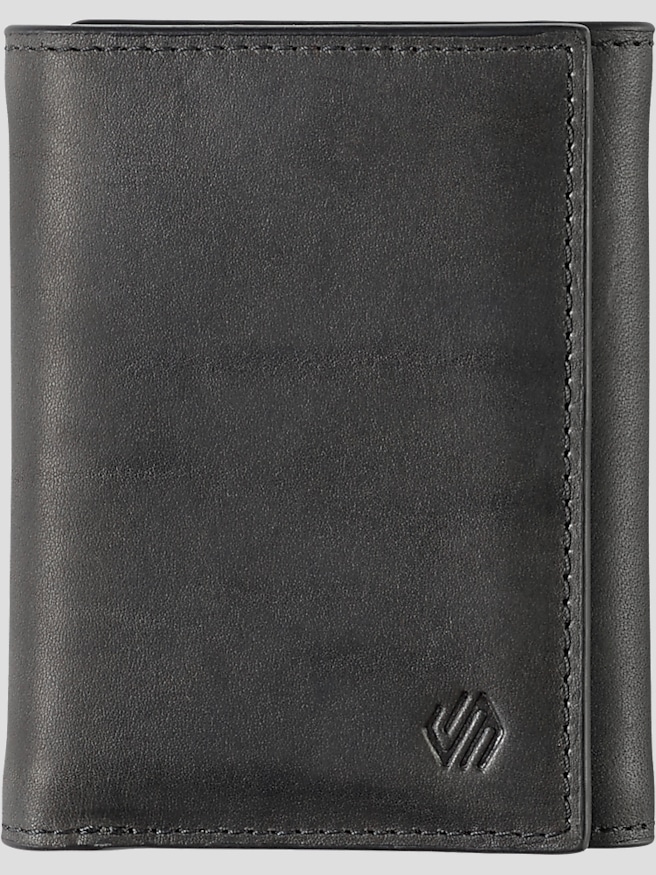
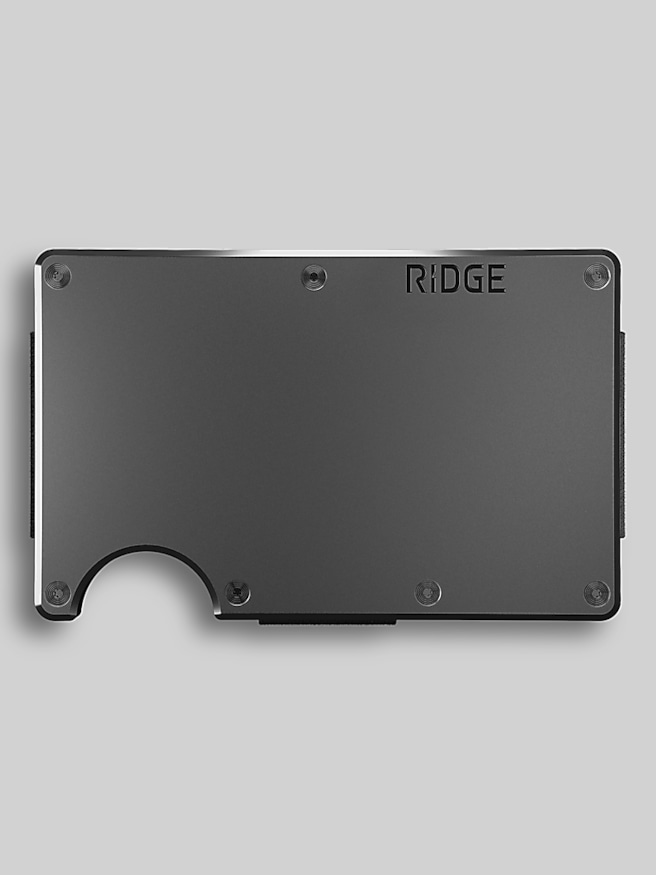
Men's black wallets combine everyday organization with a color that works just as naturally with tailored clothing as it does with jeans and a casual shirt. A black wallet keeps cash, cards, and identification together without drawing attention when it comes out at a business lunch, a restaurant, or the checkout counter. The main distinctions are format, capacity, material, and how comfortably the wallet fits into a pocket. Bifold wallets open into two sections and typically balance card storage with space for unfolded bills, making them practical for someone who carries both cash and cards. Trifold wallets fold into three sections, creating a narrower shape when closed, though the additional layers can feel thicker once filled. Slim wallets and card cases reduce bulk for those who carry a driver's license, a few payment cards, and little cash. A money clip offers another approach to holding bills, either on its own or as part of a compact wallet design. These shapes serve distinct routines: a commuter may want quick access to a transit card, while someone who regularly pays with cash may value a dedicated bill compartment. An ID window can make identification easier to locate, although a card may still need to be removed for verification. Separate slip pockets give receipts or less frequently used cards a place to sit without crowding the main slots. For dress trousers and closely fitted jackets, a low-profile shape helps keep the fabric lying smoothly rather than creating a noticeable pocket outline. Roomier everyday clothing can accommodate more capacity, but a wallet should still feel comfortable while sitting, walking, and reaching into a pocket. Black provides a restrained finish across these formats, whether the surface is smooth and polished, softly textured, or deliberately understated. Its versatility also means a wallet does not have to match every accessory exactly; a simple black design can sit comfortably alongside a black belt, brown shoes, or a metal watch.
Material and construction shape how a black wallet feels in the hand and how it responds to repeated use. Among men's leather wallets, full-grain leather retains the hide's natural surface, including subtle variations that give each piece its own character. Top-grain leather has a surface that has been refined for a more uniform appearance, while other leather constructions and nonleather materials can offer distinct textures, flexibility, and care requirements. A leather label alone does not describe the entire wallet: thickness, finish, lining, stitching, and edge treatment all contribute to its performance. Smooth black leather has a clean, dressy appearance, while pebbled textures can make small surface marks less conspicuous. Neither texture makes a wallet immune to scratches, and even dark finishes can develop visible wear along corners and folds. Durability depends partly on the material and partly on how the wallet is built and carried. Even stitching, securely attached pocket edges, and neatly finished folds are useful construction details because these areas handle frequent movement. Card slots need enough structure to hold their contents securely without requiring excessive force each time a card is removed. Leather may relax with use, but overfilled slots can stretch beyond their intended shape. The most useful capacity is the amount needed for a normal day, not the maximum number of cards that can be squeezed inside. A wallet that looks slim when empty can become substantially thicker with stacked cards, folded receipts, and extra bills. For a front pocket, shorter dimensions and fewer layers often feel more comfortable; for a jacket pocket, low bulk helps preserve the garment's line. Some wallets also include RFID-blocking materials designed to reduce communication with compatible contactless cards while they remain enclosed. That feature addresses a particular type of wireless interaction rather than every form of payment fraud, and its presence does not replace ordinary account security. Organization, comfort, and construction remain important whether or not a wallet includes this additional feature.
A black wallet earns its place through repeated use, so straightforward care matters as much as its initial appearance. For leather, routine attention usually begins with gently removing surface dust using a soft, dry cloth and following the maker's care directions for the particular finish. Leather cleaners and conditioners are not interchangeable across every surface; a formula intended for smooth leather may be unsuitable for suede, coated finishes, or nonleather materials. Any approved treatment is best tested on an inconspicuous area before broader application. If a wallet gets damp, blotting it gently and allowing it to air-dry away from direct heat helps avoid unnecessary stress on the material. A hair dryer, radiator, or prolonged exposure to strong sunlight can dry or distort leather rather than restore it. Keeping a wallet separate from loose keys and other sharp objects can reduce scratches, while removing old receipts helps prevent pockets and seams from being pushed outward. Regularly carrying only the essentials also makes the wallet easier to handle when paying for coffee, checking identification at an appointment, or settling a bill after dinner. For someone whose routine includes both office days and casual plans, black offers a consistent, unobtrusive choice without requiring a separate accessory for each setting. A compact card case can suit an evening when only identification and a payment card are needed, while a traditional billfold may better support a day that involves cash transactions and several essential cards. As a gift, a black wallet is practical for a father, brother, partner, graduate, or someone beginning a new job. The most personal choice often comes from noticing the recipient's habits: whether bills are carried flat, whether a crowded wallet is overdue for a simpler layout, or whether an easy-to-find ID compartment would be useful. A familiar format can make the transition to a new wallet comfortable, while a slimmer shape may appeal to someone who has already reduced what they carry. Thoughtful proportions, dependable construction, and a finish that suits the recipient's style give this everyday accessory lasting relevance.