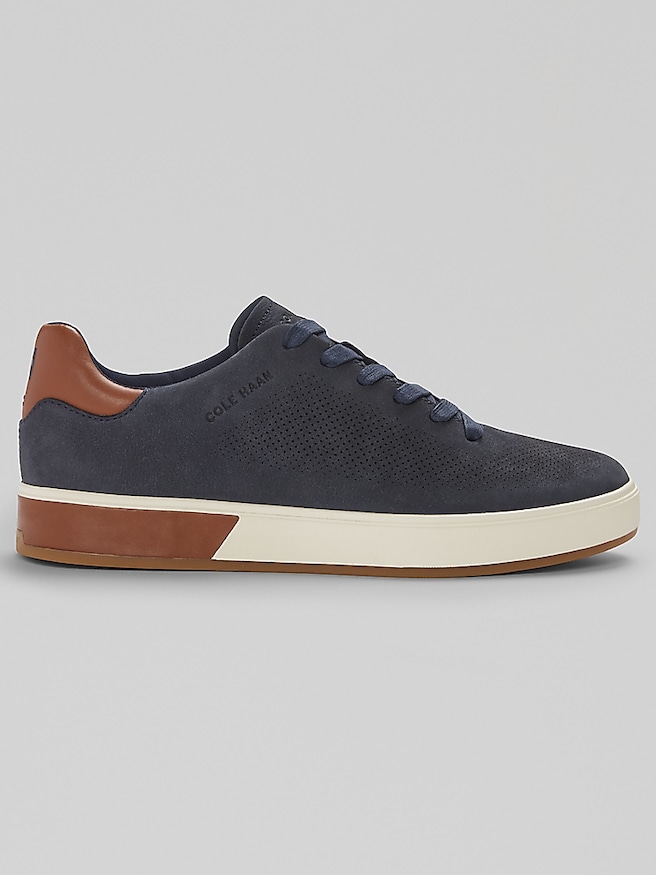
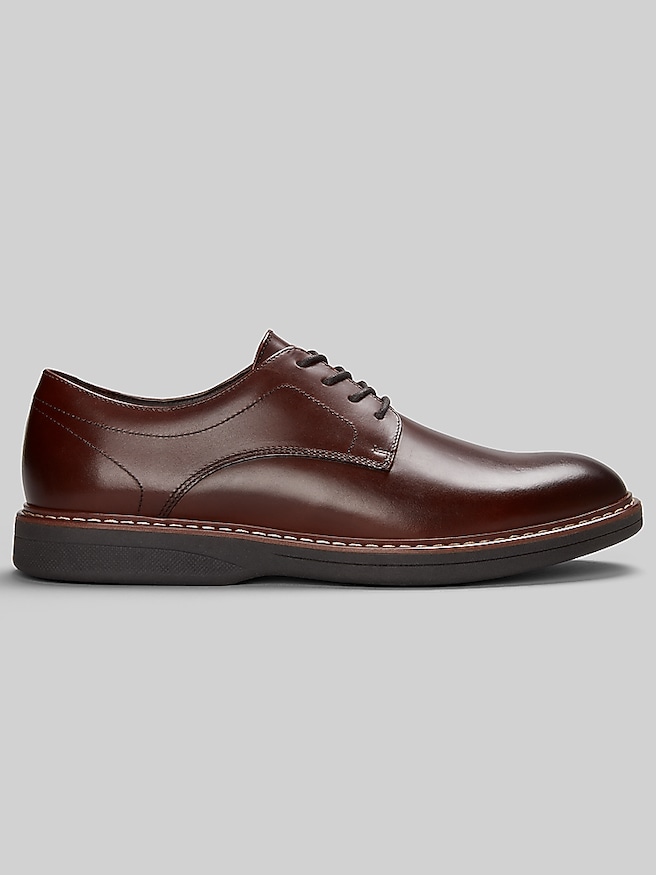
Men’s black sneakers bring a versatile foundation to everyday outfits, with styles that range from streamlined leather lace-ups to relaxed canvas shoes and athletic-inspired designs. Their defining feature is a black upper, though the rest of the shoe can change the overall effect considerably. A black sneaker with a white sole creates a clear, casual contrast, while an all-black design keeps the upper, laces, and sole visually connected for a more understated look. Smooth surfaces, minimal stitching, and a low-profile shape tend to feel more polished; textured panels, substantial soles, and visible cushioning give sneakers a sportier character. That variety makes black sneakers useful for everything from commuting and casual office days to dinner plans and weekends spent on foot. With dark jeans and a knit polo, a clean low-top looks relaxed without seeming unfinished. Paired with tapered chinos and an overshirt, the same silhouette provides a comfortable alternative to more structured footwear. Black sneakers can also complement tailored separates in settings where the dress code welcomes casual shoes, particularly when the trousers have a neat hem that does not bunch over the tongue. They are not a substitute for dress shoes at occasions that require formal footwear, but they can work well in a deliberately relaxed outfit with an unstructured jacket. For an especially cohesive finish, men’s all black leather sneakers keep attention on shape and texture rather than color contrast. The distinction between lifestyle sneakers and performance footwear also matters. An athletic appearance alone does not establish that a shoe is designed for running, court sports, or strength training. Everyday sneakers are best considered for their intended purpose, with dedicated athletic footwear reserved for activities that call for specialized support, traction, or cushioning. For someone moving between a desk, a coffee stop, and an evening gathering, a versatile everyday design can make getting dressed simpler without making every outfit look the same.
Materials influence how black sneakers look, feel, and hold their shape through repeated wear. Smooth leather offers a structured appearance and can develop natural creasing where the foot bends. Its relatively even surface also makes routine wiping straightforward, although the appropriate treatment depends on the finish. Suede and nubuck introduce a softer, more textured look, with a surface that benefits from material-specific brushing rather than the same treatment used on smooth leather. Canvas generally has a more relaxed character and can feel less structured around the foot. Knit and mesh uppers often provide a flexible feel and airflow, while synthetic materials vary widely in softness, breathability, and care requirements. The lining, tongue, collar, and insole can be just as important as the outer material, especially for someone who wears sneakers throughout a workday. A padded collar may soften contact around the ankle, while a bulky tongue can take up space over the top of the foot. Fit should feel secure through the heel and midfoot without squeezing the toes or pressing across their widest point. Enough space at the front allows toes to move naturally, but excess length can let the foot slide forward and create friction. Trying sneakers with the socks intended for regular wear gives a more useful sense of fit than relying on size alone. Feet can differ slightly in size, so comfort on both sides matters, as does the way the shoe feels while walking rather than simply standing. The heel should stay reasonably steady, and the upper should not need painfully tight laces to keep the foot in place. Cushioning preferences vary: some people enjoy a soft step, while others prefer a firmer, more stable platform. A removable insole may be useful for someone who needs room for an appropriate insert, provided the resulting fit remains comfortable. Width, toe shape, and interior volume deserve attention alongside the number printed on the size label; a sleek silhouette should never require cramped toes.
Durability in men’s black sneakers comes from the relationship between materials, construction, intended use, and everyday care. Reinforced areas around the lace openings, neatly finished seams, and a secure connection between the upper and sole are useful details to examine. The outsole should suit the surfaces where the shoes will be worn, whether that means office corridors, sidewalks, or frequent walks between transit stops. A substantial-looking tread does not automatically mean a sneaker has tested slip-resistant properties, and a thick sole does not necessarily provide better support. Comfort and condition over time are more meaningful than appearance alone. Uneven outsole wear, a compressed feeling underfoot, or an upper that no longer holds the foot securely can signal that a pair is no longer serving its purpose well. Routine cleaning helps preserve the clean lines that make black sneakers so adaptable. Loose dirt is easiest to remove before it becomes worked into seams and texture; a soft brush or cloth is often a useful starting point. Smooth leather may benefit from a suitable cleaner and conditioner, while suede calls for tools intended for its raised surface. Fabric and synthetic uppers should be treated according to their care instructions rather than assumed to be machine washable. Excess water, harsh cleaners, and direct heat can damage some materials or affect adhesives, so gentle cleaning and air-drying are generally sensible habits. Removing insoles when permitted can help the interior dry, and loosening laces before taking shoes off reduces unnecessary strain on the heel. Rotating between pairs also gives each pair time to air out between wears. For gifting, black sneakers can be a practical choice for a partner, father, brother, friend, or graduate whose wardrobe already leans toward versatile casual pieces. Familiarity with the recipient’s usual size, preferred width, and favorite shoe shape makes the choice more personal. A simple leather silhouette may suit someone who often wears chinos, while a more relaxed fabric design may feel natural alongside jeans and casual knits. The most useful pair fits both the foot and the routine, with a shape, material, and level of cushioning that make sense for repeated wear.