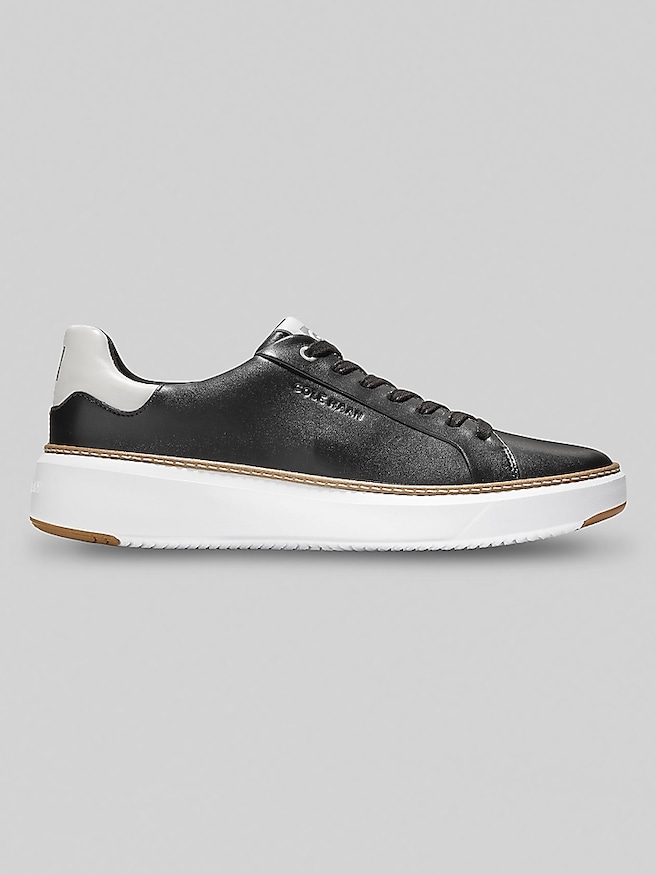
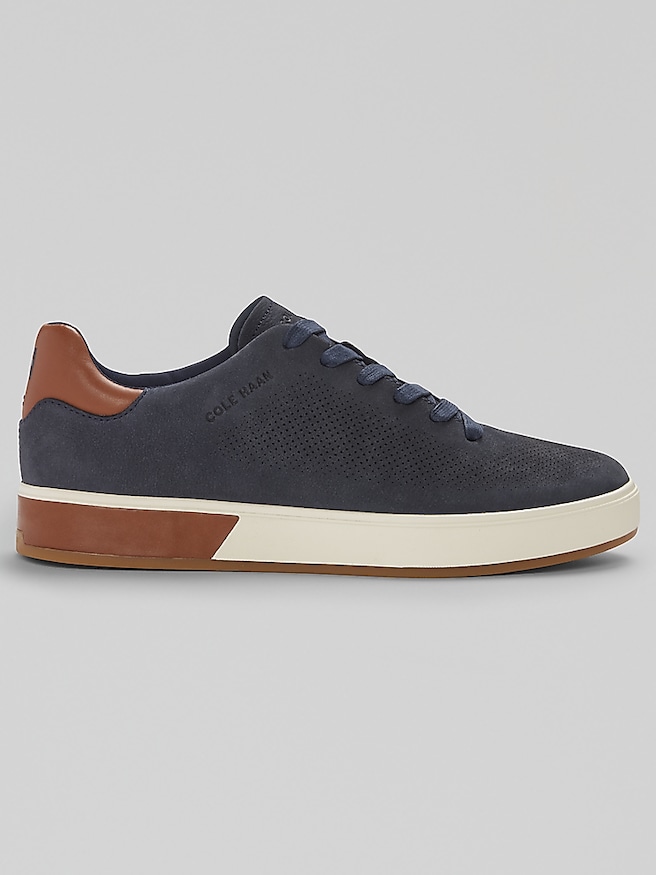
Men’s black leather slip-on sneakers bring a clean, understated finish to everyday dressing, combining the familiar shape of a sneaker with the richer texture of leather. Without laces interrupting the upper, the silhouette feels streamlined, making these shoes a natural companion to dark denim, chinos, and casual tailored pants. Black leather also provides a useful visual anchor: it grounds lighter trousers, blends smoothly with charcoal or navy, and keeps an outfit from looking overly busy when a shirt or jacket has a noticeable pattern. The effect depends partly on the sole. A contrasting white or cream sole gives the shoe a more casual, sporty character, while a black sole creates a quieter profile that can look especially cohesive with dark pants. Neither approach needs elaborate styling. Straight or gently tapered pant legs with a modest break usually let the shape of the shoe show without bunching around the opening. For a relaxed office with a casual dress code, a pair can work with chinos, an Oxford shirt, and an unstructured jacket; for dinner with friends, black jeans and a textured sweater offer an easy alternative. During the cooler months, the same footwear sits comfortably within a wardrobe of overshirts, knit polos, and lightweight outerwear, although leather sneakers are not a substitute for insulated or weatherproof footwear. Their appeal is in that space between athletic shoes and dress shoes, where a polished appearance matters but formal footwear would feel out of place. They can also be a thoughtful gift for someone who favors simple outfits and appreciates shoes that are quick to put on, provided the size and preferred fit are known. For a person whose day moves from a casual workplace to errands and an evening gathering, black leather slip-on sneakers offer a consistent look without requiring an outfit change. The overall impression is neat rather than formal, with enough texture to keep an all-black shoe from feeling flat.
Materials and construction shape how men’s black leather slip-on sneakers feel as much as how they look. Smooth leather can have a soft sheen or a more matte surface, while pebbled leather brings visible texture and may make small marks less conspicuous. Full-grain leather retains the natural grain surface, though its flexibility and feel still depend on thickness, tanning, and finishing. Other leather finishes may have a more uniform appearance, so the material description is more informative than appearance alone. A supple upper can feel comfortable across the forefoot, but softness should be balanced with enough structure to hold the heel and preserve the shoe’s shape. Elastic side panels, when present, help the opening flex as the foot enters; their recovery matters because a slip-on depends on the upper and collar for a secure fit rather than adjustable laces. The heel should feel held without pinching, and the toes should have room to move without sliding forward at every step. A little initial firmness in leather is not the same as a shoe being too narrow or too short, and painful pressure should not be treated as something that routine wear will necessarily fix. Trying shoes with the socks intended for everyday use gives a more useful sense of fit, especially when switching between thin no-show socks and slightly thicker pairs in cooler weather. Underfoot, cushioning, arch contour, and sole flexibility all contribute to comfort, but the right balance varies by wearer. Someone standing through a casual workday may prefer a more supportive feel than someone choosing shoes mainly for short outings. Rubber outsoles can provide practical everyday traction, although tread pattern and surface conditions matter, and a smooth sneaker sole should not be assumed to grip wet pavement or icy steps. A breathable lining and removable footbed, where specified, may be useful considerations for repeated wear or compatible inserts. These details help distinguish a shoe suited to occasional dinners from one that feels comfortable through a commute, a lunch walk, and several hours on the move.
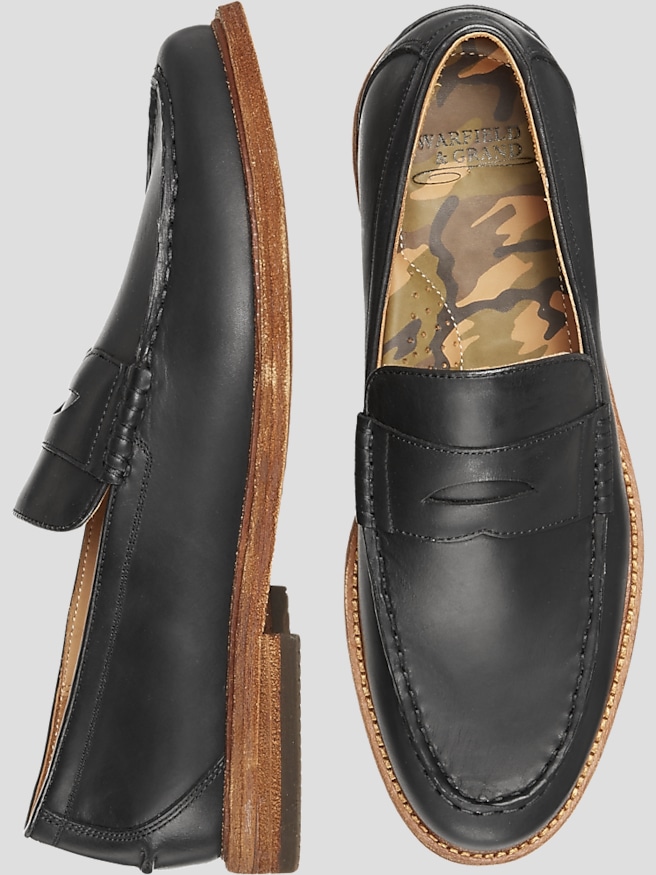
The lasting appeal of black leather slip-on sneakers comes partly from how easily they return to a tidy appearance with regular attention. Street dust is often visible against a dark upper, while pale outsoles can pick up scuffs along curbs and stair edges. Wiping away surface dirt with a soft cloth after wear helps prevent buildup, and cleaning the sole separately keeps grime from spreading across the leather. Any cleaner or conditioner should be appropriate for the stated leather finish and tested on an inconspicuous area first. Too much product can leave residue or alter the surface, so restrained care is generally more useful than frequent heavy applications. If shoes become damp, letting them dry naturally away from radiators and other direct heat helps protect the leather and construction. Leather is not inherently waterproof, and a suitable protective treatment does not turn an everyday sneaker into footwear for deep puddles or winter storms. Allowing shoes to air out between wears, using shoe trees that fit without stretching the upper, and easing the heel on with a shoehorn can help maintain their shape. Slip-on convenience should not mean repeatedly crushing the heel counter underfoot, which can weaken the structure that keeps the shoe secure. Durability also depends on walking habits and surfaces: repeated contact with rough pavement wears a sole differently from mostly indoor use, and persistent wear along one edge can affect how a shoe sits. For travel, an understated black pair can simplify packing by coordinating with several casual outfits, though a full day of sightseeing still calls for comfort already established through wear. When an occasion calls for a more traditional profile, Mens Black Leather Slip On Loafers offer a related direction with a dressier character. Sneakers keep the emphasis on relaxed versatility. With a secure fit, suitable materials, and straightforward care, their clean shape can remain a dependable part of everyday dressing, from the first coffee stop to a low-key evening out.