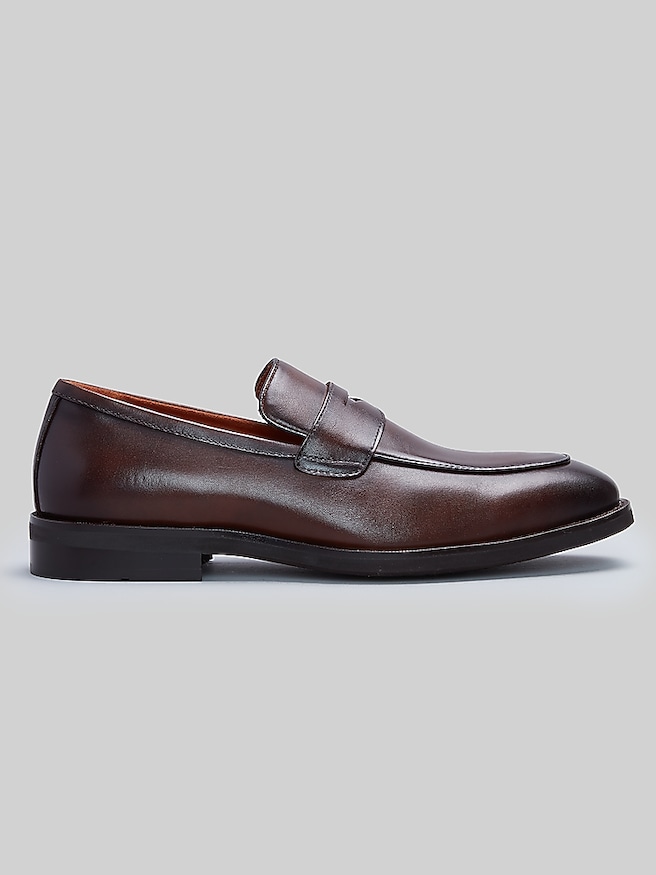
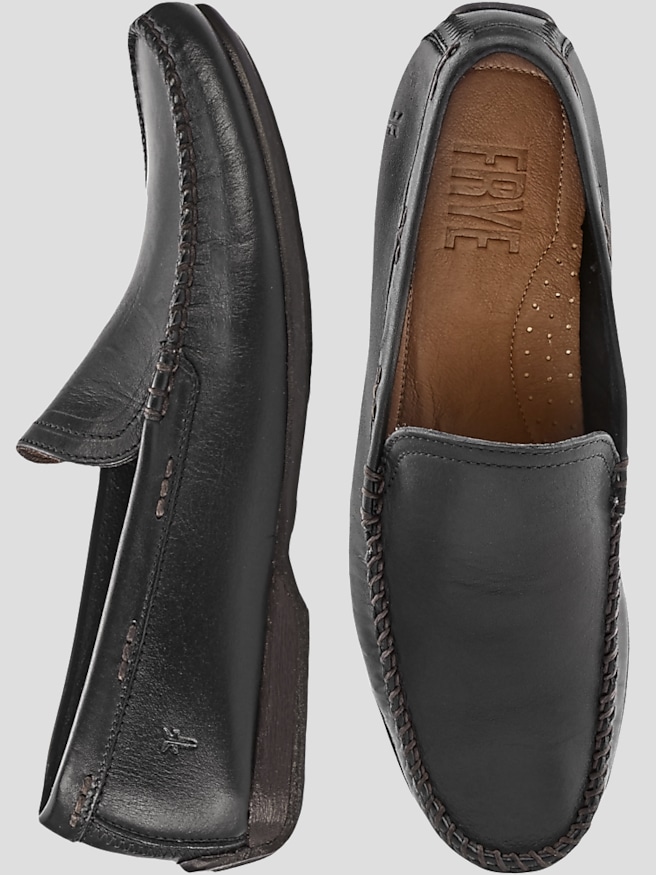
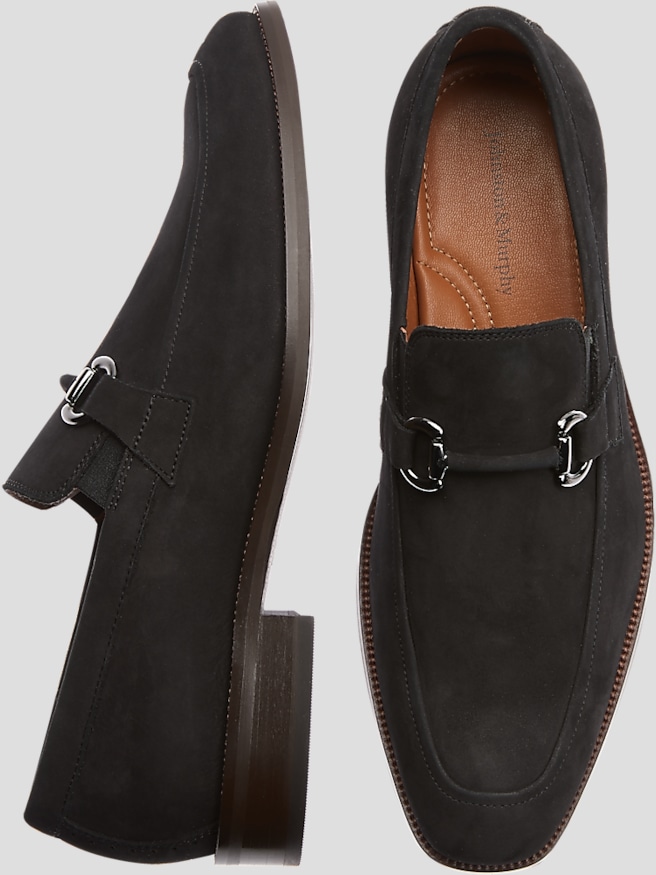
Men’s black leather penny loafers combine the polish of a dress shoe with the ease of a slip-on, making them a useful foundation for office outfits, tailored separates, and dressed-up casual clothing. Their defining detail is the leather strap across the instep, traditionally finished with a small, coin-shaped opening that gives the penny loafer its name. A stitched apron around the toe adds dimension without the visual weight of buckles or decorative hardware. Within the broader category of Mens Black Loafers, this familiar silhouette offers a particularly understated look: clean enough to complement a suit, yet relaxed enough to wear with chinos and a tucked-in shirt. Black leather creates a crisp outline against gray, navy, olive, and tan trousers, while an all-black combination can feel streamlined rather than fussy. The shape and finish make a meaningful difference. A slim sole, gently tapered toe, and smooth upper generally look dressier; a rounded toe, pronounced stitching, or thicker outsole gives the same basic design a more casual character. For a business meeting, a pair with restrained detailing can sit neatly beneath tailored trousers without competing with the rest of the outfit. For dinner or a celebration with a smart-casual dress code, penny loafers can bring structure to dark jeans and a sport coat. They can also work with a suit at weddings where the dress code allows a less formal shoe, though black-tie occasions generally call for footwear chosen specifically for that level of dress. The appeal is not that one pair belongs everywhere, but that the right proportions can bridge several everyday settings. A trouser hem with little or no break leaves the strap visible and keeps excess fabric from gathering over the shoe, helping the whole outfit look more deliberate. Fine-gauge dress socks keep the transition from trouser to shoe smooth, while a black leather belt can provide a quiet connection without requiring every finish to match exactly.
Leather quality, interior construction, and fit all influence how black penny loafers feel after the first impression. Full-grain leather retains the hide’s natural surface and can develop creasing and character with wear; top-grain leather has been refined at the surface for a more uniform appearance. Heavily coated or high-gloss finishes have a distinct look and may need care products formulated for that finish rather than an ordinary leather conditioner. Thickness, suppleness, and finishing matter alongside the leather description: a substantial upper may feel structured at first, while a softer upper may flex more readily across the forefoot. Neither quality alone guarantees comfort or longevity. A smooth lining, well-finished seams, and an insole that suits the wearer’s foot can matter just as much during a day that includes a commute, desk work, and time standing at an event. Because penny loafers have no laces to adjust, getting the fit right through the instep and heel is especially important. The foot should feel securely held without pressure across the strap, pinching at the toes, or persistent rubbing at the heel. A small amount of initial heel movement can occur in a structured loafer, but pronounced slipping or the need to grip with the toes suggests the fit deserves another look. Trying loafers with the socks intended for regular wear gives a more useful impression than trying them with unusually thick or thin socks. Leather can soften and accommodate the foot, but a shoe that is painfully tight should not be treated as a dependable break-in project. Outsoles also affect the experience. Leather soles offer a traditional appearance and can feel sleek under tailored clothing, while rubber soles often provide more grip and cushioning, depending on their tread and construction. A thicker sole changes both the profile and the feel underfoot. For someone who walks several blocks between appointments, flexibility, traction, and a stable heel may deserve more attention than a particularly sleek silhouette.
Durability comes from the combination of materials, construction, fit, and consistent care, not simply from how glossy a pair looks when new. Even stitching, neatly finished edges, and a secure connection between the upper and sole are useful details to consider. Some stitched constructions can be resoled by a qualified cobbler, although repair options depend on the shoe’s design and condition; a visible line of stitching alone does not establish how a shoe is built. Black leather also benefits from attention before scuffs and creases become difficult to manage. For smooth leather, removing surface dust with a soft brush or cloth helps keep grit from working into flex points. An appropriate conditioner can help maintain suppleness, while a compatible black cream polish can refresh color around the toe and heel. A small amount of wax polish can add shine where desired, but buildup across the bending area may emphasize creases rather than disguise them. Care should always suit the finish, with unfamiliar products tested on an inconspicuous area first. Cedar shoe trees can help maintain shape and absorb some moisture between wears, and allowing shoes to air out before putting them away supports a fresher interior. Direct heat is best avoided when drying leather because it can cause stiffness and damage. Using a shoehorn also protects the heel counter from being crushed during repeated slip-on wear. These habits are particularly worthwhile for loafers worn frequently to work, where the same pressure points receive attention day after day. As a gift, black leather penny loafers can suit a graduate building a professional wardrobe, someone starting a new role, or a person who prefers classic footwear with minimal ornamentation. The most thoughtful choice accounts for the recipient’s usual width, instep, and preferred toe shape, rather than relying on shoe size alone. A pair that fits securely, complements familiar clothing, and feels comfortable through ordinary routines is far more likely to become a lasting part of the wardrobe.