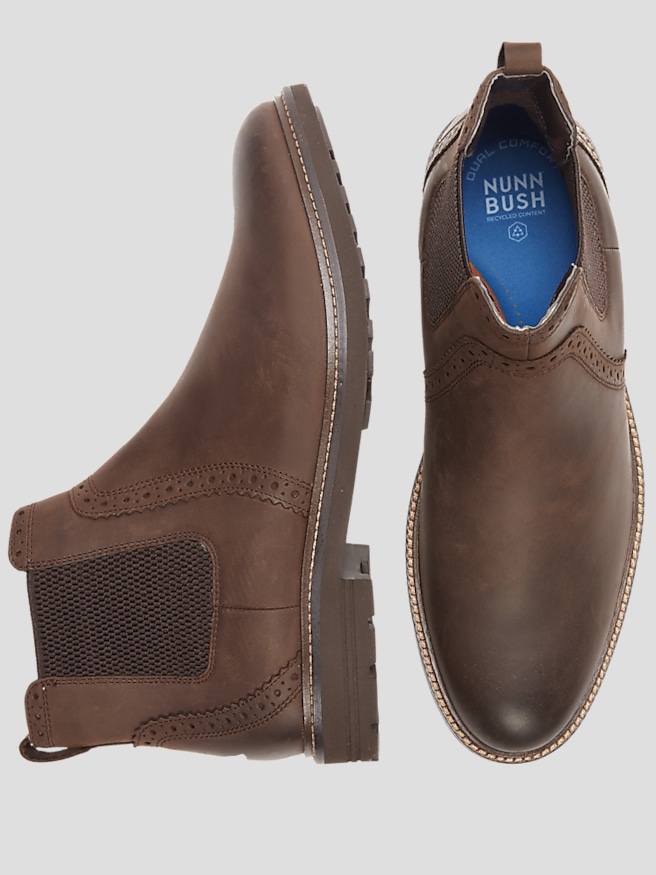
Men’s black leather Chelsea boots bring together the clean lines of a dress shoe and the easy entry of a pull-on boot. The defining details are straightforward: an ankle-height shaft, elastic side panels, and a shape that stays uncluttered without laces or prominent hardware. That simplicity gives black leather room to stand out, whether its surface has a soft, understated luster or a more polished finish. A narrow profile and gently tapered toe create a dressier impression, while a rounded toe and more substantial sole give the same silhouette a grounded, casual character. Within the broader category of Mens Leather Chelsea Boots, black offers a particularly useful foundation because it works with everything from charcoal tailoring to dark denim without adding another color to the outfit. Leather quality and finishing influence both appearance and how the boots develop with wear. Full-grain leather retains more of the hide’s natural surface characteristics, while other leather finishes may create a smoother, more uniform appearance. Neither a glossy surface nor a substantial feel alone tells the whole story; suppleness, consistent stitching, neat edges, and a well-shaped heel also deserve attention. Natural creasing across the forefoot is part of wearing leather footwear, and a suitable fit helps those creases form where the foot actually bends. Sole construction changes the experience, too. A slim leather outsole keeps the profile refined, while a rubber outsole can provide a more cushioned feel or additional grip, depending on its design. A pronounced tread adds visual weight that pairs comfortably with heavier fabrics and relaxed cuts. Small details such as the shape of the elastic panels, the height of the shaft, and the width of the sole edge can make two otherwise similar black Chelsea boots feel distinctly different. The most useful choice is one whose proportions make sense with the clothing and activities already part of a regular routine.
The appeal of black leather Chelsea boots is how naturally they move between familiar settings. For an office outfit, a streamlined pair can sit neatly beneath charcoal or navy trousers, with a tucked-in shirt and a jacket completing the look without making the footwear feel overly formal. A trouser hem that rests lightly near the top of the boot preserves its clean shape; excessive fabric pooling around the ankle can hide the silhouette and make the outfit look less intentional. With jeans, a straight or gently tapered leg usually gives the shaft enough room without catching on the pull tab. Dark indigo denim and a textured sweater create an easy dinner outfit, while black denim with a simple shirt produces a more continuous line from waist to shoe. Chinos offer another useful middle ground, especially when their cut is neither extremely narrow nor overly loose. The boot’s shape matters as much as its color: a sleek toe and discreet sole work well with finer trousers, while a broader profile can balance denim, corduroy, or other substantial fabrics. For a wedding, an evening reception, or a celebratory dinner, polished black Chelsea boots may complement a tailored outfit when the dress code allows them. They are not an automatic substitute for the footwear expected at a strictly formal occasion, so the invitation and setting still matter. For someone who prefers a small, practical footwear rotation, this ability to bridge dressed-up and relaxed clothing can make the style especially appealing. Black leather Chelsea boots can also be a thoughtful gift for a partner, father, brother, or friend who already wears leather shoes and appreciates simple design. Familiarity with the recipient’s usual size, preferred toe shape, and everyday clothing is more helpful than choosing by appearance alone. Someone who spends the day moving between a desk, meetings, and dinner plans may value a different sole and footbed than someone choosing boots mainly for occasional events.
Comfort begins with the relationship between the foot, the boot’s shape, and the socks worn with it. Chelsea boots should feel secure through the instep and heel without squeezing the toes or pressing sharply across the top of the foot. Because there are no laces to adjust, getting that balance right matters: elastic panels help with entry and movement, but they do not correct a boot that is fundamentally too narrow, too short, or too loose. A little heel movement can occur in new pull-on footwear, although persistent slipping or rubbing may signal a poor match. The toes need room to rest naturally, and the widest part of the foot should align comfortably with the widest part of the boot. Trying them with the type of socks intended for everyday wear gives a more useful sense of fit than switching to an unusually thin pair just to make them feel roomy. Leather can soften with use, but painful pressure should not be treated as a necessary break-in stage. Underfoot comfort also depends on the footbed, sole flexibility, heel height, and personal preference; a soft initial feel is only one part of how a boot performs over several hours. Once in regular rotation, simple care helps preserve both appearance and structure. Brush away surface dust, wipe with a soft cloth when needed, and use a leather conditioner suited to the finish rather than applying a heavy coating indiscriminately. For smooth black leather, a compatible cream polish can refresh the surface and soften the appearance of minor scuffs; testing care products in a discreet spot helps avoid unwanted changes in sheen. Let boots air-dry naturally away from direct heat, and use properly sized shoe trees to support their shape between wears. Pull them on with the tab rather than tugging at the elastic, and use a shoehorn if the heel is difficult to enter. Over time, a footwear repair professional can assess worn heels, damaged stitching, or sole edges. Some constructions allow resoling, while others have more limited repair options. Thoughtful care and a comfortable fit help black leather Chelsea boots remain a dependable part of an everyday wardrobe.