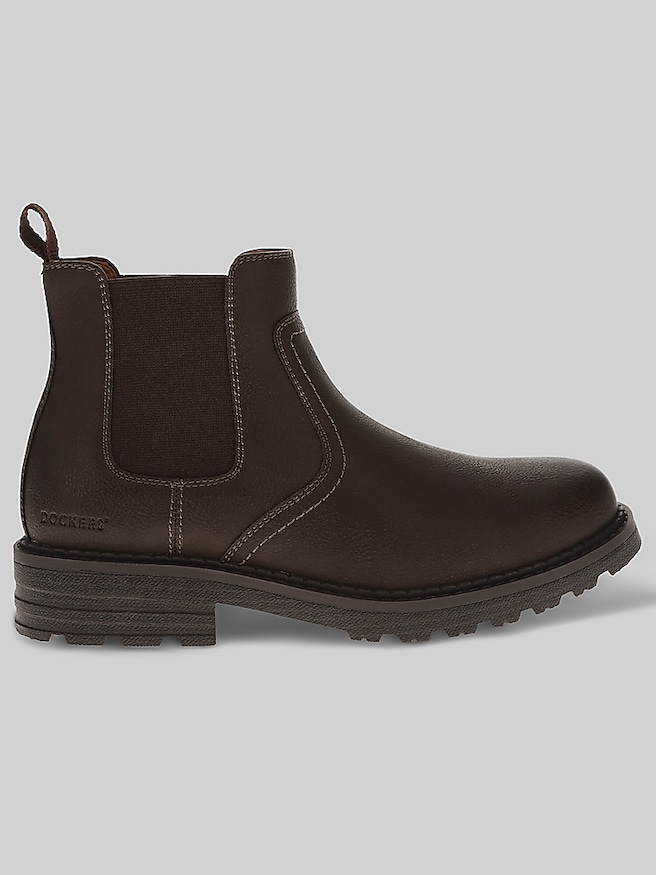
Men's all-weather Chelsea boots combine the clean, ankle-high shape of a classic Chelsea boot with construction intended to handle variable conditions. Elastic side panels and a pull-on design keep the profile streamlined, while weather-focused materials and outsoles help make the style practical for damp sidewalks, a rainy commute, or a walk across a slushy parking lot. Within the broader category of men's weather-resistant boots, Chelsea silhouettes offer a balance of everyday function and a polished appearance that works beyond the front door. The important distinction is that all-weather does not automatically mean waterproof. Water-resistant materials can help shed light moisture, while waterproof protection depends on the complete construction, including the upper, seams, sole connection, and elastic panels. A waterproof membrane or sealed construction can provide additional protection, but the product's stated specifications matter more than the category name alone. Water can still enter over the opening, so ankle-height boots are not intended for wading. Smooth leather offers a refined surface that can develop character with wear, while treated suede brings a softer texture and requires care suited to its finish. Rubber uppers are useful when water exposure is a primary concern, although lining and ventilation influence how comfortable they feel over a full day. Underfoot, a durable rubber outsole with defined tread can help on wet pavement and uneven ground. Tread depth, rubber composition, and surface conditions all affect grip; a substantial-looking sole is not a guarantee of traction on ice. For routes that involve wet steps, gravel paths, and indoor tile, consider how the outsole handles that mix of surfaces rather than judging it by appearance alone. Insulation is another separate feature: weather protection does not necessarily provide warmth, and a heavily insulated boot may feel excessive inside a heated office. The most useful combination depends on the actual routine, whether that means a short walk from the car or repeated stretches outdoors between appointments.
Fit is especially important in a Chelsea boot because there are no laces to adjust the hold across the foot. The instep and heel need enough structure to keep the boot secure without squeezing, while the elastic panels should allow entry without feeling stretched to their limit. A small amount of heel movement can occur in a new pull-on boot, but pronounced lifting, rubbing, or sliding forward suggests that the size or shape is not a good match. Toes should have room to move naturally, including when walking downhill or stepping off a curb. Trying boots with the socks intended for daily wear gives a more useful sense of fit than relying on size alone. A thick sock can noticeably change the feel through the instep and toe box, and buying extra length to accommodate width can leave the heel unstable. Leather may soften with wear, but break-in should not be expected to correct cramped toes or persistent pressure. For long commutes or travel days, cushioning, arch support, lining texture, and the weight of the sole deserve as much attention as the upper. A removable footbed can be helpful for someone who uses an orthotic, provided the boot has enough interior depth to accommodate it. Visually, a slimmer toe and lower-profile sole work well with chinos, dark denim, and tailored casual trousers. A more substantial tread gives the same pull-on shape a rugged character that suits textured pants and relaxed layers. Pant hems generally sit best over the boot opening without bunching heavily around the shaft; that small detail keeps the outline neat when standing or walking. These qualities make weather-ready Chelsea boots useful for commuters, frequent travelers, and anyone moving between casual workplaces and outdoor errands. As a gift, they are most practical when the recipient's usual boot size, width needs, and preference for a sleek or substantial sole are already known.
Long-term performance depends on care as much as construction, especially when boots encounter repeated moisture, road salt, and grit. After a wet outing, remove surface dirt with a soft brush or damp cloth appropriate to the material, then let the boots dry naturally in a ventilated space. Direct heat from a radiator, fireplace, or hot air vent can damage leather and adhesives, so faster drying is not necessarily better. If the lining becomes damp, removing a removable footbed and loosely placing clean, absorbent paper inside can help draw out moisture; replace the paper as it becomes wet. Salt residue should be addressed promptly with a cleaning method approved for the upper rather than scrubbed aggressively into the finish. Smooth leather may benefit from occasional conditioning, while suede generally needs a suede brush and a compatible protective treatment instead of leather cream. Any conditioner, wax, or water-repellent spray should match the material and be tested on an inconspicuous area first, since some treatments darken the surface or change its texture. Protective products can support water resistance, but they do not turn an unsealed boot into waterproof footwear. Cleaning the outsole also matters: packed mud and small stones can interfere with the tread's contact with the ground. Over time, flattened tread, cracks in the upper, loose stitching, or separation at the sole are reasons to assess whether repair or replacement is appropriate. Some construction methods allow resoling, while others do not, so repairability should be confirmed rather than assumed from the boot's appearance. Letting boots dry fully between wears and storing them away from concentrated heat helps preserve their shape and finish. For everyday use, the strongest choice is a Chelsea boot whose protection, fit, and sole match the conditions it will actually encounter, with enough comfort and visual versatility to remain useful after the pavement dries.