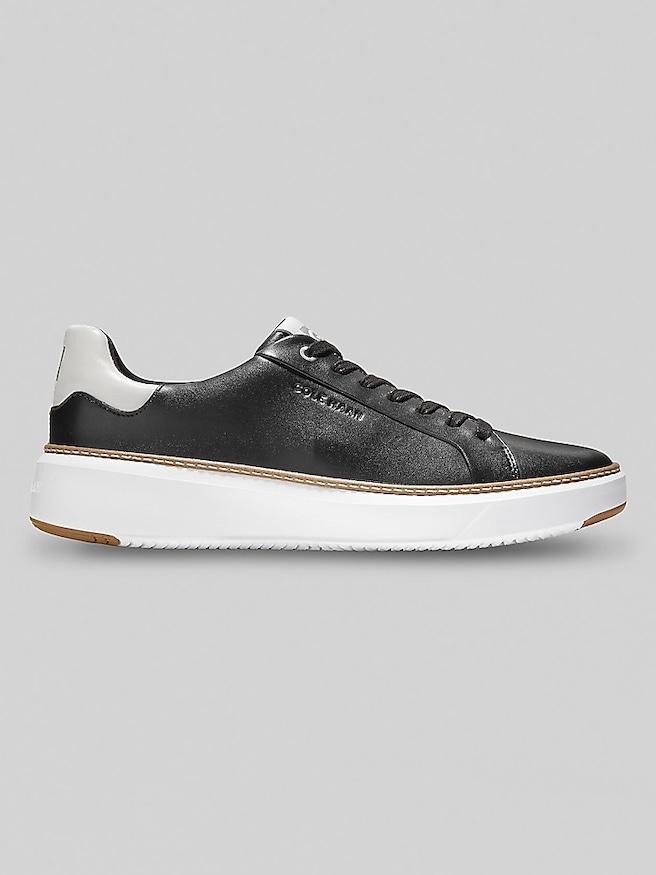
Men’s all black dress sneakers bring the ease of a sneaker to outfits that call for a more considered finish. Their appeal starts with the uninterrupted color: black uppers, dark laces, and a matching sole create a clean line that sits comfortably beneath tailored trousers without drawing attention away from the rest of the outfit. Compared with athletic sneakers, dress-oriented silhouettes typically favor restrained paneling, less bulk, and subtle detailing. The result can look relaxed with chinos and a polo or more polished with a soft-shouldered jacket and an open-collar shirt. For an office with a flexible dress code, that balance makes sense on days that include a commute, time at a desk, and dinner afterward. The shape matters as much as the color. A slim, rounded toe often works well with tapered pants, while a slightly fuller profile can balance straight-leg trousers. Excess fabric pooling around the ankle can hide the shoe’s shape, so a neat hem with little or no break helps keep the overall look intentional. Black sneakers also offer a straightforward foundation for tonal dressing: charcoal pants, a black knit shirt, and a textured jacket can feel coordinated without every piece needing an identical finish. With lighter trousers, the dark footwear creates a stronger visual anchor, especially when another black accessory connects the outfit. These shoes are best understood as a bridge between casual footwear and traditional dress shoes, not a replacement for every formal setting. A creative workplace, an informal celebration, or a restaurant outing may welcome that approach; a strict business or black-tie dress code generally calls for more traditional footwear. For a wedding guest, checking the invitation and the host’s expectations is more useful than assuming that an all-black color automatically makes sneakers formal. Their versatility comes from matching the setting, the trouser shape, and the level of detail across the outfit.
Materials give all black dress sneakers much of their character, even when the color palette stays the same. Smooth leather can provide a crisp surface with a subtle sheen, while pebbled leather brings more visible texture and may make small surface marks less noticeable. Suede creates a softer, matte effect that pairs naturally with textured trousers and knitwear, although it needs a different care routine from smooth leather. Textile and synthetic uppers can offer other combinations of weight, flexibility, and finish; their performance depends on the particular construction rather than the material name alone. The lining deserves attention, too, since a comfortable interior and well-finished seams can matter as much as the outside appearance during extended wear. Fit should feel secure at the heel and through the midfoot without pinching the toes or pressing across the top of the foot. Try shoes with the type of socks intended for regular wear, and leave enough room for toes to move naturally. A shoe that looks sleek but squeezes the forefoot is not a useful trade-off, and a loose heel can become distracting on a longer walk. Lace adjustment can fine-tune the fit, but it cannot fully correct the wrong size or shape. Underfoot, cushioning, flexibility, and support work together; an especially soft footbed is not necessarily the most comfortable choice for every person. Consider whether the shoes will spend most of the day under an office desk, move between meeting rooms, or accompany longer walks through an airport. A low-profile rubber outsole can keep the appearance understated, but tread and grip still deserve a look, especially on smooth indoor flooring. For another view of black sneaker styling, explore men's black designer sneakers, keeping the same priorities of proportion, material, and comfortable fit in mind. Discreet stitching, tidy edges, and a tongue that stays comfortably in place are small details worth noticing when assessing construction.
Keeping an all-black pair looking sharp is largely a matter of consistent, material-appropriate care. Dark footwear may disguise some marks, but dust, lint, and dried residue can stand out against a uniform black surface. For smooth leather, removing loose dirt with a soft brush or cloth before applying a compatible cleaner helps avoid rubbing grit into the finish. Leather conditioner may be appropriate when recommended for the material, while polish should be used only on finishes suited to it; a product intended to add shine can change the appearance of a deliberately matte upper. Suede needs a dedicated brush and compatible cleaning products rather than a routine built around leather cream. Textile and synthetic surfaces should be treated according to the care directions, and machine washing should not be assumed safe simply because the shoes are sneakers. Clean laces and outsole edges make a noticeable difference, particularly when the rest of an outfit is tailored. Let shoes dry naturally away from direct heat, and allow them to air out between wears. Rotating footwear when practical gives the interior time to dry and can reduce the strain of repeated daily use. Shoe trees suited to the size and shape may help leather uppers maintain their form, but they should not stretch the shoes. Durability also depends on how the footwear is used: everyday walking and social occasions place different demands on a shoe than workouts or court sports. Dress sneakers are intended primarily for casual and smart-casual wear, so an understated appearance should not be mistaken for sport-specific support. They can make a thoughtful gift for someone starting an office role, refreshing a work wardrobe, or favoring understated footwear for evenings out. Knowing the recipient’s usual size, width needs, and preferred silhouette makes that choice more personal and more practical. For regular wear, the strongest combination is simple: an all-black finish that complements the wardrobe, a shape that works with familiar trousers, and a fit comfortable enough to make the shoes a natural part of getting dressed.