Suits for Memorial Day occasions balance a polished appearance with the practical demands of a full day, whether the plans include a remembrance ceremony, a wedding, or a family gathering with a dressier invitation. Memorial Day honors members of the U.S. military who died in service, and understated tailoring can be appropriate for observances where a respectful appearance matters. Navy, charcoal, and medium gray offer versatile starting points, with subtle texture adding depth without drawing attention away from the occasion. The same suit can also serve well beyond the holiday weekend, moving into business meetings, graduation celebrations, and other events that call for coordinated tailoring. Its usefulness begins with fit rather than ornament. A jacket should sit smoothly across the shoulders, with lapels resting against the chest and enough room through the body to button comfortably without pronounced pulling. Sleeves that reveal a small amount of shirt cuff create a clean finish, while a collar that stays close to the shirt helps the jacket look settled rather than oversized. Trousers deserve equal attention: a comfortable waistband, a smooth seat, and an appropriate hem length make a noticeable difference when standing for photographs or sitting through a ceremony. Slim fits generally follow the body more closely, classic fits provide more room, and modern fits often fall between the two, although the proportions vary by design. Those labels are useful starting points, not substitutes for checking how a suit feels in motion. Reaching forward, sitting down, and walking at a normal pace reveal restrictions that may not be obvious in front of a mirror. For someone building a first tailored wardrobe, a restrained two-piece suit offers a flexible foundation. For someone who wears suits regularly, fabric texture, jacket construction, and trouser shape can make a familiar color feel distinct without limiting its usefulness. The strongest choice is one that suits both the occasion and the wearer's everyday preferences, rather than requiring constant adjustment to feel comfortable.
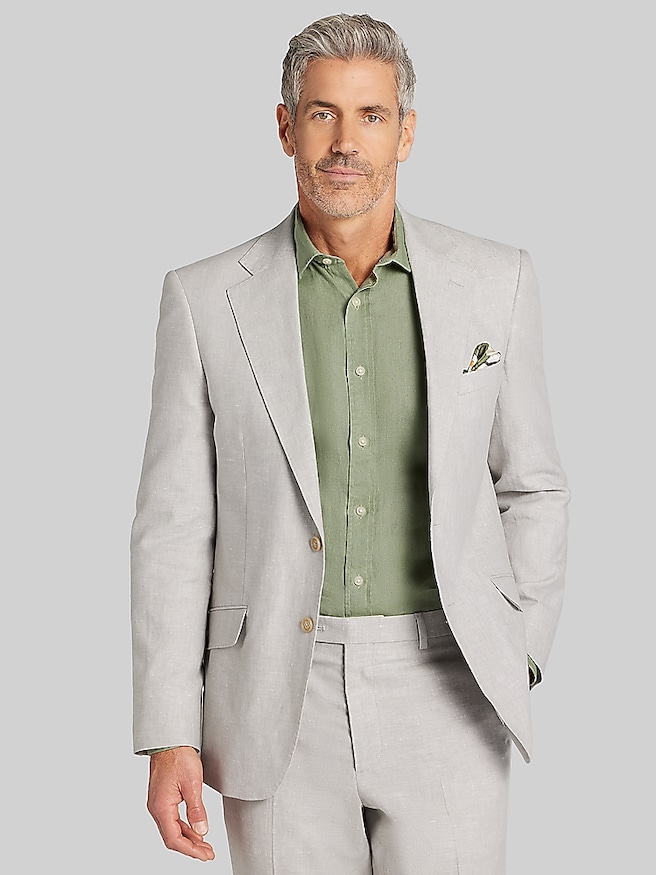
Fabric and construction influence how a suit drapes, breathes, and holds its shape throughout an event. Wool is valued for its resilience and ability to recover from ordinary creasing, and it is not limited to heavy cloth. Lightweight wool and open-weave fabrics can provide structure with airflow, making them relevant to Memorial Day gatherings that move between indoor rooms and outdoor spaces. Linen has a distinctive texture and an easy drape, with natural wrinkling that belongs to its character rather than signaling poor care. Cotton often creates a more relaxed impression, though its weight and weave affect both comfort and how readily it creases. Blended fabrics can balance characteristics such as softness, shape retention, and stretch; the fiber label and care instructions offer more useful information than appearance alone. A small amount of stretch may add ease, but it cannot compensate for a jacket that is too narrow or trousers that pull across the thighs. Lining also contributes to the experience of wearing a suit. A partially lined or unlined jacket may feel lighter, while a fuller lining can help a jacket slide smoothly over a shirt; the outer fabric and overall construction still matter. Durability depends on more than fabric weight. Even stitching, secure buttons, neatly finished seams, and sufficient room at stress points all support repeated wear. A fine, smooth cloth may look especially refined, while a textured weave can make minor creasing less conspicuous. Color and pattern establish the suit's level of formality alongside those practical details. Dark solids tend to feel more reserved, lighter grays and muted earth tones can read more relaxed, and a subtle check introduces interest without the visual impact of a bold pattern. For a formal observance, quiet accessories keep the focus appropriate. For a wedding reception or a celebratory meal, a patterned tie or softly colored shirt can bring personality to the same tailoring. Following the invitation's dress expectations helps keep those choices grounded in the setting.
A suit earns its place in a wardrobe through the occasions it can handle and the condition it maintains between them. For someone moving from a morning ceremony to an afternoon meal, comfortable trousers and a jacket that remains composed when seated can matter as much as the initial impression. For a wedding guest, a well-chosen shirt, tie, and pair of polished dress shoes can give familiar tailoring a more festive character without requiring elaborate accessories. A white or pale blue shirt is a dependable partner for many suit colors, and a restrained tie pattern can add contrast without competing with a textured jacket. Shoe formality should complement the setting: clean lines and well-maintained leather generally create a more polished finish than heavily casual details. Trouser hems should also work with the shoes, since excess fabric pooling at the ankle can make an otherwise careful fit look unfinished. Alterations can refine sleeve length, trouser length, and some areas of the jacket or waistband, but substantial shoulder changes are more involved, making the initial jacket fit especially important. Care helps preserve that fit and finish. Following the garment's label, allowing the fabric to air after wear, and using a broad, supportive hanger can reduce unnecessary strain. Light brushing can remove surface dust, while prompt attention to spills helps prevent marks from becoming harder to address. Professional cleaning is best guided by the care label and the garment's condition rather than treated as an automatic step after every outing. Before storage, pockets should be emptied and the suit allowed to dry fully; breathable protection helps shield it from dust without trapping moisture. These habits support a suit intended for repeated use, from meaningful holiday observances to professional milestones and family celebrations. For less formal plans surrounding the weekend, Memorial Day men's casual wear offers a related direction when the setting calls for something more relaxed than coordinated tailoring.