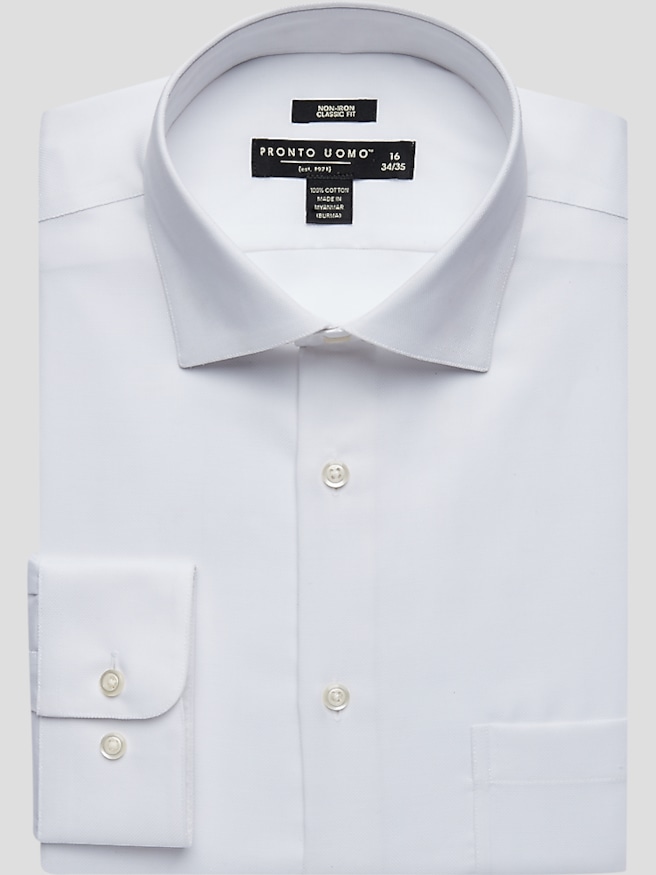
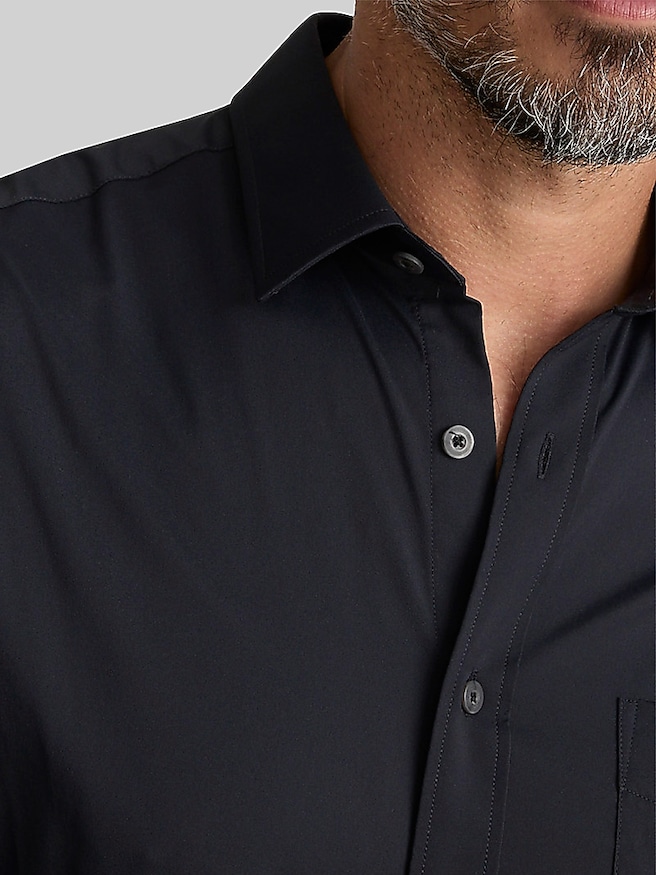
A long sleeve Oxford shirt takes its name from its fabric, not its collar. Traditional Oxford cloth is a cotton basket weave, in which groups of yarns cross to create a fine grid. That weave gives the shirt a slightly pebbled surface and a sturdier feel than smooth poplin. Cotton is the classic choice, though some Oxford shirts blend cotton with other fibers to add stretch or help the fabric resist wrinkles. The size of the yarns makes a difference, too. A traditional Oxford has a visible grain that looks at home with denim, while a finer pinpoint Oxford has a smoother surface that pairs easily with tailored trousers. The familiar Oxford button-down combines the cloth with small buttons that hold the collar points in place, so the collar sits neatly under a sweater or blazer. Oxford shirts can also have spread or point collars without those buttons; either way, it’s the weave that makes the shirt an Oxford. A chest pocket and visible stitching tend to give the shirt a more casual look, while a clean front lets the texture do most of the work. Color plays a similar role. White brings out the contrast with dark denim, while Men's Blue Oxford Shirts offer an easy alternative: pale blue sits comfortably alongside navy or charcoal, and a deeper blue stands out against stone chinos. A narrow stripe can add definition beneath a solid jacket without competing with it. The appeal of an Oxford is that the fabric has enough character to look finished on its own, even with the collar open and no jacket in sight.
Fit matters as much at a desk as it does in front of a mirror. The shoulder seams should sit near the ends of the shoulders, and the shirt should button across the chest without pulling the placket into a series of small gaps. A slim cut takes in fabric through the torso for a closer line under a jacket, while a classic cut leaves more room through the chest and waist. Neither needs to feel tight across the upper back. Reaching forward as if typing or turning a steering wheel is a useful check: a shirt can look trim with the arms at rest and still bind when they move. Long sleeves should leave enough room to bend the elbows without tugging sharply at the cuffs. With the arms relaxed, fastened cuffs generally sit at the wrist; under a well-fitting jacket, a small amount of cuff can show. The hem helps determine how the shirt is best worn. A longer, curved tail stays anchored inside trousers when sitting down or reaching for a shelf. A shorter hem looks more deliberate untucked, especially if it ends around the middle of the fly rather than covering it entirely. In a business-casual office, a tucked Oxford with chinos, a belt, and loafers gives the textured cloth a clean frame. A finer weave with a spread collar can look sharper under a sport coat, though the classic button-down reads more casually than a smooth dress shirt when the dress code calls for a formal suit and tie. Away from the office, an Oxford with dark jeans can work with the sleeves at full length or rolled just below the elbow. The same details that help it sit neatly under a jacket, from a structured collar to a defined cuff, give it enough shape to wear without one.
Oxford cloth is valued for its durability, and a traditional cotton weave often feels softer after repeated washing while keeping its visible grain. The spots that tend to show regular wear first are the inside of the collar and the edges of the cuffs, where the fabric gets the most contact. Checking those areas before laundering makes it easier to spot marks that could otherwise go unnoticed. The care label is the best starting point because fiber blends and finishes don’t all respond the same way to washing, drying, or ironing. Where the label allows, a cold wash with like colors helps limit fading and shrinkage, and air-drying or using a low dryer setting can help spare cotton from excess heat. Taking the shirt out promptly and smoothing the collar, placket, and cuffs by hand can cut down on creases. For a tucked look with tailored pants, a light press gives the front a cleaner line; for an untucked shirt with jeans, a little texture and a few soft creases look at home. Even a shirt labeled easy-care can benefit from being hung promptly instead of left bunched up after the wash. A long sleeve Oxford can also make a practical gift for someone putting together a work wardrobe, moving into a role with a business-casual dress code, or simply looking for a step up from a T-shirt. Checking the fit and sleeve length of a shirt the recipient already wears is more useful than guessing from a jacket size. White, light blue, and restrained stripes are easy choices when the recipient’s wardrobe is mostly neutral. For someone who wears button-front shirts chiefly with jeans, a textured weave and an untucked-friendly hem may see more use than a dressier collar and longer tails. Those small distinctions help an Oxford earn a regular place in the closet rather than waiting for an occasion.