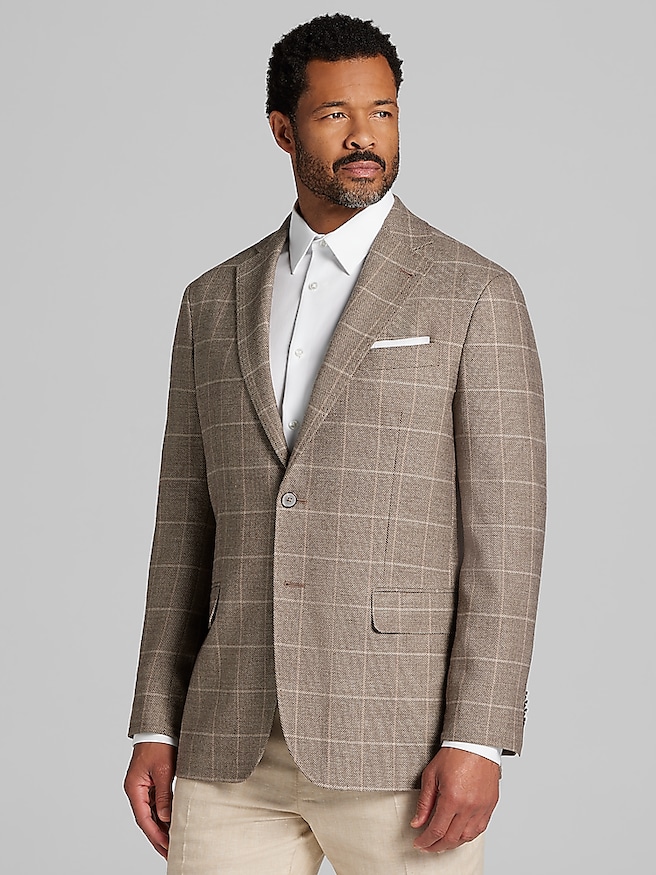
Linen sports jackets are tailored separates made from linen or linen-blend fabric, designed to pair with trousers that do not need to match. They give an outfit the shape of a jacket without requiring the coordinated look of a suit, making them useful for business-casual offices, dinners, celebrations, and other occasions that call for something more considered than a shirt alone. Linen comes from the flax plant, and its woven surface often has subtle variations in thickness that give the cloth its distinctive texture. Those small irregularities, sometimes called slubs, are part of its character rather than a sign that the fabric should look perfectly smooth. Linen also absorbs moisture and allows air to pass through the fabric, although the weight, weave, and lining of a finished jacket influence how breathable it feels. Pure linen generally has a crisp hand that softens with wear and develops visible creases, especially at the elbows and around the waist. A linen blend can change that feel: cotton may add a softer touch and more body, while wool can contribute resilience and help the cloth recover its shape. The fiber percentages matter, but so does construction. An unlined or partially lined jacket exposes more of the interior fabric and can feel less restrictive, while a fuller lining provides a smooth surface over shirt sleeves. Soft shoulders and minimal internal structure create a relaxed outline; more structured tailoring gives the chest and shoulders a firmer shape. Neither approach is inherently better. The right choice depends on whether the jacket is meant to soften a polished outfit or add definition to a casual one. Patch pockets, visible stitching, and textured buttons can emphasize an informal character, while welt pockets and a cleaner front can make the overall appearance more restrained. These details help determine how naturally a linen sport coat fits into an existing wardrobe.
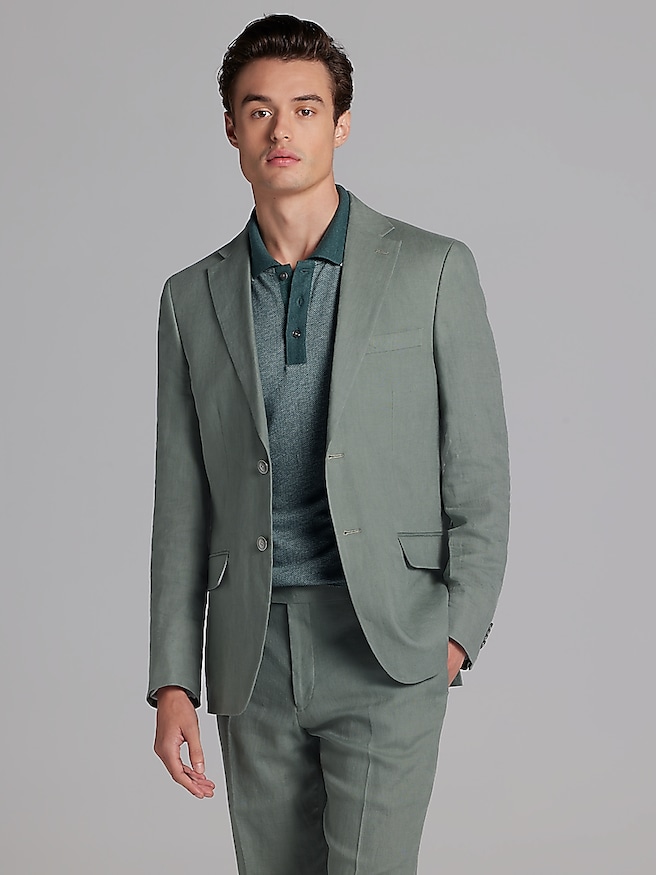
Fit makes the difference between linen that looks intentionally relaxed and fabric that simply appears oversized. Shoulder seams should sit close to the natural edge of the shoulders, with sleeves falling cleanly rather than collapsing into deep folds. With the jacket buttoned as intended, the lapels should lie flat and the front should close without strong pulling across the waist. A little ease through the chest and back leaves room to sit, reach across a table, or shake hands without feeling confined. A trim cut can still allow movement, just as a roomier cut can maintain a defined silhouette. Jacket length should balance the torso and legs, and sleeve length generally leaves a small amount of shirt cuff visible when the arms rest naturally at the sides. These proportions are more useful than choosing a size by habit alone, especially when moving between tailored and relaxed fits. Color and texture then set the tone. A neutral linen jacket with dark trousers and a solid shirt creates clear contrast for a client lunch or an evening reservation. A pale shirt, textured jacket, and chinos feel less formal while retaining a finished appearance. The muted color of green linen jackets works naturally with cream, navy, gray, and shades of brown, offering an alternative to familiar neutrals without demanding a complicated outfit. When combining separates, a noticeable difference in color or texture usually looks more deliberate than two fabrics that almost match. A fine-knit polo can complement a softly constructed jacket, while a collared dress shirt gives sharper definition around the neckline. Dark, clean-lined denim can work in settings where the dress code permits it, particularly with an informal pocket treatment and understated shoes. Loafers, derbies, and other simple leather footwear help keep the focus on the jacket’s texture. For receptions and weddings, the invitation remains the best indication of whether separate trousers and a linen sport coat provide the expected level of formality.
The appeal of a linen sports jacket includes how it settles into regular wear, not just how it looks when freshly pressed. Gentle creasing is normal, but good fit and thoughtful care keep that texture from becoming an untidy silhouette. A jacket that is too tight often develops pronounced tension lines, while heavy objects in the pockets can pull the front out of shape. Keeping a phone or bulky wallet out of an exterior pocket helps preserve the drape, particularly in lighter cloth. After wearing, hanging the jacket on a broad, shaped hanger supports the shoulders and gives absorbed moisture a chance to dissipate before storage. A soft clothing brush can lift surface dust; any spot treatment should follow the care label and account for the fabric, dyes, lining, and internal construction. Linen fiber alone does not establish whether a tailored jacket is washable. Some garments require professional dry cleaning because their structure or components may respond poorly to water, while others have care instructions that allow washing. Pressing and steaming also depend on the label, and excessive heat or pressure can affect the finish. When packing, a gentle fold with minimal compression is preferable to forcing the jacket beneath heavy luggage; hanging it after unpacking can help lighter creases relax. Over time, durability depends on the weave, seam construction, fit, and care as much as the fiber name. Linen can be a strong fabric, but repeated friction at cuffs, elbows, and pocket edges still deserves attention. For someone building a versatile wardrobe, a linen sport coat can connect tailored trousers, chinos, dress shirts, and knit polos already in rotation. It can also make a thoughtful gift for someone who enjoys dressing for dinners, gatherings, or a less formal workplace, provided the recipient’s measurements and fit preferences are known. The most useful choice is one that suits those everyday habits: comfortable through the shoulders, compatible with familiar colors, and easy to wear without needing an entirely new outfit.