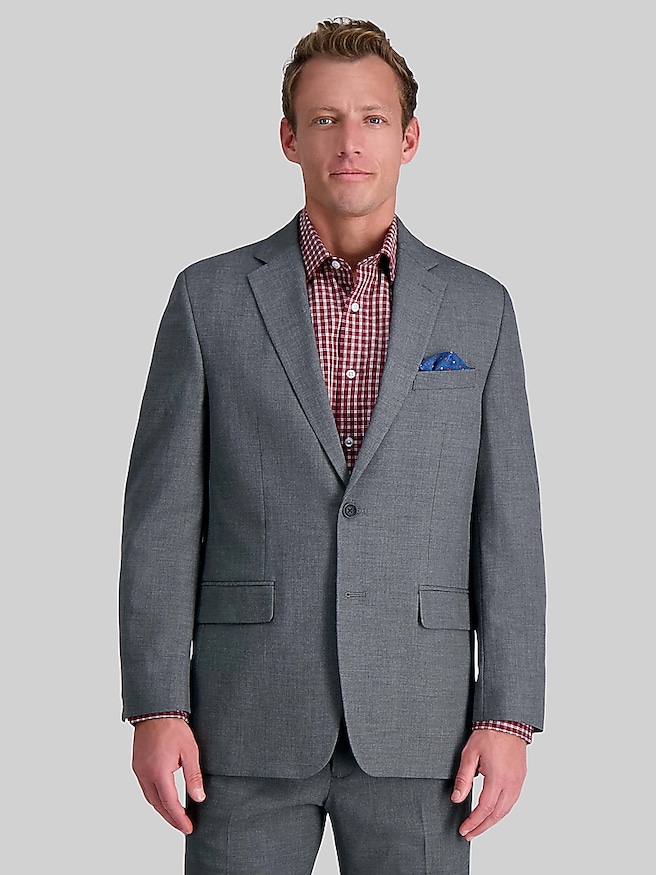
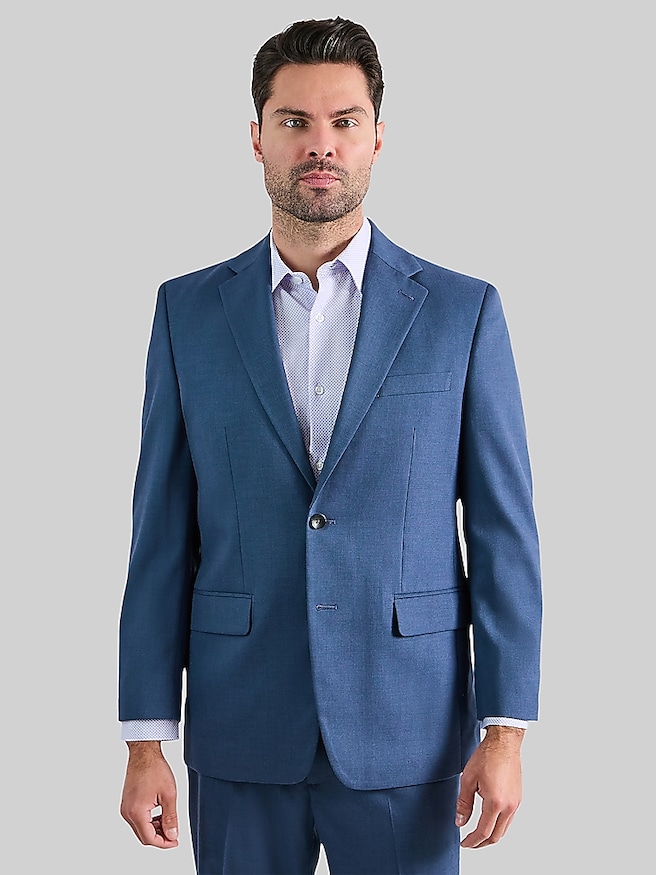
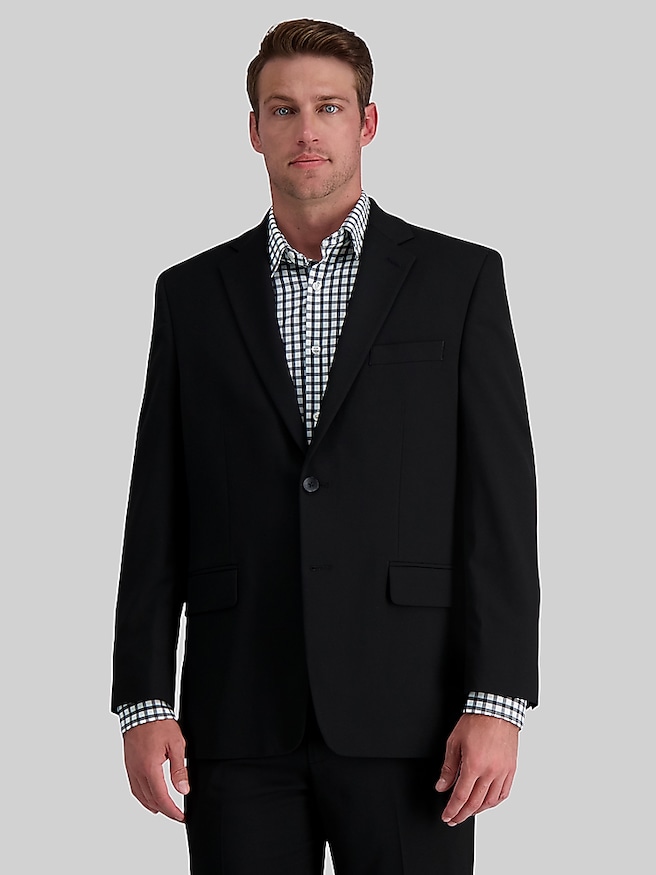
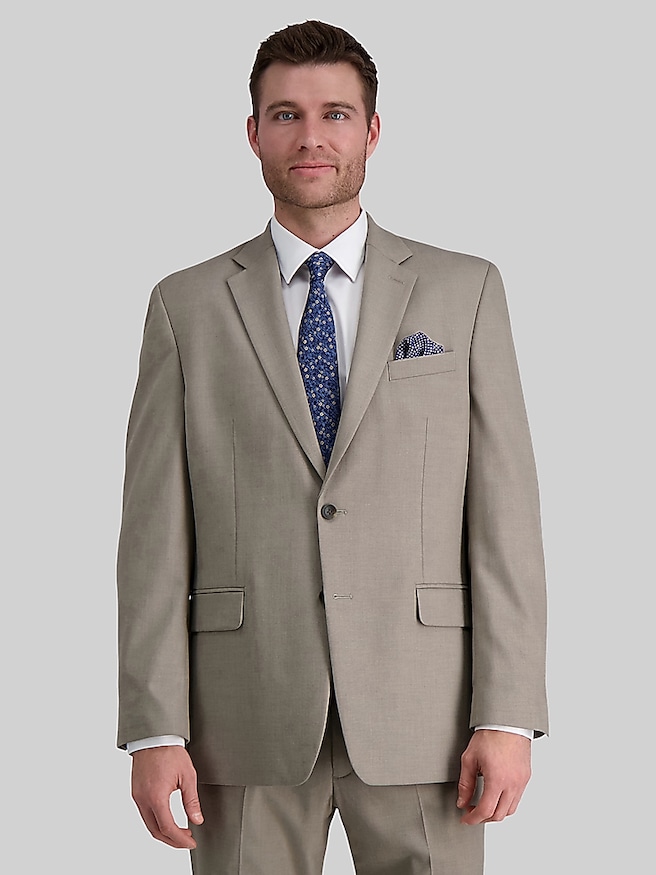
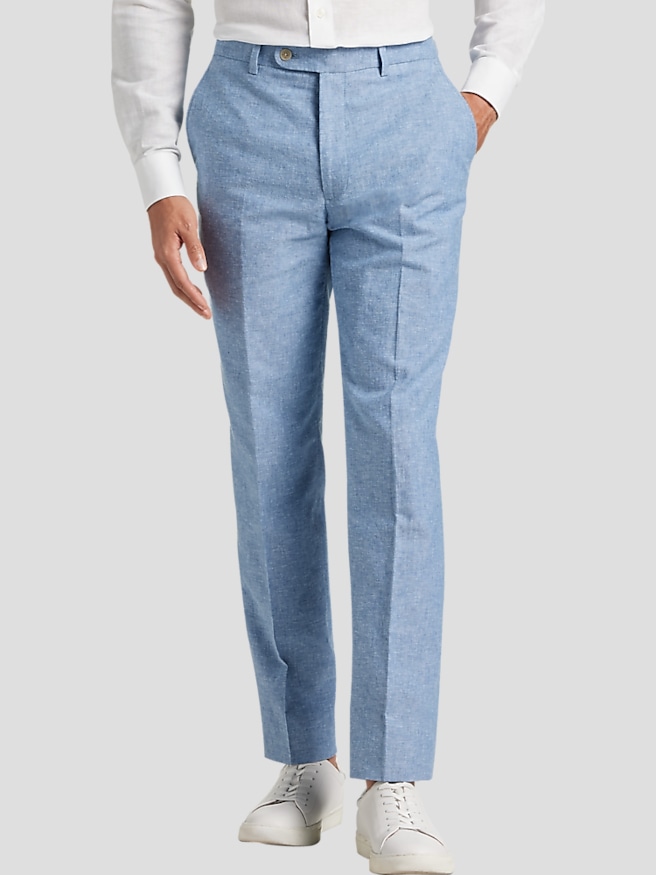
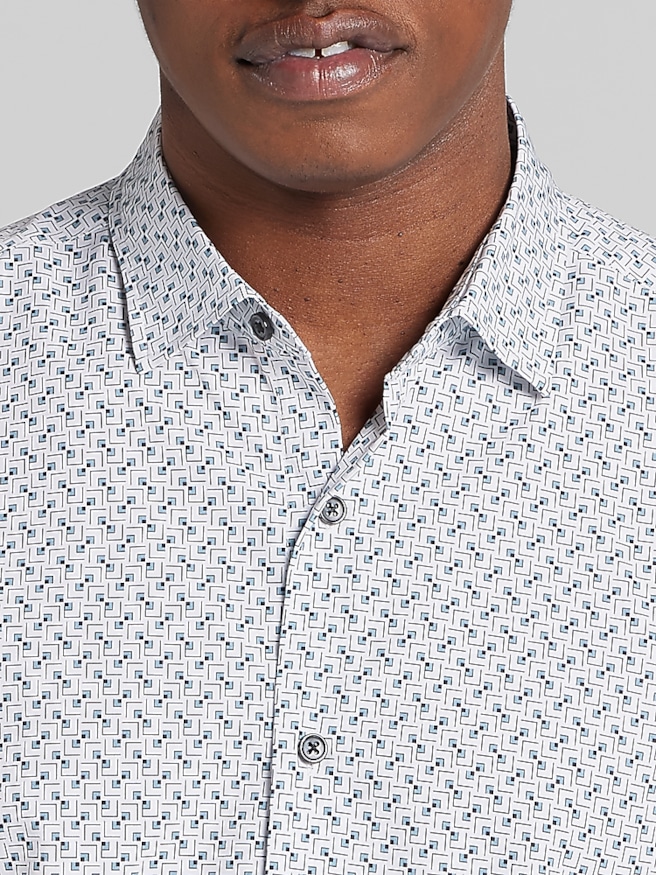
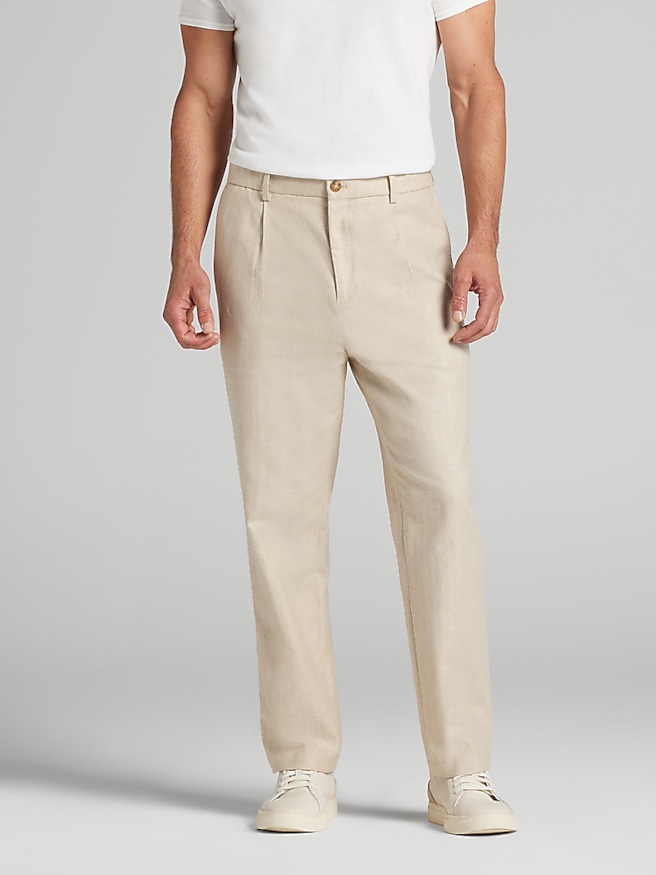
Linen blend clothing combines linen, a fiber made from flax, with cotton, viscose, or other fibers. The blend can keep the dry feel and subtle texture associated with linen while changing how the cloth drapes, how smooth it feels, and how readily it creases. Cotton can give a linen blend a softer, more familiar feel without taking away all of its body. Viscose, a type of rayon, often gives it a more fluid drape, so the fabric falls closer to the body instead of holding a crisp outline. Blends made with polyester can hold their shape better and show fewer sharp creases, though the effect depends on the weave and the proportions. A small amount of elastane can add stretch, but not every linen blend stretches, and a soft fabric isn't necessarily a stretchy one. The fiber percentages are a useful starting point, not the whole story. A light, open weave lets air pass through more easily than a tightly woven cloth of the same blend, and a lining changes how the finished garment feels. A denser weave may be the better choice when the goal is a clean, tailored line. The surface matters, too. Some linen blends have small irregularities in the yarn, known as slubs, that give even a solid color some depth up close. A finer, more even weave tends to look dressier and pairs easily with smooth fabrics and polished leather. Either can crease at the elbows, hips, and lap just from sitting or moving around. That's part of the character of linen blend clothing, not necessarily a sign that the fit is off. For someone who likes the look of linen but prefers less pronounced creasing, a smoother blend with a more fluid drape may be a better match than a crisp cloth that holds every fold.
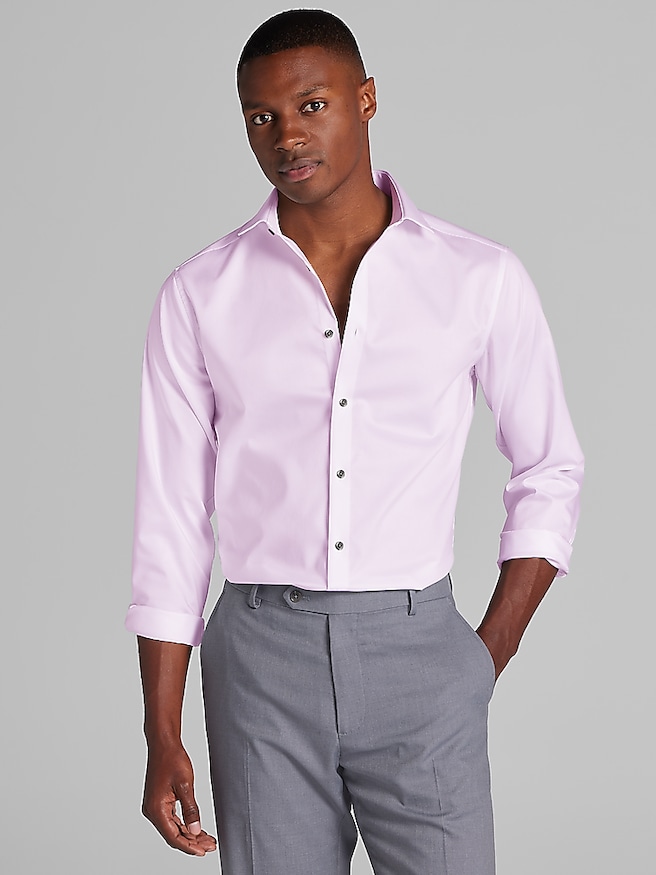
Fit has as much to do with how linen blend clothing looks at the end of the day as it does with how it looks on a hanger. A woven blend with little stretch needs enough room to move without pulling. Across the shoulders and upper back, the fabric should lie smoothly while standing but still feel easy when reaching forward. A quick way to check is to make the same motion it takes to reach across a table. If the fabric binds across the back or pulls sharply at the front, the cut may be too close even if it looks neat with arms at rest. With Linen Blend Trousers, pay attention to the rise and the room through the seat and thighs. A waistband can feel fine when standing and dig in when seated. Pockets that flare or diagonal lines that stay visible across the hips can point to tension in the fit, unlike the soft folds that come and go with movement. A leaner cut can still read as relaxed when the cloth falls cleanly rather than gripping the leg. A fuller cut can look just as tidy when the waist sits securely and the hem doesn't bunch over the shoes. Beyond fit, the setting helps determine how much texture makes sense. For an office with a business-casual dress code, a restrained color and a smooth finish can give linen blend clothing enough polish without making it feel formal. For dinner in a more relaxed setting, a visible weave can carry much of the look on its own, especially alongside quieter colors and textures. For travel, a softly draping blend can make sense for a long stretch of sitting, provided a few folds out of the bag won't be a concern.
Care starts with the label because two linen blends can call for very dissimilar treatment. An unlined, washable garment and a tailored one with a lining may contain similar fiber percentages but respond poorly to the same wash routine. If the label allows machine washing, use the recommended cycle and take the garment out promptly rather than letting it sit twisted in the drum. A gentle shake and a pass by hand over the seams can smooth some folds before drying. Follow the label on whether to hang, lay flat, or tumble dry. If ironing is permitted, use the recommended setting instead of assuming the cloth can take the heat used for pure linen. The goal doesn't have to be a perfectly flat surface. Smoothing a collar, a front edge, or a hem can make the whole garment look neater without pressing away its texture. Linen fibers are strong, but the weight and weave of the cloth, the construction of the seams, and how closely the garment fits all play a part in how it holds up. Frequent rubbing at a pocket edge or along a seam can show wear sooner than it does on a broad panel of fabric. Give pieces enough room in the closet to avoid pressing in folds between wears. For a gift, linen blend clothing makes sense for someone who already favors textured fabrics or easygoing tailoring. A familiar fit and care routine are often better clues than a favorite color alone. Someone who prefers simple laundry habits may appreciate a machine-washable blend, while someone who values a crisp outline may be comfortable with a bit more upkeep. The most useful choice is one that fits the recipient's everyday plans and still looks good with the small creases that come from actually wearing it.