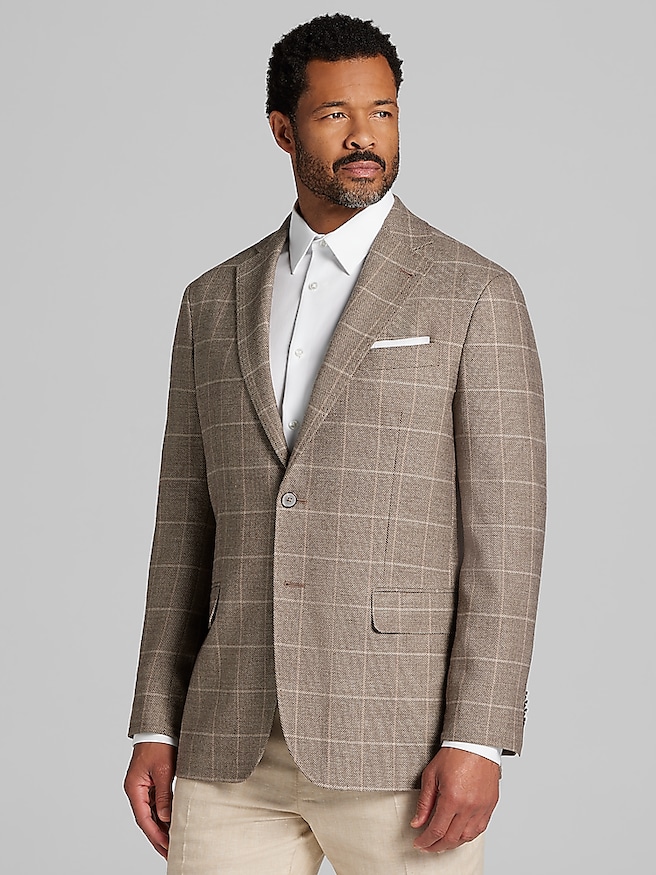
Lightweight turtlenecks for sport coats bring a clean, uninterrupted line to tailored dressing, replacing the collar and tie with a soft neckline that frames the face. Their appeal is in the balance: a sport coat supplies structure through the shoulders and chest, while a fine-knit turtleneck adds texture without competing with the jacket’s shape. The combination feels considered for an office with a relaxed dress code, a dinner reservation, a gallery opening, or a gathering where a full suit would feel overly formal. A smooth, closely knitted fabric usually sits more neatly beneath a jacket than a chunky stitch, allowing the lapels to lie flat and the sleeves to move comfortably. Solid colors make that relationship especially clear. Black beneath a gray sport coat creates a crisp outline, navy adds depth alongside brown or tan tailoring, and cream introduces contrast without the sharp edge of a white dress shirt. Tonal combinations offer another approach, with slightly varied shades keeping the outfit interesting through texture rather than bold color. A subtle herringbone or check in the jacket can stand out against the quiet surface of the knit, while a softly textured turtleneck can lend dimension to a plain sport coat. The neckline matters just as much as the color: a fold that rests evenly looks intentional, whereas excessive fabric can bunch beneath the chin or crowd the jacket collar. With tailored trousers, the effect leans polished; with clean, dark denim and an unstructured sport coat, it becomes more relaxed without looking unfinished. Footwear can reinforce either direction, from leather loafers to understated lace-up shoes. The result is an outfit with fewer visible layers and details than a shirt-and-tie combination, but plenty of character in the fabric, proportion, and way the pieces sit together. It also leaves room for personal preference: a higher, softly folded neck has a more enveloping appearance, while a shorter fold creates a tidier frame above the lapels. Neither needs extra ornament to give the outfit a clear point of view.
Fabric and fit determine whether that streamlined appearance also feels comfortable through a full day. Fine-gauge knitting creates small, closely spaced stitches, giving a turtleneck a relatively smooth surface and helping it slide beneath a jacket sleeve. Fiber content adds another layer of distinction. Fine merino wool can offer softness, breathability, and natural resilience, while cotton often has a familiar hand and a less springy drape. Silk blends may introduce a subtle sheen and a smoother feel against the skin, and blends with synthetic fibers can contribute shape retention or easier care, depending on the construction. Cashmere can feel exceptionally soft, though its surface may need attentive care where fabric repeatedly rubs. No fiber name alone tells the whole story; yarn quality, stitch density, finishing, and the proportions of a blend all influence how a garment wears. A lightweight knit should have enough substance to fall cleanly rather than cling to every contour, especially across the chest and midsection. The shoulder seams should sit close to the natural shoulder line, and the sleeves should follow the arms without gathering into thick folds beneath the sport coat. Through the body, a close but easy fit gives the jacket room to settle naturally. Pulling across the chest, stretched ribbing, or a neckline that feels restrictive can make an otherwise polished combination uncomfortable during a meeting or a long meal. Extra width can create its own problems, collecting around the waist or bunching near the armholes. Length deserves attention as well: a hem that stays in place when seated helps maintain a clean line, whether the knit is worn tucked into trousers or left untucked beneath the jacket. For shoppers who prioritize softness at the neck and easy movement, Comfortable Turtlenecks offers a related way to explore this essential layer. The most useful fit is one that allows the wearer to reach for a bag, sit at a desk, and move through an evening without repeatedly adjusting the collar or cuffs.
Lasting performance comes from both construction and care, particularly when a fine knit spends much of its time beneath tailoring. Even stitching, secure seams, and ribbed edges that recover gently after stretching are useful signs of thoughtful construction. The neck should fold smoothly without looking distorted, and the cuffs and hem should sit flat rather than flare or twist. Friction at the underarms, sides, and inner sleeves can cause pilling, including on soft natural fibers; careful removal with an appropriate fabric tool can help maintain a tidy surface when the care instructions allow it. Those instructions should always determine the cleaning method, since similar-looking knits may require hand washing, machine washing on a gentle setting, or professional cleaning. When washing is permitted, avoiding excessive agitation and following the recommended drying method can help preserve the garment’s shape. Knits intended to dry flat benefit from being gently reshaped rather than stretched, and folded storage generally places less strain on the shoulders than a hanger. Jewelry edges, rough bag straps, and sharp hardware also deserve attention around delicate yarns. These practical details matter for a layer that may move from a presentation to dinner without a change of clothes. They also help distinguish a useful wardrobe addition from something chosen only for its appearance. For someone who regularly wears sport coats, a lightweight turtleneck can expand the possibilities of familiar tailoring without adding complicated accessories or an entirely new silhouette. As a gift, it suits a recipient who appreciates understated dressing, provided the neck fit, fiber preferences, and care expectations are considered alongside color and size. A person who favors easy-care clothing may value a different fabric composition than someone comfortable with more attentive maintenance. With those preferences in mind, the appeal remains straightforward: a soft layer, a clean neckline, and enough refinement to complement a well-fitting sport coat.