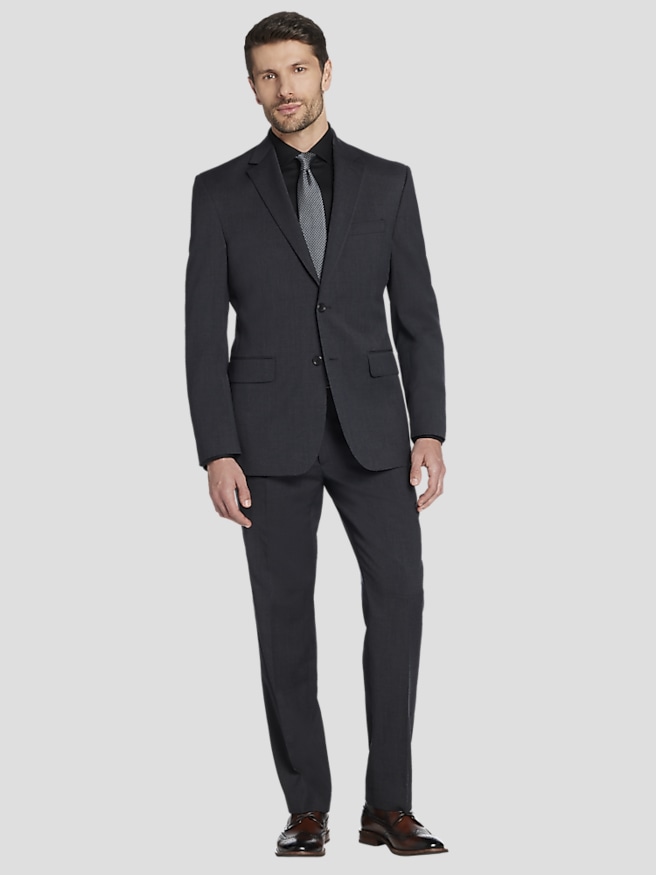
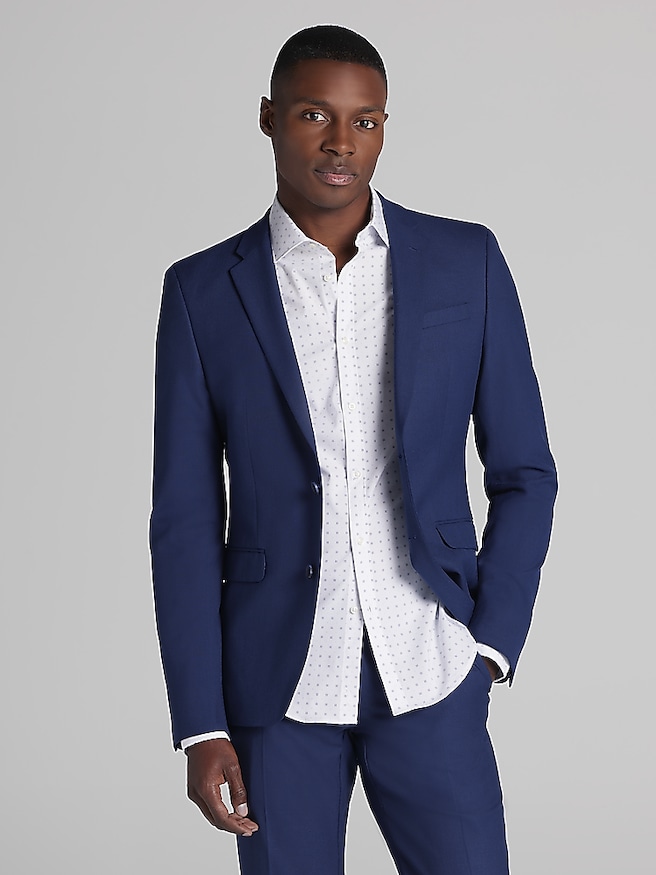
A light gray suit pairs well with an ice blue prom dress because its soft, neutral color complements pale blue without creating a sharp contrast or competing with the dress. The combination feels coordinated rather than identical, giving each person’s outfit its own character while keeping the overall palette cohesive. Light gray suits for ice blue prom dresses can range from cool silver-gray tones to slightly warmer shades with a hint of beige, and those undertones influence the finished look. A cooler gray often reinforces the crisp quality of ice blue, while a warmer gray introduces a softer contrast. The dress’s fabric matters, too: shimmering satin, sequins, and beading reflect light differently from matte chiffon or crepe. A suit with a subtle, low-sheen finish can balance a reflective dress, while a lightly textured fabric adds depth beside a simpler one. Solid fabrics offer an uncluttered backdrop for accessories, and restrained patterns can add interest without overwhelming the pairing. A fine weave may appear smooth from across the room but reveal texture in close-up photos, giving a pale suit more dimension. Wool is valued for its drape, breathability, and ability to recover from minor wrinkles; wool blends can combine those qualities with added strength or stretch, depending on their composition. Polyester blends may offer durability and wrinkle resistance, although their feel and breathability vary with the weave and fabric weight. Stretch fabrics can make sitting and dancing more comfortable, but stretch does not replace a well-proportioned fit. For a prom look, the strongest combination is usually a balanced one: enough structure to look polished in portraits, enough ease to enjoy dinner and the dance floor, and a finish that complements the dress rather than trying to duplicate its shine. A crisp white shirt keeps that balance clear and gives both gray and blue room to stand out. The result can feel formal and youthful without relying on dramatic color or elaborate detailing.
Fit gives a light gray prom suit much of its character, particularly because pale fabric makes folds, pulling, and uneven lines easier to notice. A jacket should sit cleanly across the shoulders, with its collar resting close to the shirt collar and its lapels lying flat against the chest. When the jacket is fastened, strong pulling around the button can indicate that the body is too snug, while excess fabric through the waist can obscure the shape. Slim fits offer a closer silhouette, but a tailored appearance does not require the narrowest cut; room through the chest, seat, and thighs helps the suit move naturally. For someone who will spend time seated at dinner before dancing, that ease is more useful than a fit that looks sharp only while standing still. Trousers should hang smoothly, with a hem that meets the shoes deliberately rather than gathering heavily at the ankle. A slight break creates a classic finish, while little or no break emphasizes a cleaner, narrower line. Jacket sleeve length also affects the proportions, with a small amount of shirt cuff providing a neat transition at the wrist. Accessories bring the ice blue connection into focus without making every detail match. A pale blue tie can echo the dress, while a silver-gray tie keeps the look more tonal. Navy adds definition for someone who prefers a stronger accent, especially against a white shirt. A pocket square can remain white or pick up a small amount of blue rather than repeating the tie exactly. Black leather shoes give light gray a crisp, formal foundation; dark brown can create a softer contrast when the event’s dress expectations allow it. A belt, if worn, should relate to the shoes in color and finish. These details work best when they support the suit’s proportions and the shared color palette, leaving room for personal preference in the tie, lapel shape, and overall silhouette. The effect is coordinated without looking like a costume.
A light gray suit also has value beyond a single prom photo, especially when its fabric, construction, and care suit the way it will be worn. A two-piece silhouette with restrained detailing can transition to weddings, graduation celebrations, and other dressy occasions, with a change of shirt and accessories giving the same gray a distinct mood. A vest adds another layer of formality and keeps the outfit looking composed when the jacket comes off, although the event’s dress code should always determine whether a suit is appropriate. An invitation specifying black tie generally calls for a tuxedo rather than a standard business-style suit. Within gray suiting, small shifts in depth and undertone can change the visual balance; Stone Gray Prom Suits provide a related color direction to consider alongside paler shades. For repeated wear, useful construction details include secure buttons, clean seams, a smooth lining, and trouser pockets that lie flat instead of pulling open. Fabric recovery matters as well: a suit that relaxes after sitting will usually maintain a neater appearance throughout a long event. Light colors make marks more visible, so prompt attention to spills is worthwhile. Blotting gently with a clean cloth is safer than rubbing, and the care label should guide any cleaning or pressing. A broad, shaped hanger supports the jacket’s shoulders between wears, while properly hanging the trousers helps preserve their crease. Letting the suit air out before storing it and avoiding a crowded closet can reduce trapped odors and unnecessary wrinkles. Professional cleaning is appropriate when the care instructions call for it, rather than treating every wear as a reason for another cleaning. With thoughtful care, light gray remains a versatile foundation: soft enough to complement an ice blue prom dress, distinctive enough for a memorable entrance, and adaptable enough to feel relevant when the next formal invitation arrives.