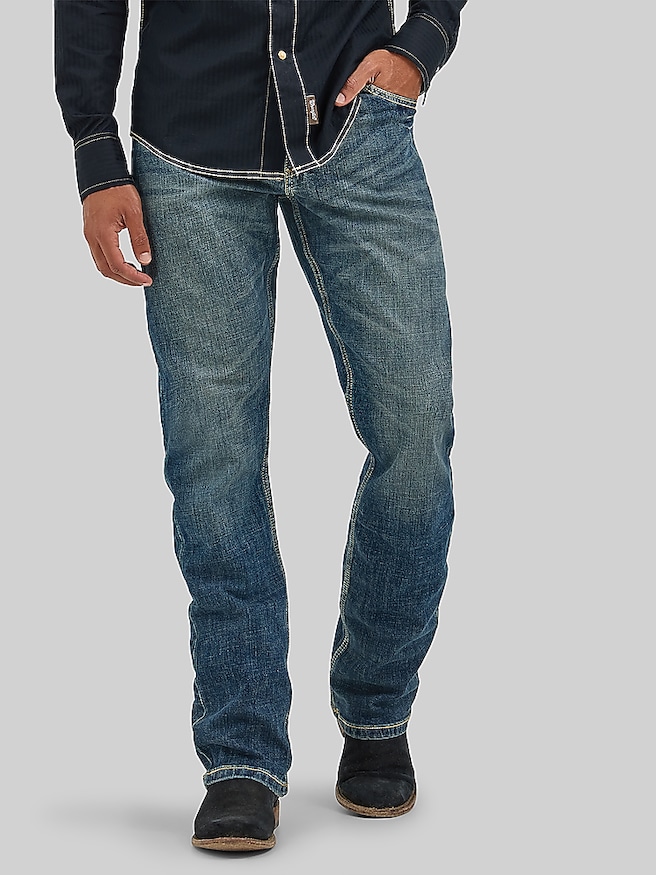
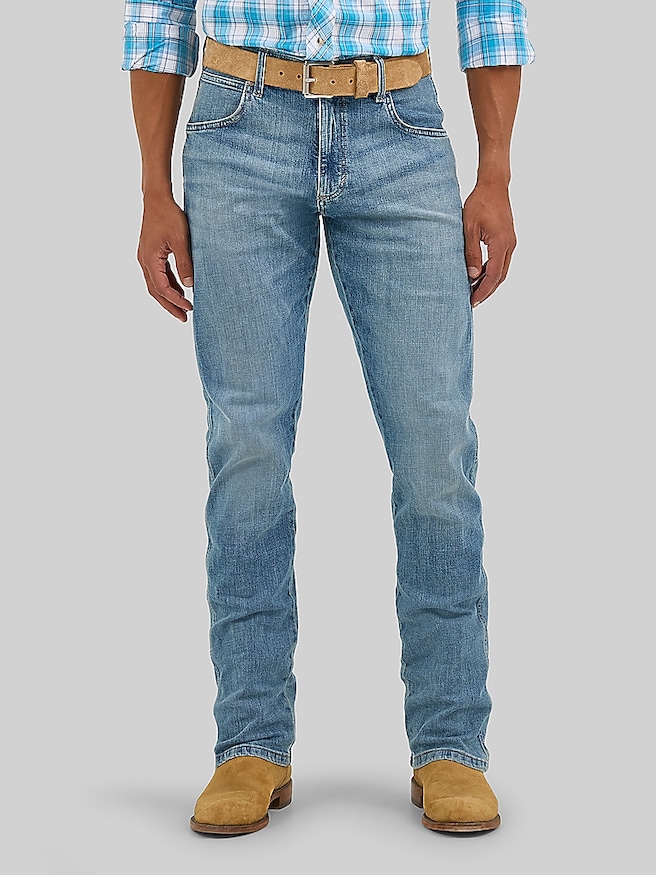
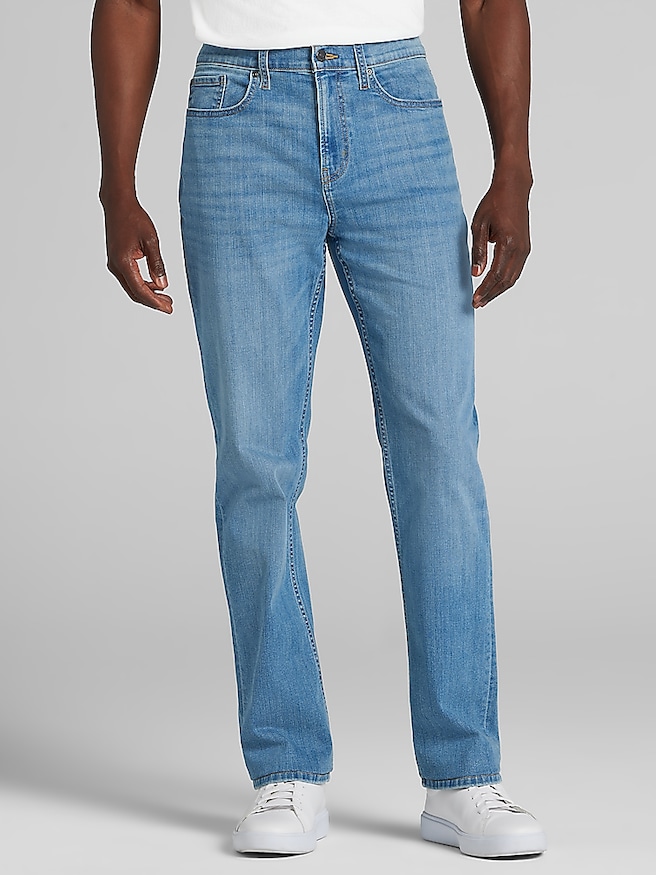
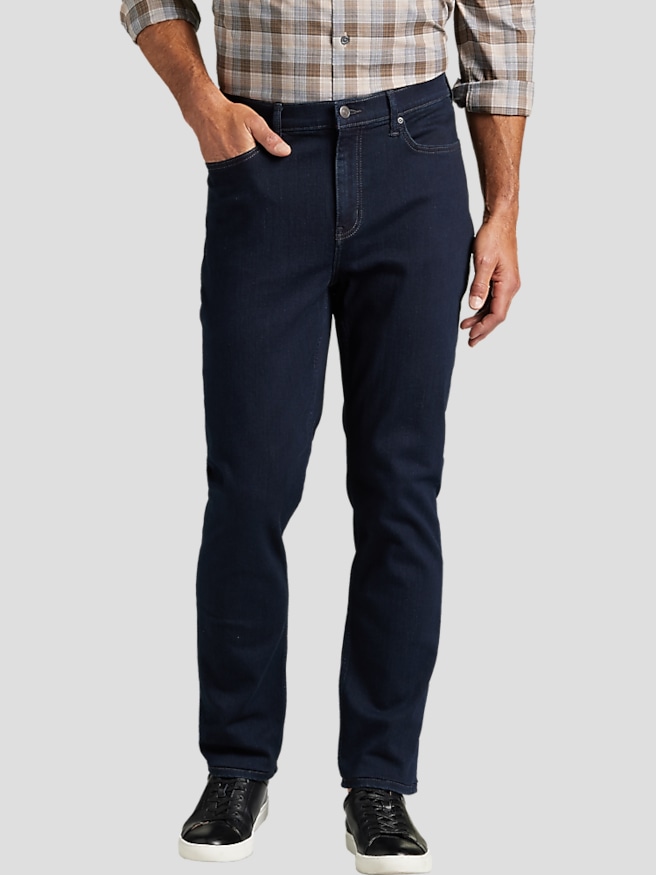
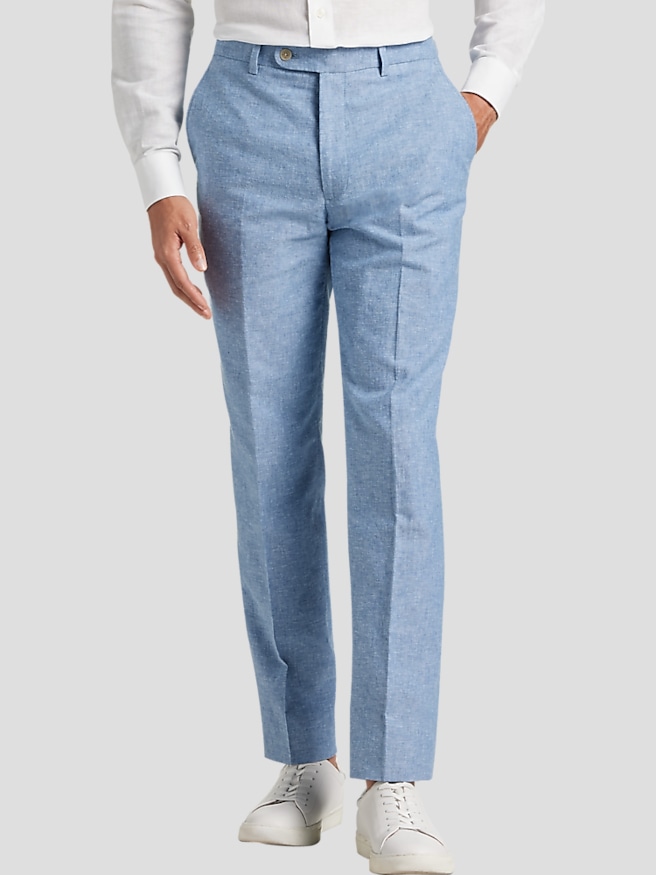
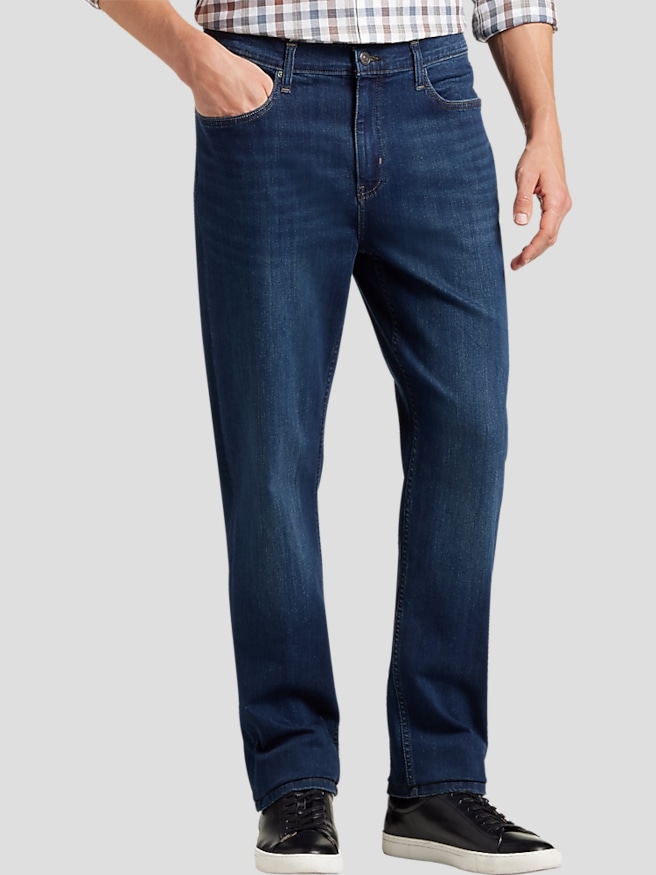
Light blue men's jeans have a relaxed character that comes from more than color alone. A pale denim wash softens the look of a five-pocket design, making the familiar shape feel easygoing without losing the structure that makes jeans useful for everyday dressing. Shades can range from a nearly powder-blue finish to a more pronounced faded blue, with subtle variations around seams, pockets, and the thighs adding depth. Within the broader category of Men's Blue Denim Jeans, these lighter washes offer a distinct alternative to deep indigo: less visually heavy, often more casual, and especially effective alongside simple, well-chosen layers. A white T-shirt and clean sneakers create a straightforward combination for coffee with friends or a casual lunch, while a navy polo adds contrast without making the outfit feel overly coordinated. An Oxford shirt worn untucked can bring a little more definition, particularly when its hem falls neatly rather than covering most of the front pockets. For dinner at a laid-back restaurant, a fine-gauge knit shirt or an unstructured sport coat can sharpen the overall impression while keeping the denim's relaxed personality intact. Texture matters in these combinations. The visible weave of denim works comfortably beside smooth cotton, textured knits, and suede footwear, giving a simple outfit enough detail without relying on bold patterns. Gray, olive, tan, and navy all sit naturally against light blue, while black creates a stronger contrast that can make a clean, unfaded shirt or jacket stand out. Distressing changes the effect, too: pronounced abrasions and torn areas read as distinctly casual, whereas an even wash with minimal wear is easier to pair with a collared shirt. Light blue denim makes sense for errands, informal gatherings, travel days, and workplaces where jeans are permitted. Its role is casual rather than formal, so the setting and dress code still matter, even when the rest of the outfit is polished.
The way light blue jeans sit on the body has as much influence on their appearance as the shade of the wash. A straight fit generally maintains a more consistent width through the leg, creating a familiar silhouette that leaves room without looking oversized. A slim fit follows the leg more closely, while a tapered shape narrows toward the ankle and can give a roomier upper leg a cleaner finish below the knee. Relaxed cuts offer additional ease through the seat and thigh, which can appeal to someone who spends much of the day seated or simply prefers less restriction. These descriptions are useful starting points, but the relationship between the waist, rise, seat, and thigh determines whether a pair feels comfortable in practice. A waistband that stays in place without digging in, pockets that lie reasonably flat, and enough room to bend or sit comfortably are more meaningful than a fit name alone. The hem also affects the finished look: a slight break over the shoe feels traditional, while little or no break creates a tidier line around low-profile sneakers or loafers. Excess fabric pooling at the ankle can obscure that shape. Fabric composition adds another layer to the decision. Cotton denim has a recognizable texture and tends to soften with wear; rigid denim contains no stretch fiber and can feel more structured at first. Blends with elastane or another stretch fiber provide give during movement, although the amount of stretch and the fabric's ability to recover vary by construction. A small stretch percentage does not, by itself, describe how the jeans will feel. Denim weight, weave, and finishing also influence flexibility and substance. Reinforced stress points, secure stitching, and well-constructed pocket openings contribute to durability, especially in areas that experience repeated friction. A lighter wash does not necessarily mean a thinner fabric, and a substantial denim can still have a pale blue appearance. The strongest everyday choice balances the desired silhouette with comfortable movement and fabric suited to the way the jeans will be worn.
Light blue denim benefits from care that preserves both its color and its shape. The care label is the best reference because washing and drying requirements vary with fiber content and finishing. When machine washing is permitted, turning jeans inside out, using a gentle detergent, and washing with similar colors can help limit surface abrasion and unwanted color transfer. Bleach and harsh treatments can alter the wash, sometimes leaving uneven patches rather than a consistent lighter shade. Excessive dryer heat may cause shrinkage or affect stretch fibers, so drying methods deserve the same attention as washing. Air drying, when appropriate for the garment, can reduce heat exposure; smoothing the legs and seams while the fabric is damp helps the jeans dry with less twisting and bunching. Frequent washing is not always necessary after brief, clean wear, but visible dirt and spills should be addressed promptly using methods suitable for the fabric. Pale denim makes some marks more noticeable than dark indigo, particularly around the knees and pocket edges, which is worth considering for activities involving heavy dirt or abrasion. Over time, creases and subtle wear can give the fabric a more individual appearance, while excessive friction or aggressive cleaning can shorten its useful life. Light blue men's jeans can also make a practical gift for someone whose wardrobe already leans toward casual shirts, sneakers, and comfortable everyday clothing. A recipient's usual waist size is only part of the picture; preferred rise, inseam, leg shape, and tolerance for stretch are equally helpful details. Someone who favors a roomy straight leg may not feel at home in a close-fitting tapered cut, even when the waistband measures the same. Familiar preferences make the gift more personal and more likely to become part of a regular rotation. Whether worn for a weekend outing or an ordinary day of appointments and errands, light blue jeans work best when the wash, fit, and fabric feel natural to the person wearing them.