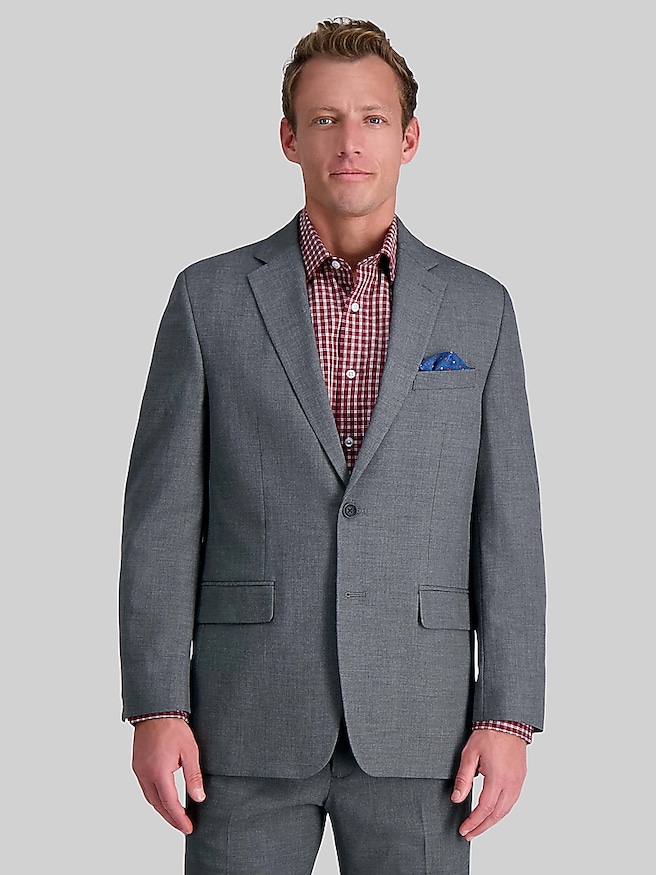
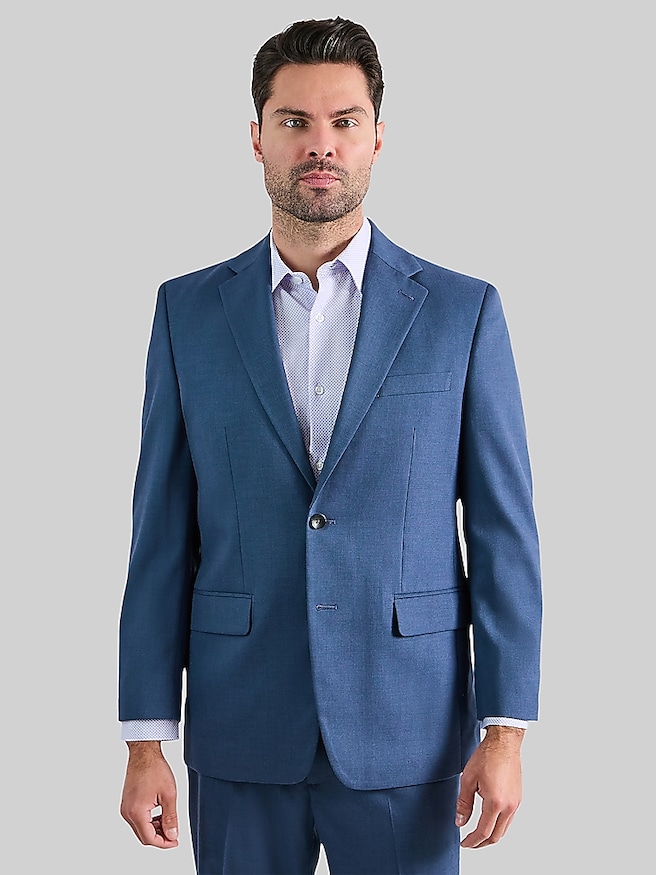
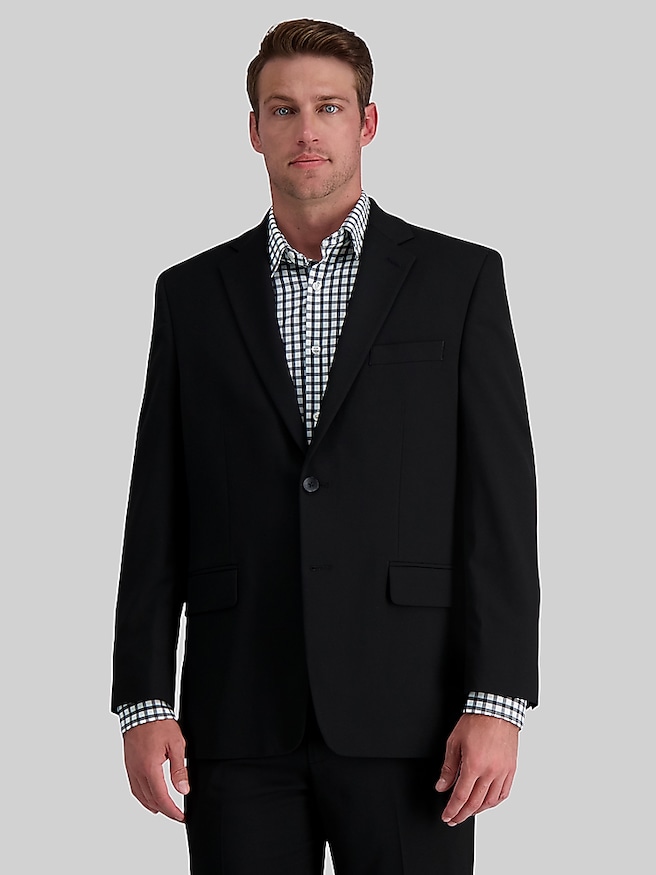
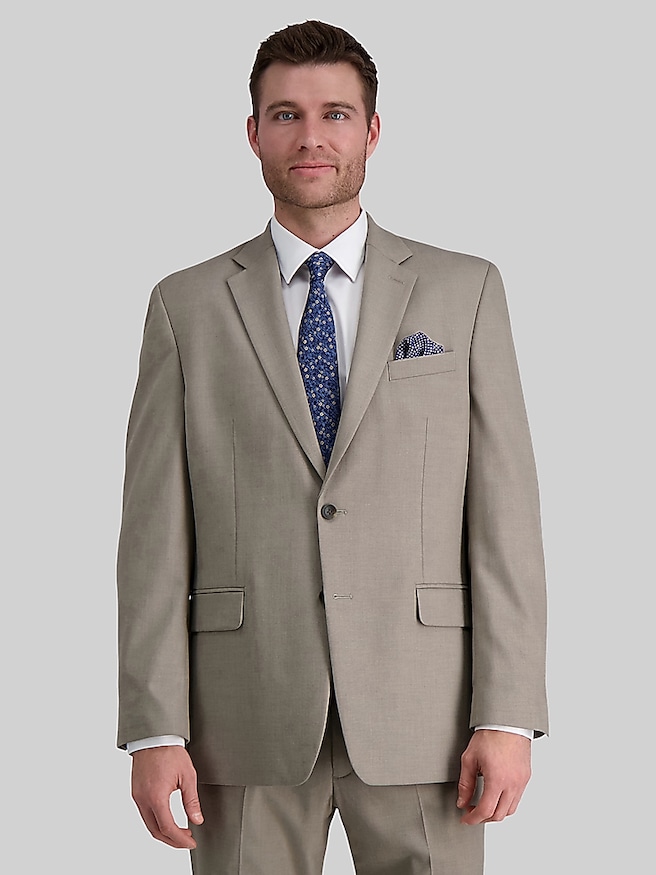
Light blue jackets make a soft, stylish choice for Valentine’s Day, offering an alternative to traditional reds and pinks. A pale blue jacket gives a dinner outfit a sense of occasion without making it look like it was put together around a holiday theme. The shade stands out against charcoal or navy trousers, while a white shirt keeps the contrast crisp. For a table at a neighborhood restaurant, a softly tailored jacket over a fine-gauge knit feels dressed up without looking as formal as a suit. At a restaurant with a dress code or a venue where the evening calls for a tie, a more structured jacket, a pressed shirt, and dark trousers make the color feel polished. Blue can also sit alongside a Valentine’s accent rather than replace it: a muted rose pocket square against powder blue brings in a little warmth without taking attention away from the jacket. The shade itself changes the effect. A gray-leaning blue has a quiet, understated look, especially with charcoal, while a clearer sky blue holds its own next to navy. Cream and pale blue make for a softer combination that suits a daytime date or a relaxed dinner at home. When the jacket is the lightest part of the outfit, darker trousers give the look some definition; when the shirt and trousers are light as well, differences in texture help keep the pieces from blending together. A finely textured weave, for example, stands out against a smooth white shirt even when the colors are close in brightness. The appeal is similar across Solid Color Jackets For Valentine's Day: a single shade can do most of the work, leaving room for a patterned tie or textured knit without making the outfit feel too busy.
The fabric and construction of a light blue jacket matter as much as the shade, particularly when the jacket is meant to work for more than one kind of evening. A smooth wool or wool-blend jacket generally has a clean drape that looks at home with dress trousers, while a matte, textured weave feels less formal alongside chinos. Cotton tends to have a more relaxed appearance and can show creases at the elbows as it breaks in. Fabrics with a little stretch may feel easier to move in, but stretch is no substitute for room through the chest and upper back. A lightly structured jacket follows the body more closely, while a defined shoulder gives the jacket a sharper outline. The difference shows up in everyday moments: reaching across a small table, sitting through a show, or slipping the jacket on over a knit instead of a dress shirt. A good fit starts with shoulders that sit cleanly, lapels that lie flat, and enough room to fasten the jacket without lines pulling away from the button. With a dress shirt, a small amount of cuff showing gives the sleeve a clean finish; over a knit, the sleeve should sit smoothly rather than bunch up at the wrist. Fit is worth considering with the layer most likely to be worn underneath, since a jacket that sits neatly over a thin shirt may pull over a substantial sweater. For repeat wear, details such as secure buttons, pockets that lie flat, and seams that stay smooth through the shoulder and armhole matter more than a dressy finish alone. A jacket with a clean line and easy movement can go from a Valentine’s dinner to a reception or a dinner out with friends without feeling tied to any one occasion.
A light blue jacket can be a thoughtful Valentine’s Day gift for a partner who enjoys getting dressed for a night out, or for someone whose closet is mostly navy, gray, and white and could use a little color. The best clue is often a jacket the recipient already reaches for. Its shoulder width, sleeve length, and room through the chest offer a better starting point than a shirt size alone, and its shape can reveal whether the recipient likes a defined shoulder or a softer, more relaxed fit. Usual plans matter, too. Someone who wears chinos to dinner may get more use out of a textured jacket, while someone who often pairs a jacket with a dress shirt may prefer a smoother finish and a cleaner line. Light blue can show small marks more readily than navy, especially at the cuffs and pocket edges, so care is part of what makes the jacket practical. The care label is the best source for cleaning instructions, since the outer fabric and lining may need to be treated together. After an evening out, airing the jacket before putting it away and hanging it on a broad, shaped hanger can help preserve the shoulders. Emptying the pockets keeps keys and a phone from weighing down the front, and leaving space between hangers helps prevent the sleeves and lapels from getting crushed. If a mark needs attention, rubbing can spread it or disturb the finish, so any spot treatment should follow the care instructions. With the right fit and a fabric suited to regular use, a light blue jacket can become as easy to reach for as a darker one. Worn with charcoal trousers and a white shirt, it looks composed enough for a special dinner; worn with a knit and chinos, it brings the same color to plans that call for something less formal.