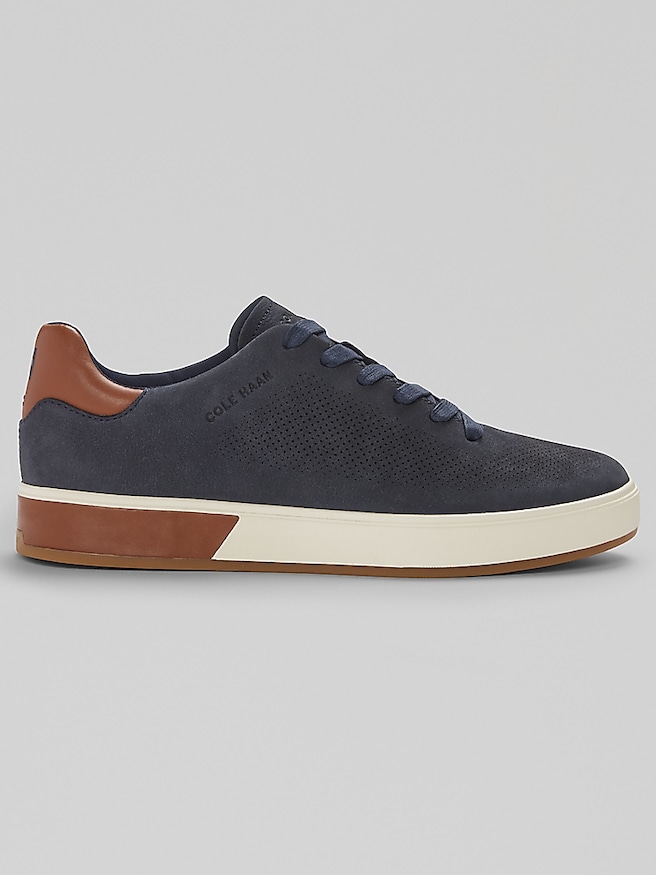
Leather sneakers for men bring the texture and character of leather to footwear designed for everyday wear. Their appeal lies in the balance: less formal than lace-up dress shoes, more polished than many athletic styles, and easy to work into outfits that do not need to look overly dressed. A clean, low-profile pair can sit neatly beneath straight-leg jeans, while a slightly more substantial silhouette works well with chinos and a knit polo. With tailored trousers and an unstructured jacket, understated leather sneakers can create a relaxed look for a dinner reservation or a workplace with a flexible dress code. The details make a noticeable difference. Minimal stitching, subtle perforations, and a streamlined sole tend to keep the look restrained; contrasting panels, pronounced tread, and thicker soles give the shoe a more casual presence. White leather creates a crisp contrast with darker pants, black has a quieter effect, and brown shades pair naturally with denim, navy, olive, and beige. An everyday wardrobe built around Mens Leather Casual Sneakers can accommodate everything from a casual lunch to an evening gathering without making footwear the focal point. Leather itself also deserves attention. Smooth finishes emphasize clean lines, while pebbled textures add depth and can make minor surface marks less noticeable. Full-grain leather retains the hide’s natural surface, and top-grain leather has been refined for a more uniform appearance. Neither label alone tells the whole story of a shoe’s comfort or construction, so the lining, stitching, sole, and overall shape matter as well. Some leather develops a softer feel and subtle creasing with wear, giving the shoes a lived-in character rather than a permanently untouched appearance. The best match is a style whose proportions suit the clothes already in regular rotation. A narrow, simple sneaker complements tapered pants, while a broader shape often looks more balanced beneath a fuller leg. Pants that finish near the top of the shoe allow the silhouette to show without excess fabric bunching around the ankle.
Fit determines whether that polished appearance translates into a shoe that feels good through an ordinary day. Leather can soften with use, but a sneaker should not require uncomfortable stretching before it becomes wearable. Toes need enough space to move naturally, the ball of the foot should align with the widest part of the shoe, and the heel should feel secure without rubbing. A little room at the front is useful; repeated sliding inside the shoe is not. Trying sneakers with the type of socks intended for regular wear gives a more realistic sense of fit than judging them with unusually thick or thin socks. Width is especially important because a longer size does not necessarily solve pressure across the forefoot. Laces can fine-tune the hold over the instep, but they cannot correct a shape that is fundamentally too narrow. Inside the shoe, lining materials affect the feel against the foot, and padding around the collar and tongue can soften contact at common pressure points. Cushioning underfoot may make standing and walking more comfortable, though a thick sole does not automatically provide better support. Flexibility at the forefoot, a stable heel, and a secure upper all contribute to how the shoe moves. For a day that includes a commute, time at a desk, and a walk to lunch, comfort should remain consistent across those activities. Leather casual sneakers are generally intended for everyday movement rather than running workouts or court sports, which call for footwear designed around those demands. Durability also depends on more than the upper material. Even stitching, securely attached soles, and reinforcement near lace openings are useful construction details to assess. Rubber outsoles can provide a practical combination of flexibility and traction, with tread patterns influencing how the shoe feels on common walking surfaces. Areas that bend repeatedly will develop creases, particularly across the toes; this is normal for leather footwear. Deep cracking, loose seams, or uneven sole wear deserve closer attention, since they can affect both appearance and comfort over time.
Regular care helps leather sneakers retain the finish that makes them useful across so many outfits. A soft brush or clean cloth can remove loose dust before it becomes embedded around seams and lace openings. For smooth leather, a lightly damp cloth often handles everyday surface marks, followed by gentle drying with a separate cloth. Cleaning products should be suitable for the specific leather finish and tested on an inconspicuous area first. Suede and nubuck need their own brushes and cleaners rather than the same treatment used for smooth leather. Conditioner may help certain smooth leathers stay supple, but applying too much can leave residue or alter the appearance, so the manufacturer’s care directions should take priority. Light-colored leather benefits from prompt attention to scuffs, while darker finishes can still collect dust along the stitching and sole edge. Cleaning the outsole separately keeps grime from spreading onto the upper. Laces can also affect the overall impression: a tidy upper looks less finished when the laces are heavily soiled or frayed. After cleaning, shoes should dry naturally away from direct heat, which can damage leather and adhesives. Breathable storage, occasional rotation between pairs, and shoe trees appropriate to the shape can help preserve form and allow the interior to dry between wears. These habits are especially worthwhile for sneakers worn repeatedly to work, social outings, and weekend errands. Leather sneakers can also make a thoughtful birthday or graduation gift for someone who appreciates practical clothing with a refined finish. The most useful choice reflects the recipient’s habits rather than an imagined wardrobe: a person who lives in denim may favor a textured brown sneaker, while someone who regularly wears simple tailored separates may prefer a smooth, understated design. Familiar sizing and preferred width matter more than choosing a dramatic silhouette. Whether worn with a button-down shirt and chinos or a plain T-shirt and jeans, leather sneakers work best when their shape, comfort, and level of polish feel at home in everyday life.