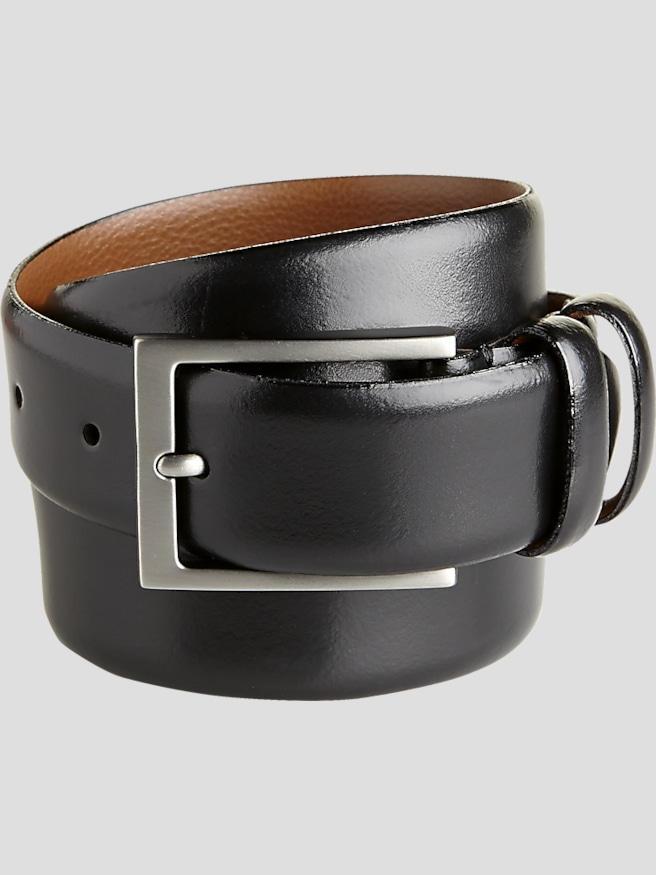
Black leather belts combine practical support with a clean finishing detail, bringing definition to the waistband without competing with the rest of an outfit. Their appeal lies in that balance: a smooth black strap can look understated with charcoal dress pants, crisp with a tucked-in white shirt, or relaxed against dark denim. For anyone building a coordinated wardrobe, black leather provides a dependable starting point, especially when black shoes are already part of the regular rotation. The character of the belt comes from more than its color. A narrow strap, restrained buckle, and lightly polished surface generally suit tailored clothing, while a wider profile, visible grain, and substantial hardware feel more at home with jeans or sturdy chinos. Dress belts commonly measure about 1 to 1¼ inches wide, while casual styles often fall around 1½ inches; the belt loops and proportions of the trousers matter more than a rigid rule. A belt should pass through the loops easily and sit flat rather than bunching the fabric at the waist. With a navy suit and black lace-up shoes, a simple black leather dress belt creates a consistent line between the shoes and tailoring. With a polo shirt and gray chinos, a matte finish can make the same color feel less formal. Buckle finishes offer another subtle point of coordination. Silver-tone hardware has a cool, quiet look, while warmer metallic finishes create more contrast against black leather. Matching every metal detail precisely is unnecessary, though a similar finish on a watch and buckle can make an outfit feel considered. For a broader look at the category, Men's Black Belts connects this leather-focused selection with the wider range of black belt styles. The most useful choice is one whose width, surface, and buckle fit the clothing it will accompany, whether that means office trousers, weekend denim, or dress pants for a celebration.
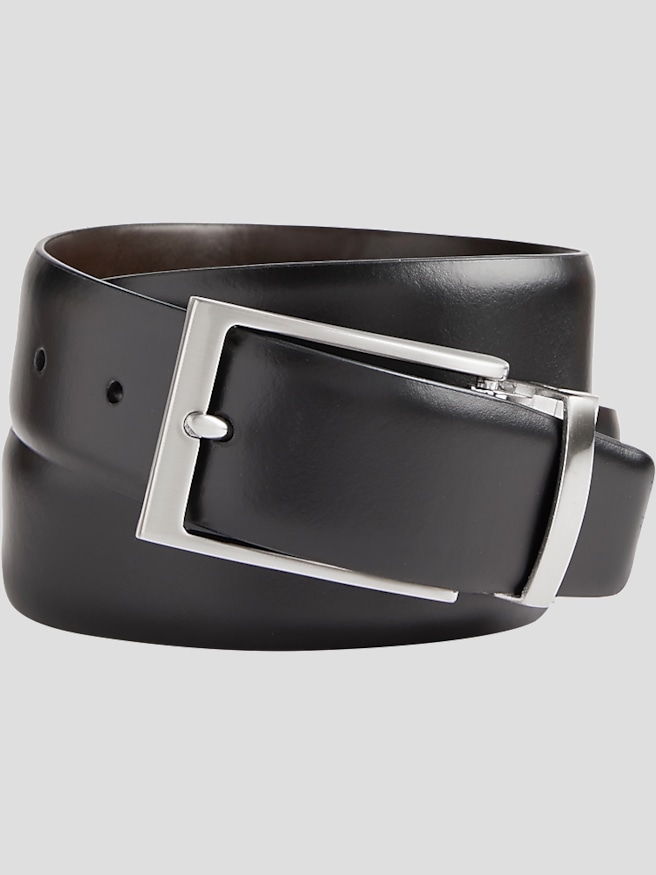
Leather construction influences how a black belt feels from the first wear and how it holds its shape over time. Full-grain leather retains the hide’s natural grain surface and may show small variations in texture, giving the strap character rather than a perfectly uniform appearance. Top-grain leather has been refined at the surface for greater consistency and can also serve well in a regularly worn belt. The phrase “genuine leather” identifies leather content but does not, by itself, establish a particular level of quality or durability. Bonded leather contains leather fibers or pieces joined with binders and generally does not offer the same long-term resilience as a well-made solid leather strap. Cowhide is a common belt material because it can provide a useful balance of firmness, flexibility, and wear resistance, though tanning, thickness, finishing, and construction all affect performance. A dress belt may use a leather face and a separate backing to create a slim, structured profile; a casual belt may have a thicker, more substantial feel. Neither thickness nor stiffness alone proves quality. A comfortable strap should bend around the waist without feeling brittle, and its edges should feel smooth rather than rough against clothing. Neat stitching, securely attached hardware, and a keeper loop that holds the loose end close to the strap contribute to everyday usefulness. Black finishes also vary: some have a glossy, uniform surface, while others allow more natural texture to remain visible. An embossed pattern can add dimension to an otherwise simple outfit without introducing another color. Traditional prong buckles provide familiar adjustment through spaced holes, while ratchet mechanisms use smaller adjustment increments that can make seated comfort easier to fine-tune. Reversible designs offer two wearing surfaces, although their turning hardware benefits from gentle handling. For frequent wear, the strongest combination is sound material, careful construction, and a buckle mechanism that feels secure and straightforward to operate.
Fit determines whether a black leather belt feels like a natural part of an outfit or an accessory that needs constant adjustment. Many traditionally sized belts are selected about two inches larger than the labeled trouser waist, but sizing conventions vary, and the maker’s measurements should take precedence. Measuring a comfortable existing belt from the point where the strap meets the buckle to the hole most often used provides a useful comparison. On a prong-buckle belt, fastening near the middle hole usually leaves room for adjustment in either direction and a manageable length of strap beyond the keeper. The belt should hold the waistband comfortably without digging in when seated or pulling the trousers into folds. Someone who spends much of the day at a desk may appreciate closely spaced adjustments, while a person moving between meetings and evening events may favor a low-profile buckle that stays unobtrusive under a jacket. Trim-to-fit construction can offer a more customized length, but only belts specifically designed for trimming should be shortened, following their supplied directions. Black leather belts also make practical gifts for graduations, birthdays, or a first professional role when the recipient’s size and clothing preferences are known. A simple finish and modest buckle often work across more outfits than conspicuous hardware. Care helps preserve that usefulness: surface dust usually needs only a soft cloth, and minor dirt can often be lifted with a slightly damp cloth before the leather dries naturally away from direct heat. Soaking, harsh cleaners, and heavy applications of conditioner can damage the finish or affect the strap’s structure. Any leather-care treatment should suit the manufacturer’s guidance and be tested in an inconspicuous area, since some finishes need little additional conditioning. Hanging a belt straight or storing it in a loose coil limits sharp creases. With an appropriate fit and thoughtful care, black leather can develop gentle signs of use while remaining a polished, functional part of everyday dressing.