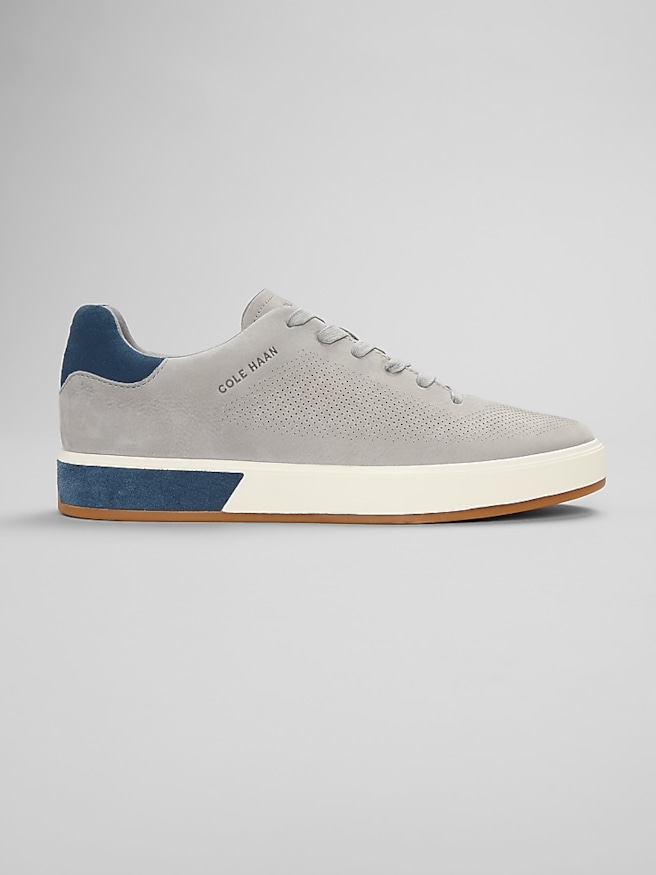
Khaki sneakers are casual shoes in an earthy neutral color that can range from sandy beige and warm tan to muted shades with a slight olive undertone. Their appeal is the balance they bring to an outfit: softer than black, less stark than bright white, and easy to wear with many of the colors already found in a casual wardrobe. With dark indigo jeans, khaki adds a light contrast without making the shoes the center of attention. With navy chinos and a knit polo, the same color feels relaxed but considered. Gray trousers, an olive overshirt, or a cream crewneck also work well with this understated palette. The precise shade matters, especially when pairing sneakers with khaki pants. A noticeable difference between the shoes and trousers usually looks more intentional than two nearly matching tones; darker olive chinos or lighter stone-colored pants can create that separation. Shape contributes just as much as color. A low-profile sneaker with minimal detailing keeps the overall look clean, while a thicker sole or layered upper gives the outfit a more athletic character. Smooth finishes tend to look sharper alongside an unstructured blazer, and textured uppers feel natural with denim and other casual fabrics. For workplaces that allow sneakers, a tidy, simple silhouette can complement a button-down shirt and chinos without looking like gym footwear. Casual dinners, museum visits, coffee stops, and everyday errands are equally natural settings for this color. Khaki sneakers remain casual shoes, so dress codes that call for formal footwear still warrant a dress shoe. The contrast of Brown White Sneakers offers a related neutral look when a two-tone design better suits the outfit. In either palette, the strongest combinations give the footwear a clear place in the outfit rather than trying to match every detail exactly.
Materials influence how khaki sneakers look, feel, and hold their shape through repeated wear. Canvas has a woven texture that suits laid-back outfits and often creates a lighter, more flexible feel, although breathability depends on the lining and overall construction. Smooth leather gives the color a more polished surface and can develop creases that reflect regular use. Suede adds a soft, brushed texture, making even a simple design feel more dimensional; its nap can also make the same shade appear lighter or darker as the surface changes direction. Synthetic uppers vary considerably, from structured leather-like finishes to flexible textiles, so appearance alone does not tell the whole story about comfort or durability. Stitching around high-flex areas, secure attachment between the upper and sole, and a lining that feels smooth against the foot are useful construction details. Rubber outsoles can provide a durable contact surface, but traction depends on the tread pattern, compound, and the surface underfoot rather than color or sole thickness alone. Fit deserves equal attention. A comfortable sneaker leaves space for the toes to move without letting the foot slide forward, holds the heel securely without rubbing, and does not squeeze across the widest part of the forefoot. Trying shoes with the socks intended for everyday wear gives a more realistic sense of the fit. Feet can also differ slightly in size, making comfort on both sides more important than relying only on the number printed inside the shoe. Cushioning may soften each step, but a plush footbed does not automatically provide the structure every foot needs. For someone who uses an orthotic, a removable insole and sufficient interior depth can matter more than extra padding. Sneakers worn for commuting, standing at a casual gathering, or exploring a city should feel comfortable from the outset; pressure points and persistent heel movement are not features to overlook in the hope that wear will resolve them.
Regular care helps preserve the subtle color that makes khaki sneakers so useful. Dust and surface marks can change the appearance of light earthy tones, especially around the toe and along the edge of the sole. Care should follow the material and the manufacturer's instructions rather than a single cleaning method for every sneaker. Smooth finished leather often responds well to gentle wiping with a soft cloth and a suitable leather cleaner, while suede generally needs a dedicated brush and products intended for its textured surface. Canvas and synthetic textiles may allow mild spot cleaning, but machine washing is not appropriate unless the care instructions specifically permit it. Testing a cleaner on an inconspicuous area helps reduce the risk of discoloration, and allowing footwear to air-dry away from direct heat protects adhesives and material finishes. A clean outsole edge also makes a noticeable difference when sneakers are paired with chinos or other tailored casual clothing. Rotating between pairs gives the interior time to dry between wears, and loosening the laces before taking shoes off helps avoid crushing the heel counter. Durability depends partly on use: a lifestyle sneaker suited to errands and casual outings is not necessarily built for running, court sports, or demanding workouts. Keeping the intended activity in mind helps set realistic expectations for support and wear. For travel, the most useful pair is one that already fits comfortably and coordinates with several outfits, reducing the need to pack extra shoes. Khaki sneakers can also make a thoughtful gift for someone who favors understated clothing, provided the size, preferred width, and usual sneaker shape are known. A person who wears mostly navy, gray, denim, and earth tones is likely to find the color easy to incorporate. The lasting appeal is straightforward: a versatile neutral, a comfortable fit, and a design that feels at home in everyday life without looking overly athletic or overly dressed up.