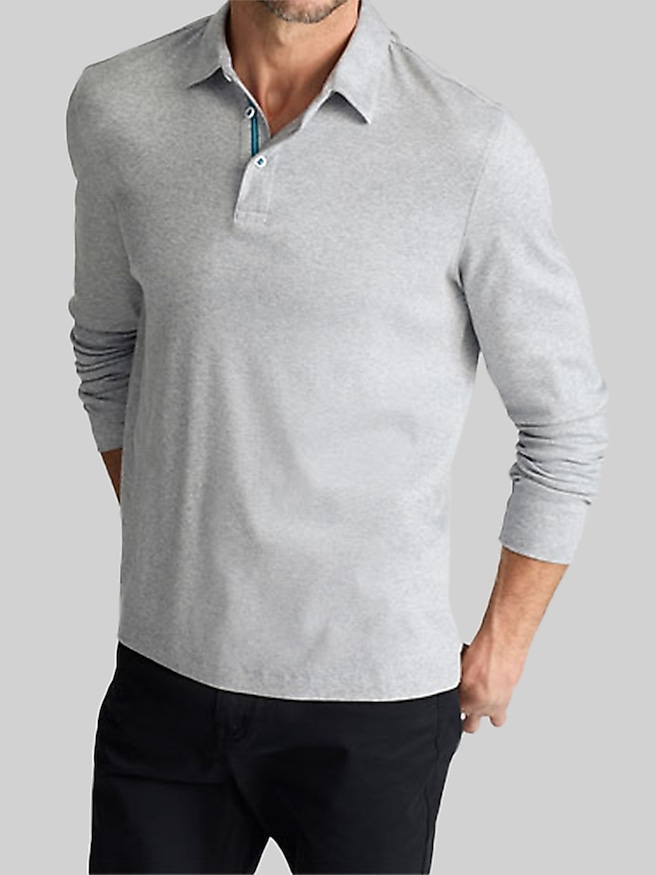
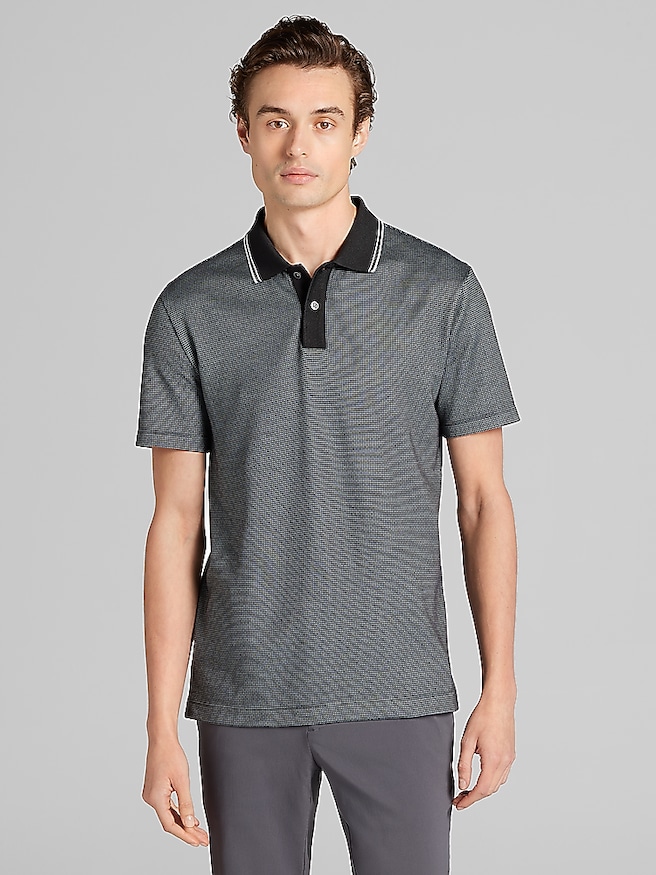
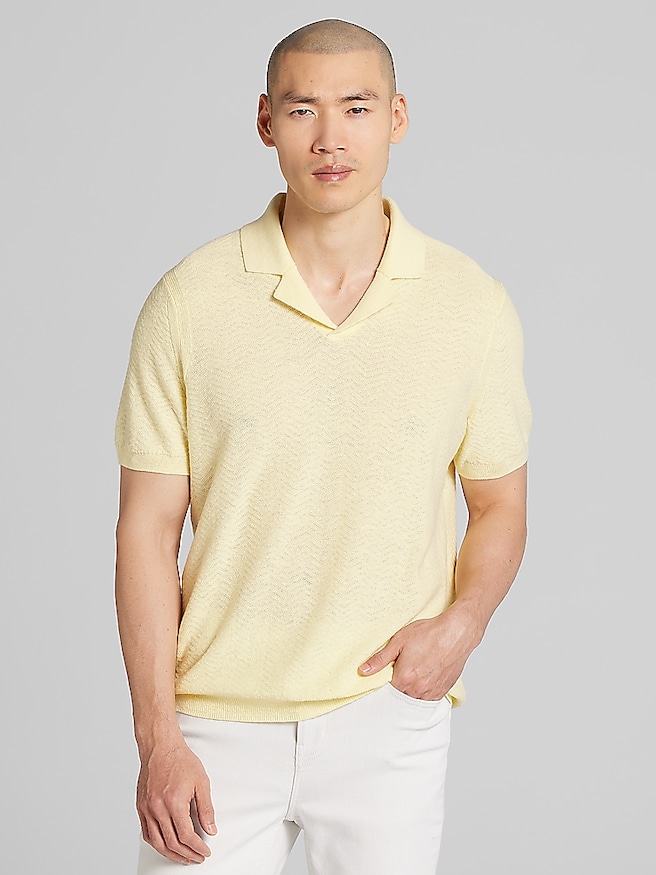
A johnny collar polo is a polo shirt with a buttonless, open V-neckline framed by a folded collar. Instead of the adjustable buttoned placket found on a traditional polo, it has a fixed opening that gives the front a clean, uncluttered appearance. That neckline is the defining feature; the shirt itself can have a close, tailored shape or a more relaxed silhouette, depending on its cut and fabric. The result sits comfortably between a casual T-shirt and a button-front shirt, with enough structure to look intentional without feeling overly dressed. Its connection to midcentury knitwear gives it a subtle vintage character, especially in ribbed, textured, or sweater-knit constructions. A smooth jersey version creates a simpler look, while piqué adds a lightly pebbled surface and a bit more body. Fine-gauge sweater knits can bring a softer drape and more pronounced texture, making the collar, cuffs, and hem part of the overall design. Cotton is a familiar choice for its soft feel and breathability, though the weight and construction of the fabric matter as much as the fiber itself. A lightweight cotton jersey will behave differently from a dense cotton rib, even when both have the same fiber content. Blends containing viscose can have a fluid feel and gentle sheen, while polyester can contribute strength and shape retention. A small amount of elastane may add stretch, particularly through the chest and shoulders. None of those details automatically makes one polo better than another; they influence how the shirt feels against the skin, how closely it follows the body, and how it works with the rest of an outfit. For someone drawn to the ease of a polo but looking for a neckline with a little more personality, the johnny collar offers a recognizable distinction without relying on a bold pattern or prominent decoration.
The most convincing fit gives the open collar room to sit naturally while keeping the body of the shirt neat. Shoulder seams generally look balanced near the edge of the shoulder, and the chest should have enough ease that the neckline does not pull wider when the wearer moves. A johnny collar is meant to stay open, but an opening that spreads excessively or collapses against the chest can suggest that the size or cut is not quite right. Sleeve length and width also affect the overall impression. Short sleeves that follow the upper arm without gripping it create a cleaner line, while a roomier sleeve gives the shirt a more casual attitude. At the hem, an untucked polo usually looks balanced when it covers the waistband without extending so far that it overwhelms the trousers. Ribbed hems may rest closer to the waist, creating a slightly bloused shape; straight hems tend to hang more freely. These details become especially noticeable in simple outfits. With tailored chinos and leather loafers, a johnny collar polo can feel appropriate for a business-casual office that permits knit shirts. With dark jeans and understated sneakers, the same neckline gives a dinner outfit more definition than a basic crewneck. Under an unstructured jacket, a finer knit can lie smoothly through the sleeves and torso, provided the jacket has enough room to prevent bunching. The collar should sit comfortably at the jacket opening rather than bunching beneath it. Color changes the effect as well: navy, charcoal, cream, and muted earth tones are easy to combine with familiar wardrobe staples. The Black Polo Shirt Mens collection offers another understated color direction, with black providing a clear contrast against tan chinos or light gray trousers. Textured fabrics can add depth to a single-color outfit, while stripes or contrast trim draw more attention to the shirt itself. The strongest combinations give the neckline space to stand out rather than competing with several equally prominent details.
A johnny collar polo earns its place in a wardrobe through repeated use, so fabric recovery, construction, and care deserve attention alongside appearance. A collar with enough body to hold its shape helps preserve the shirt’s defining feature, while even stitching and neatly finished seams contribute to a polished look. Ribbed cuffs and hems should stretch comfortably and settle back rather than remaining loose after wear. Dense knits can feel substantial, but weight alone is not a measure of durability; fiber quality, yarn structure, finishing, and everyday friction all play a role. Textured surfaces may catch on rough bag straps or hook-and-loop fasteners, and soft yarns can develop pilling where fabric rubs repeatedly. Following the care label is especially important because a cotton piqué polo and a delicate sweater-knit polo may need very different treatment. When machine washing is permitted, turning the shirt inside out and washing it with similar colors can help protect its surface. Excessive heat may cause shrinkage or affect stretch fibers, so drying instructions matter just as much as washing instructions. Some knits need to dry flat to maintain their proportions, and heavier sweater-style polos often keep their shape better folded than suspended from a hanger. Any pressing or steaming should stay within the label’s recommendations, with particular care around the collar and textured areas. Those practical details make a difference for someone who wants a dependable shirt for office days, restaurant reservations, family gatherings, or travel. The style also makes a thoughtful gift for a dad, brother, partner, or friend who already wears polos but would appreciate a change from the familiar button-front neckline. A preferred color, familiar fit, and manageable care routine are more useful starting points than an unfamiliar statement pattern. Whether worn as an everyday staple or saved for plans that call for a little extra polish, a well-chosen johnny collar polo brings together an open neckline, comfortable knit construction, and a distinct but approachable sense of style.