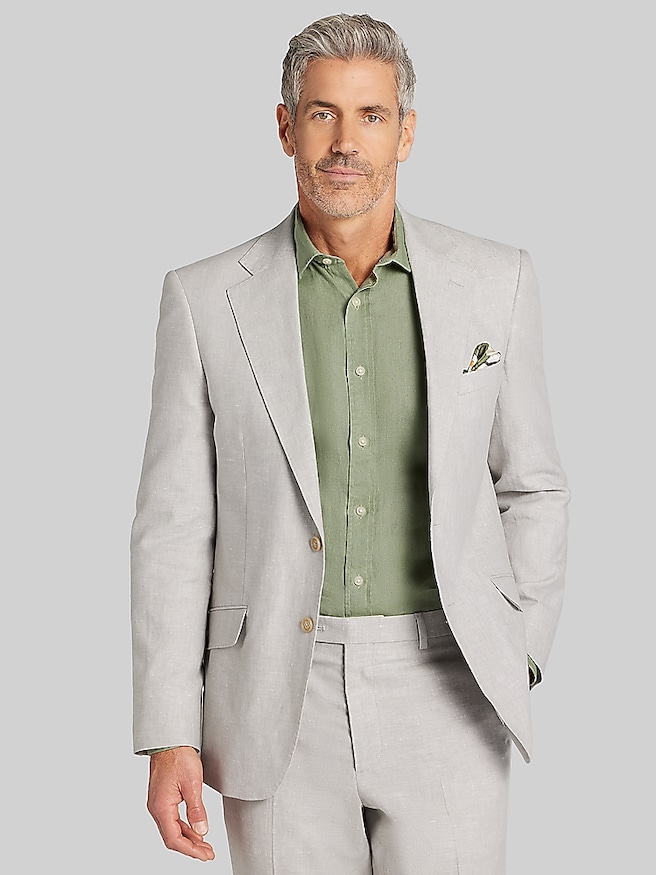
Holiday performance suits bring a tailored appearance to celebrations that involve more than standing still. An office reception can lead into a seated dinner, a family gathering can mean several hours of conversation and photographs, and a New Year’s Eve party may keep the evening going well beyond the first toast. Performance tailoring is designed with that movement in mind, using fabric construction, stretch, or specialized finishes to support comfort and help maintain a neat appearance. The exact benefits depend on the garment: stretch does not automatically mean wrinkle resistance, and a lightweight fabric is not necessarily moisture-wicking. Wool offers natural resilience and breathability, while wool blends can combine a traditional tailored look with added flexibility or easier maintenance. Some synthetic blends are designed for shape retention and resistance to creasing, though fiber content alone does not tell the whole story. Fabric weight, weave, lining, and construction all influence how a suit feels through a long event. A softly textured finish can lend depth to holiday dressing without looking flashy, while a smoother surface creates a crisp backdrop for a patterned tie or textured shirt. Navy and charcoal provide understated foundations for gatherings with colleagues, relatives, or friends; deeper colors and subtle patterns can give the same tailored outline a more celebratory character. Holiday performance suits are especially useful for people who move between professional and social settings, travel to celebrations, or prefer clothing that accommodates sitting, walking, and dancing without feeling restrictive. Their appeal is practical rather than purely technical: a jacket should still drape cleanly, trousers should keep their shape, and the complete outfit should feel appropriate when the invitation calls for polished attire. Performance features support that experience, but they do not replace thoughtful fit or determine the dress code. A tailored suit can work beautifully for many holiday occasions, while an invitation specifying black tie generally calls for a tuxedo rather than a standard business-style suit.
Fit gives a performance suit its structure, even when the fabric has generous stretch. The shoulders should follow the body without extending noticeably beyond it, and the jacket collar should rest close to the shirt collar rather than pulling away at the back. When the jacket is buttoned, the front should lie relatively smooth; pronounced pulling around the button often signals that more room is needed. Comfort through the chest and upper arms matters during everyday gestures, from reaching across a dinner table to greeting someone with a handshake. Stretch can make those movements easier, but it should not be used to compensate for a jacket that is too small. A slim fit generally follows the torso and legs more closely, while a roomier cut provides additional ease through the chest, seat, and thighs. Neither silhouette is automatically more polished; proportion and clean drape matter more than the label. Trousers should sit securely at the intended waist position without needing a tightly cinched belt, with enough room through the seat to sit comfortably. The hem can have little break or a more traditional break over the shoe, depending on the desired silhouette, but excess fabric pooling at the ankle can interrupt an otherwise sharp outfit. Sleeve length also changes the impression of fit, with a small amount of shirt cuff providing a clean finish. For holiday dinners that involve moving between a reception area and a crowded table, a breathable shirt and a comfortable waistband can matter as much as the jacket’s appearance. Layering deserves similar attention: a fine-gauge knit adds texture but needs enough space beneath the jacket to avoid bunching at the sleeves. For gifting, performance tailoring can be a thoughtful choice for someone beginning a professional role, attending frequent celebrations, or refreshing formal clothing. Familiarity with the recipient’s measurements, preferred cut, and usual dress requirements is more useful than guessing from casual clothing sizes, since suit proportions and personal preferences can vary considerably.
Holiday tailoring also benefits from details that make repeated wear and travel more manageable. A fabric with good recovery can help trousers regain their line after sitting, while a well-constructed jacket should settle naturally across the shoulders when put back on. Wrinkle-resistant finishes may reduce visible creasing, but no tailored garment is entirely unaffected by a tightly packed suitcase or hours folded over a chair. For a trip that includes a holiday party, a garment bag can protect the suit from abrasion, and unpacking upon arrival gives the fabric time to relax before dressing. Heavy objects in jacket pockets can distort the front panels, so keeping keys and bulky accessories elsewhere helps preserve the silhouette. After an event, allowing the suit to air out on a broad, shaped hanger supports the shoulders and gives moisture time to dissipate. Trousers benefit from being hung neatly rather than left folded at the knee. Care should always follow the garment label, especially with stretch fibers, specialized finishes, or structured linings; machine washability should never be assumed from the word “performance.” Gentle brushing can remove surface dust, and appropriate professional cleaning can address soil without making cleaning after every brief wear a habit. Heat also deserves caution, since aggressive pressing or steaming can affect certain fabrics and finishes. Durability comes from both construction and these small routines: protecting the shoulder shape, avoiding overloaded pockets, and allowing time between wears can help preserve a polished appearance. Styling can then stay simple. A crisp shirt and restrained tie suit a company celebration, while a fine knit and polished shoes can soften the look for a less formal gathering. For occasions that leave room for either a coordinated suit or a separate jacket, holiday suits and blazers offer related approaches to festive tailoring. The strongest choice is one that fits the invitation, feels comfortable throughout the celebration, and remains useful for dinners, milestone events, and dressed-up evenings beyond the holiday calendar.