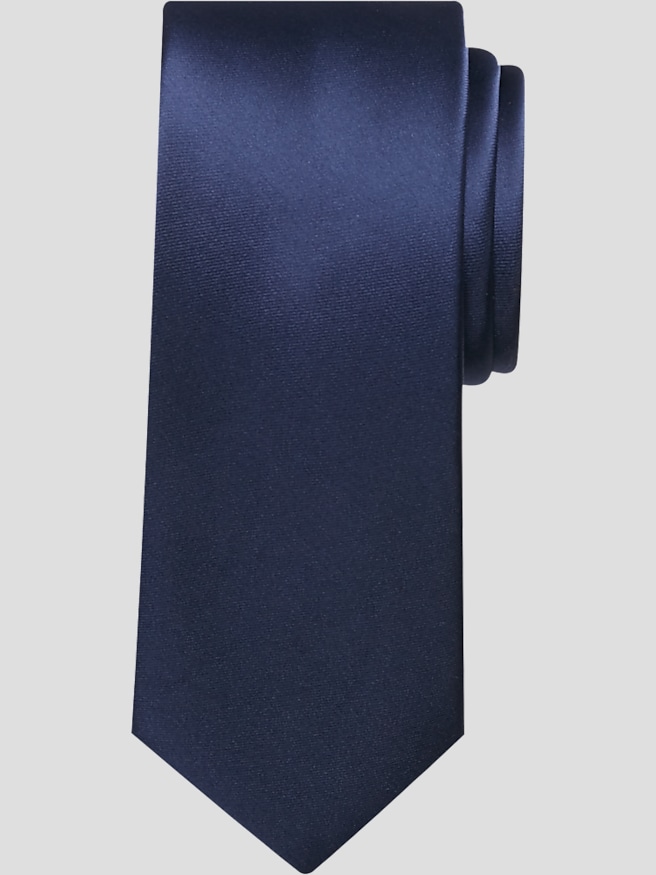
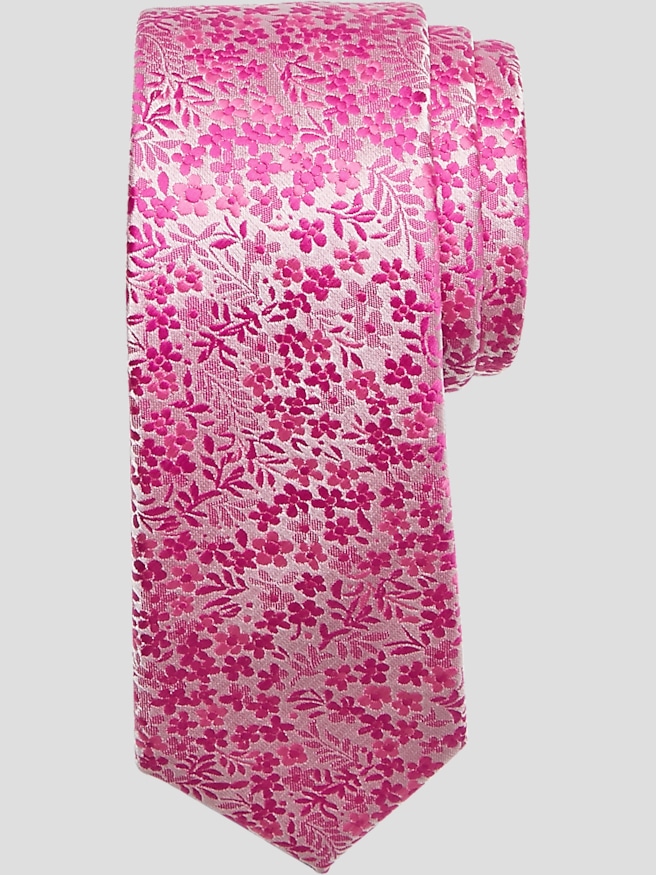
Holiday neckwear includes neckties and bow ties that bring festive color, seasonal patterns, or a dressier finish to an outfit for holiday gatherings. From a Thanksgiving dinner to an office celebration, Christmas party, Hanukkah gathering, or New Year’s Eve reception, the right neckwear can reflect the occasion without overwhelming the rest of the look. Deep burgundy, forest green, midnight blue, and silver tones work naturally with familiar suit colors, while a subtle gold accent can add warmth to a dark jacket and crisp white shirt. A solid tie with a textured weave creates a different impression from a smooth, lustrous tie in the same shade: the first feels understated and tactile, while the second catches the light and leans more formal. Holiday motifs offer another way to express personality, whether the pattern is recognizable across the room or reveals its festive character only up close. Small repeating designs tend to blend easily with tailored clothing, while larger novelty patterns make the neckwear a more prominent part of the outfit. For a workplace gathering that moves from an afternoon meeting to an evening dinner, a restrained pattern can feel appropriate in both settings. At a lively family celebration, a more playful design can become part of the tradition, especially when it returns in photographs year after year. Pattern scale matters as much as color: a small tie motif has more definition against a solid shirt, while broad stripes or larger geometric shapes can stand apart from a fine shirt check. Coordinating does not require every accessory to match. A pocket square that picks up one secondary color in the tie often looks more natural than an identical pattern repeated throughout the outfit. The result can be festive and personal while still feeling like clothing chosen for the person wearing it, rather than a costume reserved for a single evening.
Materials, construction, and proportions influence how holiday neckwear looks and feels over the course of an event. Silk is valued for its drape and depth of color, though its finish can range from smooth and reflective to textured and relatively matte. Wool and wool-blend ties bring a softer surface that pairs comfortably with flannel, tweed, and other textured tailoring. Knitted neckwear has a more relaxed character, with visible texture that can soften the formality of a jacket and collared shirt. Polyester can hold vivid colors and defined patterns, with care requirements that depend on the fabric and construction. The fiber label is only part of the story: the weave, lining, and overall thickness also affect the knot and the way the tie hangs. A substantial tie may form a fuller knot, while a lighter fabric can sit more neatly beneath a closely fitted collar. With a conventional necktie, the tip generally looks balanced when it reaches near the waistband while the wearer is standing naturally. Torso length, trouser rise, collar size, and knot choice all affect where that tip lands, so length deserves attention alongside the pattern. Tie width also works in relation to jacket lapels and the overall silhouette; a very narrow tie can look disconnected from broad lapels, just as an unusually wide tie can dominate a slim jacket. A four-in-hand knot offers a slightly asymmetric shape that suits many everyday dress shirts, while a half-Windsor creates a more triangular finish. Bow ties draw attention higher on the outfit and can feel celebratory with a dinner jacket or a tailored suit, depending on the dress code. Self-tie styles have small, natural variations in shape, while pre-tied styles provide a consistent outline. Either should sit comfortably at the collar without pulling it tight. For formal celebrations, the invitation remains the best reference for deciding whether expressive holiday neckwear or a traditional black bow tie belongs with the outfit.
Holiday ties also make thoughtful gifts when the choice reflects the recipient’s habits, not just the occasion printed on the fabric. A father who enjoys dressing for family dinner may appreciate a different style from a friend who attends formal receptions or a colleague who wears a tie throughout the workday. Familiar shirt colors, favorite jackets, and a preference for subtle or expressive patterns are useful clues. Someone who mostly wears navy and charcoal tailoring can often work a rich red or deep green tie into an existing wardrobe, while a person known for playful accessories may enjoy a more distinctive seasonal motif. Texture can be equally personal: a softly textured tie suits a relaxed dresser, while a smooth finish may appeal to someone who prefers sharply defined tailoring. For gatherings with a more relaxed dress code, Holiday Turtlenecks provide another approach to a dressed-up neckline without a tie. Whatever the occasion, careful handling helps neckwear keep its shape beyond one celebration. Untying a necktie by reversing the knot, rather than pulling the narrow end through under tension, reduces unnecessary strain on the fabric and seams. Letting it rest after wear gives light creases time to relax. Conventional woven ties can be stored hanging or loosely rolled, while knitted ties are generally better stored flat or loosely rolled to avoid stretching. Bow ties benefit from having adjustable straps and fastenings handled gently rather than tugged into place. Cleaning should follow the care label, since water, heat, and stain treatments can affect different fabrics in different ways. Blotting a spill gently instead of rubbing helps limit further damage before appropriate cleaning. Sound stitching, a smooth lining, and fabric that recovers well after knotting all contribute to lasting wear. With suitable care, holiday neckwear can become a familiar finishing touch for recurring celebrations, carrying the same sense of occasion from one gathering to the next.