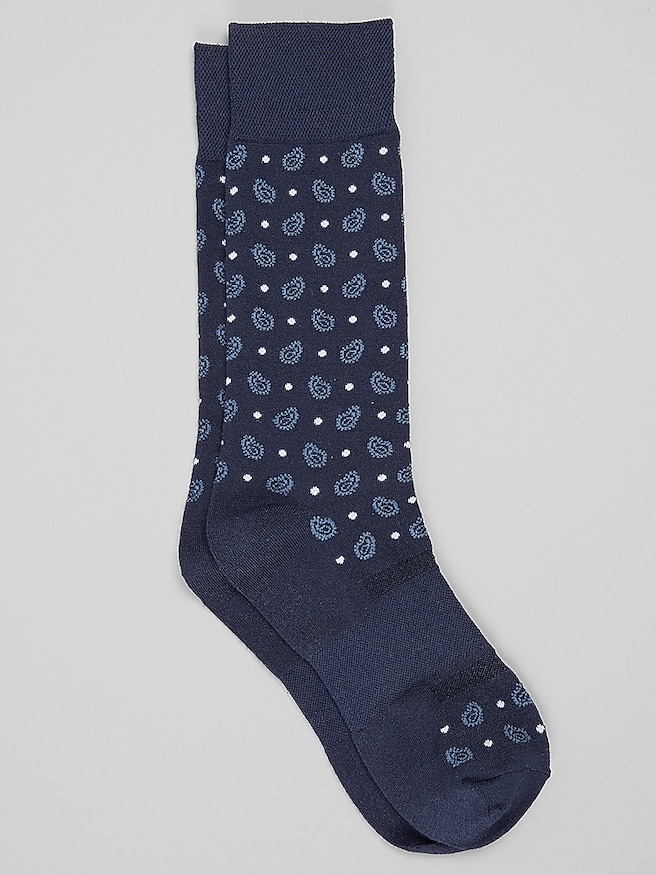
High school black socks are an everyday clothing staple for students who need a neat, understated finish with school uniforms, dress clothes, or casual outfits. Their solid color works easily with black shoes, charcoal trousers, navy pants, and many uniform combinations, keeping the focus on the overall outfit rather than a bright pattern at the ankle. For schools with a dress code, the important distinctions often come down to sock height, visible logos, and whether the fabric must be completely plain. A black sock with a contrasting emblem may not meet the same requirements as an unmarked pair, even when most of it sits inside a shoe. Crew socks typically extend above the ankle toward the lower calf, making them a practical option with full-length pants and everyday footwear. Dress socks generally have a finer profile that fits comfortably inside loafers, lace-up dress shoes, and other close-fitting styles. Over-the-calf lengths provide more coverage and can help keep the leg covered when trouser hems rise while sitting at a desk or on an auditorium stage. Ankle and no-show shapes offer less visible coverage, so their suitability depends on the school’s rules and the outfit. Beyond daily classes, plain black socks can serve students at academic presentations, school concerts, awards ceremonies, and graduation events where polished clothing is expected. A smooth, dark line between pants and shoes looks especially tidy during a seated performance or a formal photograph. For casual outfits outside a required uniform, the same neutral foundation pairs naturally with jeans, sneakers, and simple tops, including the styles represented by High School Black Tees. The appeal is straightforward: black socks can move between several parts of a student’s schedule without introducing another color to coordinate. The most useful choice is not necessarily the thickest or most formal one, but the shape and construction that suit the shoes, school requirements, and length of the day.
Fabric and fit make a substantial difference when socks stay on from the first class through an after-school meeting. Cotton blends are often chosen for their soft feel, while polyester or nylon in a blend can contribute strength, shape retention, and quicker drying than cotton alone. A small amount of spandex or elastane adds stretch, helping the fabric follow the foot rather than hanging loosely around it. Merino wool blends are another option valued for moisture management and odor resistance, although their feel and care requirements vary by construction. Fiber content is only part of the picture: a fine, closely knitted sock can feel very different from a thick cushioned style made with a similar blend. Lightweight dress socks leave more room inside fitted shoes, while cushioning under the heel and forefoot can add softness for walking between buildings or standing through a rehearsal. Extra padding also takes up space, so a sock that feels comfortable in a roomy sneaker may make a snug loafer feel crowded. Size should follow the listed shoe-size range rather than the student’s grade or age. The heel pocket should sit at the heel, the toe area should allow comfortable movement, and the fabric should lie smoothly without folds beneath the foot. A sock that pulls tightly across the toes or repeatedly slips into the shoe is unlikely to become more comfortable over a long school day. Cuffs should stay in place without excessive pressure, and a smooth toe seam can be helpful for students who notice rubbing across the tops of their toes. Ribbed legs, stretch through the arch, and shaped heels may improve the way a sock stays positioned, but each feature works best when the underlying size is correct. Trying socks with the intended shoes gives a clearer sense of fit than judging thickness by touch alone, especially when choosing between everyday uniform socks and a finer pair for dress occasions.
Durability matters for black socks that go through repeated wear and washing, particularly when a student relies on the same basic color throughout the school week. Reinforcement at the heel and toe can support areas that receive frequent friction, while resilient fibers and well-finished seams help the sock retain a usable shape. Dense fabric is not automatically more durable than a lighter knit; yarn quality, construction, shoe fit, and care all influence how long a pair holds up. Shoes that rub at the heel or crowd the toes can accelerate wear in those spots, making small fit issues worth noticing before holes appear. Care instructions should be checked for each fabric blend. Many everyday socks tolerate machine washing, but the recommended water temperature and drying method can vary. Washing with similar dark colors, turning socks inside out, and avoiding unnecessary high heat can help limit surface abrasion and protect elastic fibers. Bleach can affect black dye and may damage some materials, so any stain treatment should be compatible with the care label. Socks should be fully dry before being put away, and rotating pairs gives each one a break between wears. Matching pairs before they enter a drawer also makes busy school mornings easier, especially when similar black socks have different cuff heights or cushioning. A practical sock rotation may include a lighter option for dress shoes and a more cushioned construction for everyday sneakers, rather than expecting one thickness to work equally well with every shoe. School athletic activities may call for sport-specific support or padding beyond what a standard dress sock provides. For a student preparing for high school, joining a performance group, or building a wardrobe for presentations and formal school events, black socks can also be a useful gift when the shoe size and dress requirements are known. Their value lies in the small details that make daily wear easier: comfortable seams, dependable coverage, a secure fit, and a finish that complements the rest of the outfit without drawing attention.