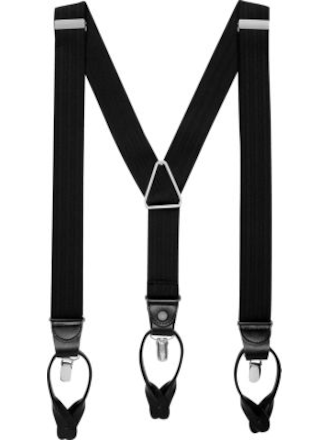
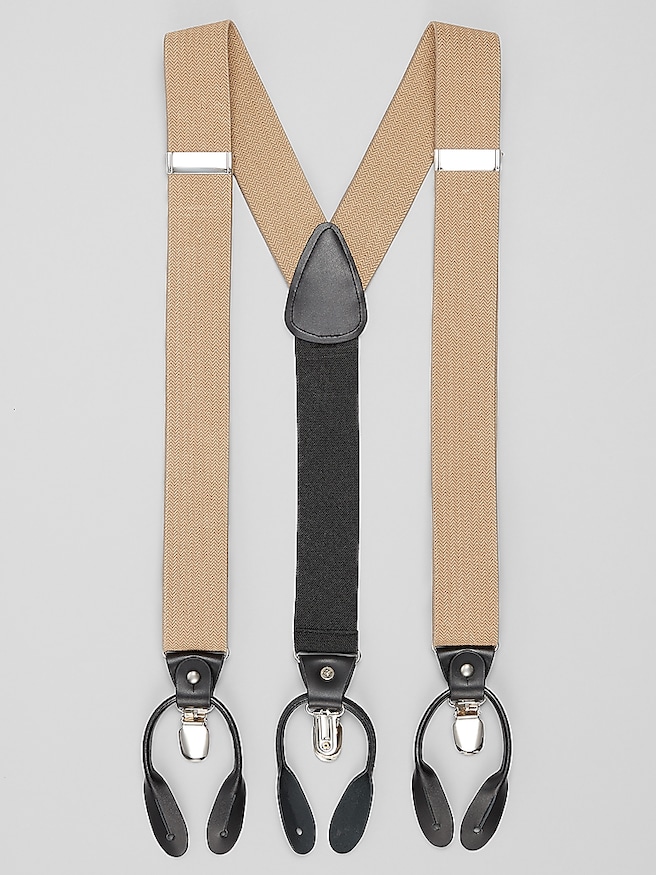
Groomsmen’s suspenders bring a coordinated finishing touch to wedding attire while helping trousers sit comfortably at the intended waistline. Worn over a dress shirt and beneath a jacket or vest, they can stay discreet during the ceremony and become a more visible part of the outfit when jackets come off at the reception. Their appeal ranges from traditional formalwear to relaxed celebrations: smooth, understated straps complement a tuxedo, while textured fabrics and leather details can lend character to a suit-and-tie ensemble. The main attachment types are clip-on suspenders and button-on suspenders, also called braces. Clip-on styles fasten directly to the trouser waistband, making them a practical option when the wedding party’s trousers do not have suspender buttons. Button-on styles connect to buttons positioned around the waistband, usually on the inside, for a traditional finish without visible metal clips at the waist. Neither attachment replaces proper trouser fit; suspenders work best when the waistband sits comfortably and the seat and legs have enough room for sitting, walking, and dancing. Coordinating them with Groomsmen Pants starts with checking the waistband construction, trouser rise, and attachment compatibility rather than color alone. Higher-rise trousers often create a particularly balanced line with braces, although the right combination depends on the cut and proportions of the complete outfit. Suspenders generally take the place of a belt, keeping the waist free of an extra buckle and avoiding two competing methods of support. For a wedding party standing together at the altar, consistent strap widths, colors, and hardware finishes help the group look intentional without requiring every accessory to be identical. The groom might wear a subtly different texture or shade, while the groomsmen share a common design. That small distinction can carry through portraits without distracting from the suits, ties, or faces in the photograph. Suspenders are both a functional foundation and a detail that helps connect the wedding party’s look.
Material and construction influence how suspenders feel through a full celebration, from getting-ready photos to the final dance. Elastic straps offer give as the wearer moves, which can be useful during long stretches of sitting and standing. Woven fabric styles may combine a decorative front with an elastic back section, providing texture while preserving some flexibility. Cotton and linen facings tend to have a matte, textured appearance, while silk or satin-faced designs introduce a smoother surface suited to dressier outfits. Fiber content alone does not determine formality; the weave, finish, width, and hardware all contribute to the overall effect. Leather straps and leather attachment tabs add another distinct texture, and their suppleness matters as much as their appearance. Stiff materials can feel restrictive, particularly when adjusted too tightly. Strong stitching, neatly finished edges, secure adjusters, and firmly attached tabs are useful signs of careful construction, especially for an accessory expected to see use beyond one wedding. Y-back suspenders meet at a single point behind the torso, while X-back designs cross and extend to two rear attachment points. Both can provide support when properly fitted, though the strap placement and feel may differ from person to person. Adjustable length is important across a group with different heights and torso proportions, and the stated length range deserves attention rather than assuming one size will suit everyone. A comfortable fit keeps the straps resting against the shoulders without digging in, pulling the waistband upward, or slipping outward during movement. Trying them with the actual shirt and trousers makes these details easier to assess. Sitting in a chair, reaching forward, and taking a few steps can reveal tension that is not obvious while standing still in front of a mirror. Clips should close securely without crushing or distorting delicate waistband fabric. Button attachments need sound stitching and suitable placement; trousers without the necessary buttons may need a tailor’s attention. These practical details help the wedding party stay focused on the celebration instead of repeatedly readjusting straps between photographs.
Color, proportion, and finish give wedding suspenders much of their visual character. Black straps offer a restrained option with black formalwear, while navy, gray, and muted brown tones can blend with many suit palettes. A close color match keeps the accessory quiet; a deliberate contrast makes it more noticeable against a light dress shirt. Matching every accessory exactly is not essential. Suspenders can echo a tone in a tie or pocket square, while leather tabs can relate to the shoes without creating an overly uniform effect. Hardware is worth considering, too: a similar metal tone across clips, adjusters, and cuff links helps small details feel connected. Narrow straps create a finer line, while wider straps have a stronger presence and spread contact over a broader area of the shoulders. Proportion should suit the wearer and the outfit rather than follow a single rule for the entire group. Under a fitted vest, bulky adjusters or thick straps may show through, so checking the layers together is more useful than judging each piece separately. At a reception where jackets may be removed, the back configuration becomes part of the visible outfit as well. Suspenders also make a thoughtful groomsman gift when selected with each recipient’s measurements and trouser attachments in mind. A versatile color and comfortable construction can extend their use to other weddings, anniversary dinners, and formal celebrations. Care depends on the complete construction, not just the main fabric: leather tabs, elastic sections, and metal fittings may require different treatment. Follow the care label, avoid soaking materials unless permitted, and use an appropriate cleaning method for any leather components. After wear, let the straps air out before storing them loosely without sharp folds or heavy objects pressing on the hardware. Periodic checks for stretched elastic, loose stitching, worn button loops, or weakened clips help preserve dependable support. With thoughtful coordination and routine care, groomsmen’s suspenders can remain a useful part of a dress wardrobe long after the wedding photographs are framed.