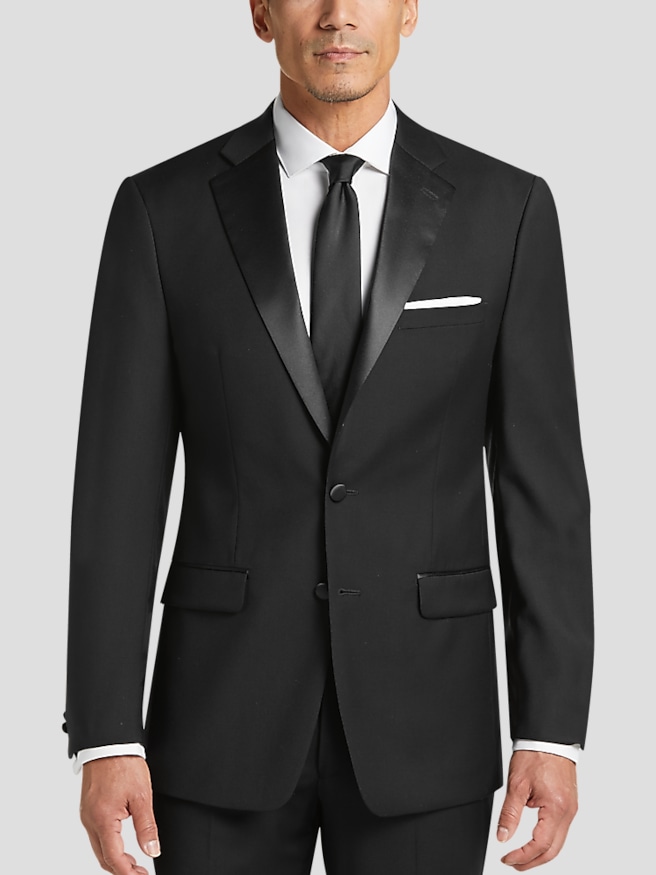
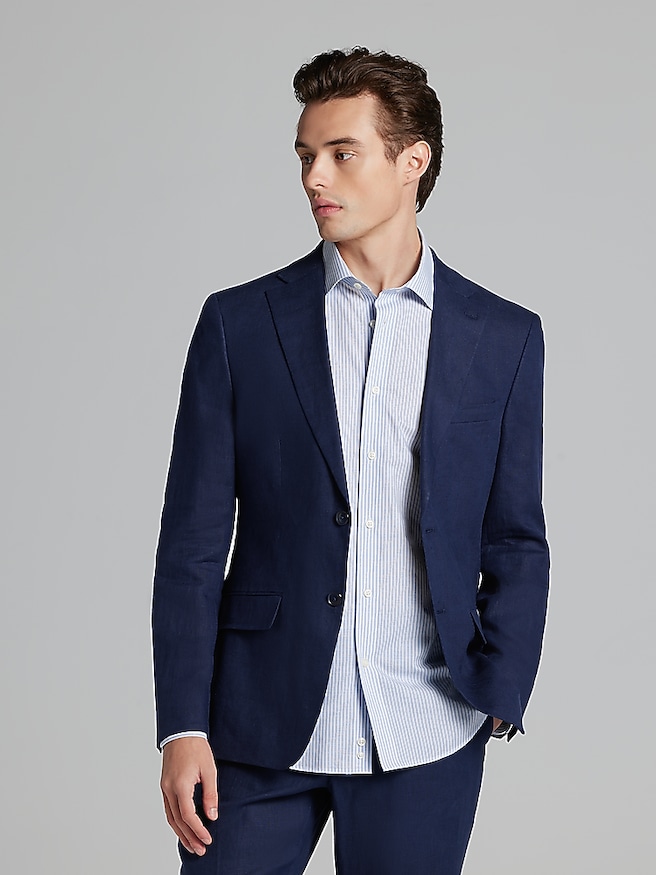
Groom suit colors help establish the tone of a wedding outfit, from the crisp contrast of black to the softer character of gray, blue, or brown. The best color depends on the wedding’s dress code, venue, time of day, and overall palette, along with the groom’s personal style. Navy and charcoal are versatile choices for weddings that call for a suit: both look polished with a white dress shirt, work with a broad range of tie colors, and remain useful for other occasions after the celebration. Navy has a rich blue undertone that pairs naturally with burgundy, silver, and muted green accessories, while charcoal creates a more restrained backdrop for subtle patterns or a distinctive boutonniere. Black offers a sharp, high-contrast appearance, especially with a white shirt and dark footwear, although a black suit is not interchangeable with a tuxedo. An invitation specifying black tie generally calls for a tuxedo, so the dress code matters more than color alone. Medium gray strikes a balance between dark formal shades and lighter neutrals, making it an adaptable option for a ceremony followed by a lively reception. Lighter gray has a softer presence and can work particularly well in bright interiors or outdoor settings where dark tailoring may create a stronger visual contrast. Blue extends beyond navy, too: a muted medium blue feels approachable, while a brighter shade makes the suit a more noticeable part of the wedding palette. Color also changes with its surroundings. A suit viewed against a white wall may look different beside dark wood, greenery, or stone, and textured fabric can appear lighter wherever it catches the light. For wedding photographs, subtle distinctions often have more impact than expected. A deep navy suit beside charcoal attendants, for example, can distinguish the groom without making the wedding party look disconnected. A shared shirt color or closely related tie palette keeps that contrast intentional.
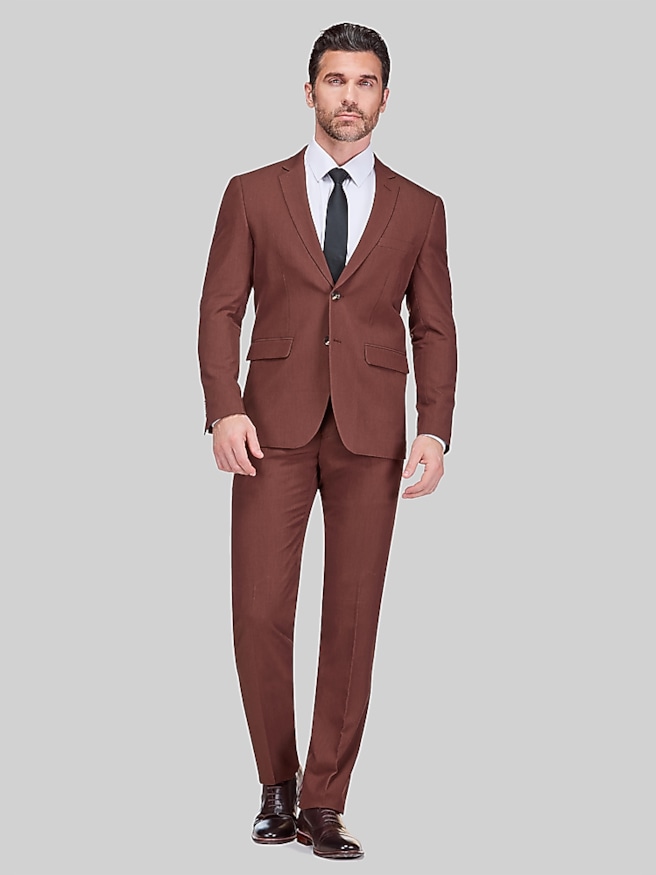
Brown, tan, and other earth-toned groom suits offer an alternative to the familiar blue-and-gray palette. The appeal of a brown suit for the groom lies in its range: chocolate brown can feel rich and understated, while a softer medium brown brings out the character of a textured weave. Brown works especially well alongside ivory, cream, muted pink, and green, with the exact combination depending on how much contrast the outfit needs. A white shirt keeps the effect crisp; an ivory shirt creates a gentler transition, provided it complements the surrounding wedding attire rather than appearing unintentionally mismatched. Tan and beige give tailoring a lighter visual weight and suit celebrations with a relaxed dress code, particularly when paired with simple accessories and clean lines. These shades can still look carefully considered, but color alone does not determine formality: a sharply tailored neutral suit and polished leather shoes communicate something different from the same shade in a visibly rumpled fabric with casual footwear. Deep green and burgundy make a more expressive statement and benefit from restrained shirts, ties, and pocket squares that leave room for the suit color to stand out. Wedding-party coordination does not require every person to wear an identical shade. The groom might wear a deeper version of the attendants’ color, or a contrasting neutral connected through matching accessories. When fabrics are intended to match, viewing them together is more reliable than comparing separate screen images. Shoe color provides another useful point of continuity. Black footwear gives charcoal and black suits a crisp finish, while brown footwear can complement navy, medium gray, tan, and brown when the shades feel balanced. A belt, if worn, generally looks most cohesive when its color and finish relate closely to the shoes. Small choices like these help a distinctive suit color feel integrated into the whole outfit.
Fabric, fit, and construction influence how groom suit colors look throughout a full wedding day. Smooth wool often gives navy, charcoal, and brown a clear, even appearance, with natural resilience that helps the fabric recover from ordinary creasing. Wool blends vary in texture, stretch, and care requirements, so the fiber content is worth considering alongside the color. Cotton can give a suit a more matte, relaxed character, while linen’s visible texture and tendency to crease create a deliberately less structured effect. Neither is automatically right or wrong for a wedding; the important distinction is whether that character suits the setting and dress code. A fine texture can add depth to a solid color without introducing an obvious pattern, while checks and pronounced weaves make a stronger impression in photographs. Fit matters just as much as the fabric’s surface. Jacket shoulders should sit cleanly, the lapels should lie flat, and the front should close without pulling into pronounced lines around the button. Trousers need enough room through the seat and thigh for sitting, walking, and dancing, with a hem length that looks intentional against the chosen shoes. Slim, tailored, and roomier silhouettes can all look polished when their proportions suit the wearer. The full outfit also needs to remain comfortable through a ceremony, dinner, and reception, not simply look good while standing still. Durable fabric, neatly finished seams, and appropriate alterations support that longer wear. Afterward, following the garment’s care label helps preserve both its shape and color. A supportive hanger, time to air out between wears, and prompt attention to stains can reduce unnecessary cleaning; professional cleaning and pressing should follow the fabric’s requirements. Storage away from prolonged direct sunlight helps protect darker shades from fading. For a groom who expects to wear the suit again, navy, charcoal, medium gray, and brown can move naturally into anniversary dinners, other weddings, and dressier professional occasions. A change of shirt, tie, and shoes gives the same suit a different purpose while keeping the wedding-day choice part of a lasting wardrobe.