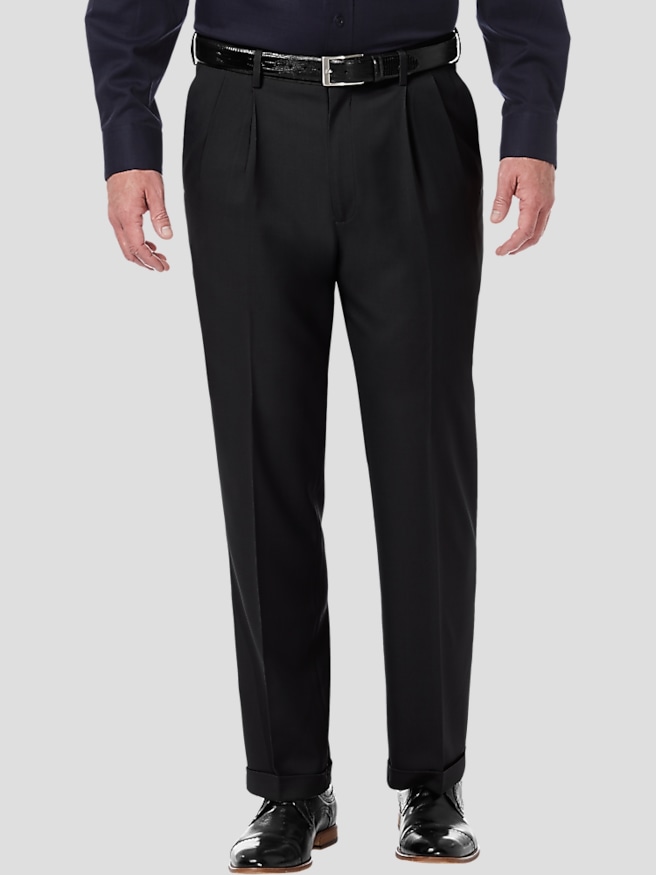
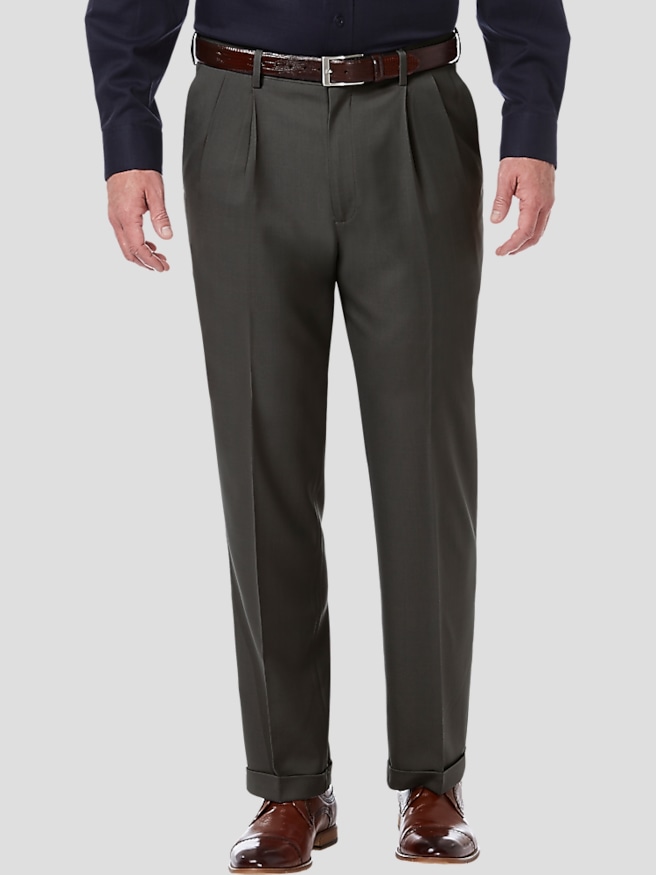
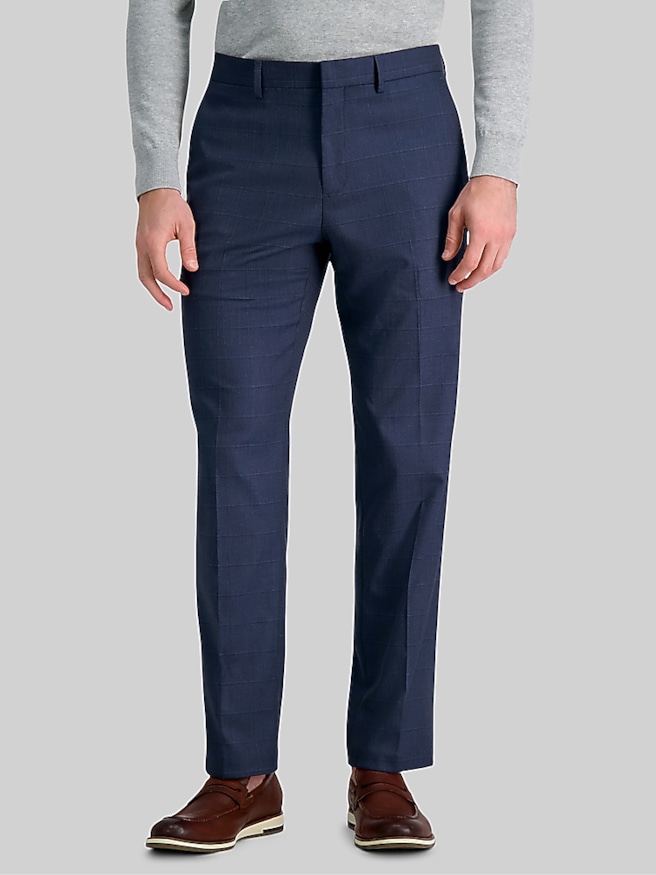
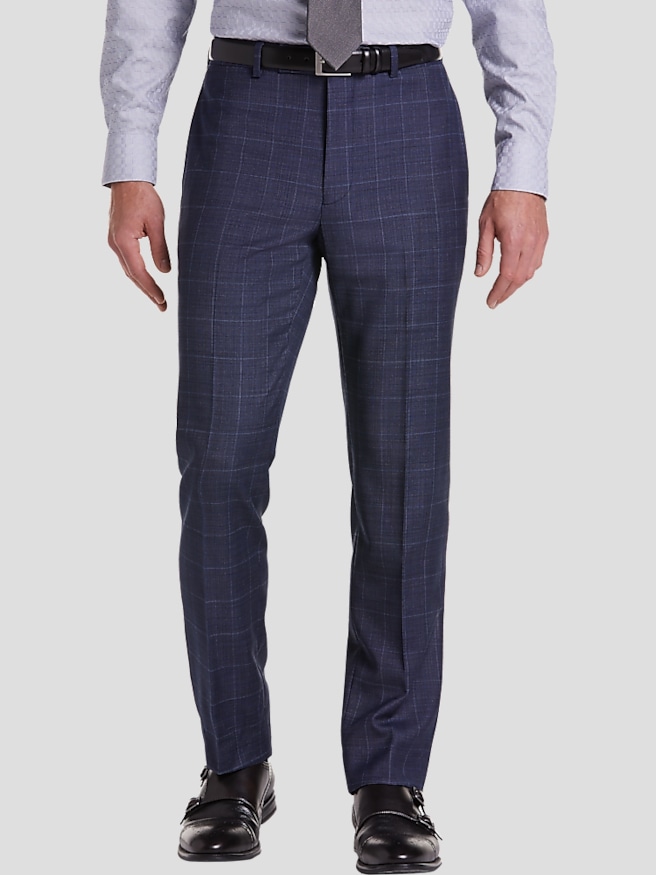
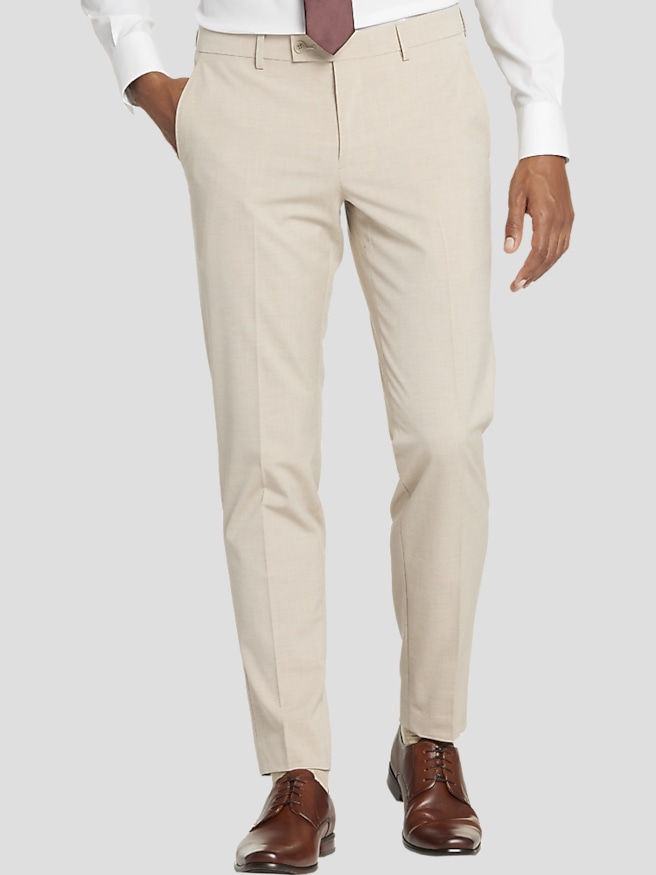
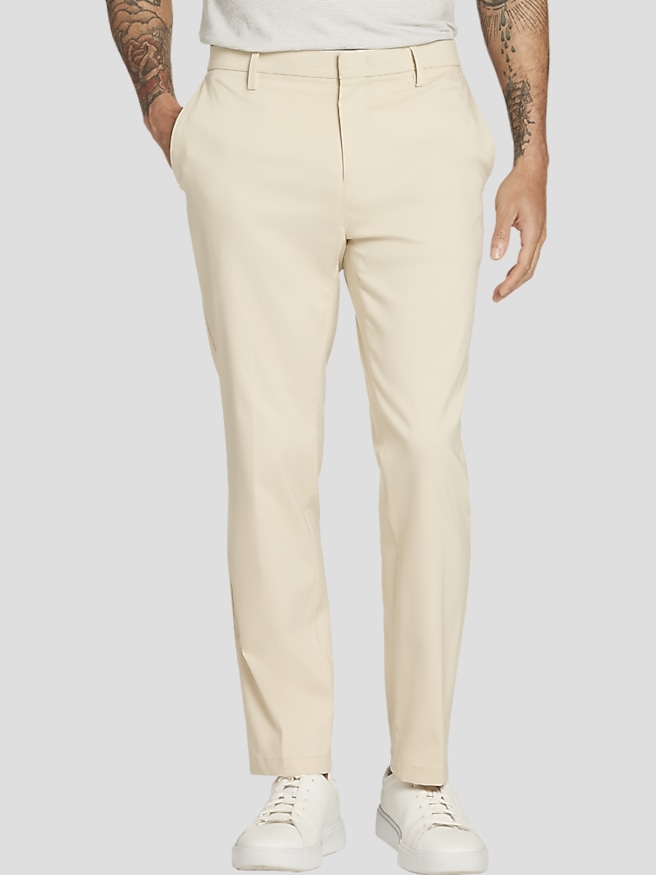
Grey tapered pants combine a neutral color with a leg shape that narrows gradually from the thigh toward the ankle, creating a clean outline without necessarily fitting tightly throughout. That distinction makes them useful for men who prefer room through the seat and upper leg but want less fabric around their shoes. A tapered cut is not automatically a slim fit: the amount of space at the waist, hips, and thighs depends on the design, while the taper describes how the leg becomes narrower below. Athletic builds may feel more comfortable with a fuller thigh and a defined taper, while leaner builds may prefer a closer cut that still allows easy movement. Across dress trousers, chinos, and casual styles, grey provides a versatile foundation for office outfits, dinner plans, family gatherings, and everyday dressing. Light grey has a softer, more relaxed appearance, medium grey pairs easily with both pale and saturated colors, and charcoal brings greater visual depth to tailored combinations. Fabric texture matters as much as shade. A smooth surface looks crisp alongside a dress shirt, while a subtle heather or visible twill weave gives an outfit a less formal character. Grey tapered trousers can anchor a white shirt and navy jacket without competing with either piece, or give a simple knit polo and leather sneakers a more finished look. For anyone comparing silhouettes, Tapered Leg Pants provides a broader point of reference for the same narrowing leg shape. Within grey styles, the most useful distinctions are often practical ones: how the fabric drapes, whether the waistband stays comfortable when seated, and how neatly the hem meets the shoe. These details help separate pants suited to a presentation or celebration from pairs intended for a relaxed workplace or an evening out. The appeal is a balanced silhouette that looks intentional with a tucked shirt yet remains easy to wear with an untucked top of an appropriate length.
Materials influence the appearance, feel, and intended use of grey tapered pants. Wool and wool-blend trousers generally offer a fluid drape that complements tailored jackets, especially when the fabric holds a clear crease down the front. Cotton twill has a more substantial, casual character, with a diagonal weave that works naturally in chinos. Depending on its weight and finish, cotton can feel crisp at first or softer and more broken in, and it may develop visible creasing through normal wear. Blended fabrics can combine the feel of natural fibers with properties such as added stretch or improved resistance to wrinkling, though those benefits depend on the actual composition and construction. A small amount of elastane may make sitting, bending, and climbing stairs more comfortable, but stretch does not compensate for a cut that is too tight. Performance-oriented fabrics may support a more active routine when the garment specifically includes features such as moisture management or easy-care construction. For a day that moves from a commute to several hours at a desk and then dinner, comfort through the waistband and knees can matter more than a sharply narrow ankle opening. A comfortable fit lets the front pockets lie relatively flat and the fabric fall smoothly rather than pulling into horizontal lines across the hips or thighs. The rise also changes the experience: a waistband that sits comfortably at the intended position helps a tucked shirt stay neat and reduces the urge to adjust the pants throughout the day. Hem length deserves similar attention. A slight break can soften the line over loafers or lace-up shoes, while little or no break emphasizes the taper. Excess fabric bunching at the ankle can obscure the shape that makes the cut distinctive. For men with fuller calves, enough room below the knee helps the trouser leg settle back into place after sitting. Secure buttons, neatly finished seams, and well-constructed pocket openings are useful durability details, particularly for pants worn repeatedly through a busy routine.
The styling range of grey tapered pants comes from how readily their neutral shade connects other parts of an outfit. A pale blue button-down, brown leather belt, and brown shoes create an approachable office combination; a white dress shirt and black shoes bring a sharper contrast to charcoal trousers. Burgundy, olive, navy, and cream also sit comfortably alongside grey, allowing a shirt or sweater to add color without making the overall look feel busy. When a jacket enters the outfit, a deliberate contrast in color or texture often looks more cohesive than two greys that nearly match but do not. For weddings and other celebrations, dressier tapered trousers can work when the invitation permits separates, but they do not replace the coordinated pieces required by a more formal dress code. Casual versions pair naturally with polos, simple sweaters, and clean sneakers, with the narrower hem keeping the lower half of the outfit tidy. Grey tapered pants can also make a practical gift for someone building a work wardrobe or refining an everyday rotation, provided the recipient’s waist size, inseam, preferred rise, and fit preferences are known. Long-term usefulness depends partly on care. The garment’s care label should take priority over general fabric assumptions, since linings, finishes, and blended fibers can change cleaning requirements. Machine-washable pants benefit from the recommended cycle and drying method, while trousers labeled for dry cleaning need that treatment. Excess heat can affect certain stretch fibers and may contribute to shrinkage in some fabrics. Prompt attention to stains, empty pockets before cleaning, and appropriate storage help preserve a neat appearance. Hanging trousers along their intended crease or folding casual pairs smoothly can reduce unnecessary wrinkles between wears. Following ironing instructions and using a pressing cloth where appropriate can help limit unwanted shine. With a comfortable cut, suitable fabric, and consistent care, grey tapered pants can serve as a dependable part of a wardrobe across both tailored and casual settings.