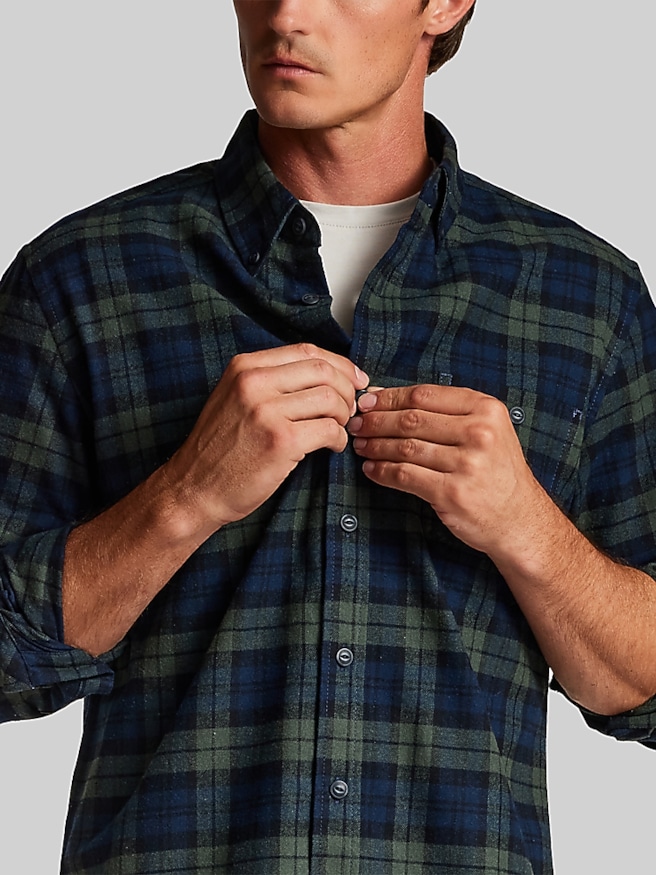
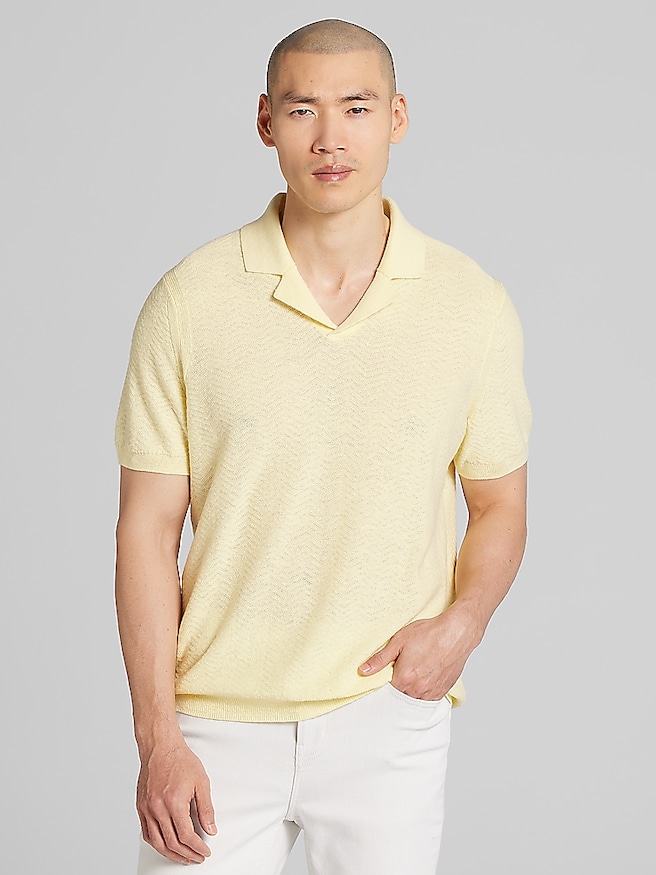
Green sweaters bring color to men’s wardrobes in shades ranging from soft sage and mint to earthy olive, deep forest, hunter green, and vivid emerald. Common styles include crewneck pullovers, V-necks, turtlenecks, cardigans, cable knits, and sweater vests, each with a distinct shape and layering role. The shade often sets the tone: muted olive feels relaxed with dark denim and brown leather shoes, while forest green looks polished beside charcoal trousers and a pale blue shirt. Sage pairs naturally with cream, navy, and gray, creating contrast without making the sweater the loudest part of an outfit. Mint offers a lighter, brighter effect, while emerald gives a simple combination of neutral pants and clean shoes a more expressive finish. Green also works well with subtle patterns, including small checks or narrow stripes, especially when the shirt contains a complementary neutral color. A crewneck has a straightforward neckline that can frame a T-shirt or show a small amount of shirt collar. A V-neck leaves more room for a collared shirt and, where the dress code permits, a tie. Turtlenecks create a continuous line beneath a sport coat, while cardigans let the shirt underneath remain part of the outfit. Sweater vests add knit texture without sleeves, making them useful over button-front shirts when freedom of movement through the arms matters. Smooth, fine-gauge knits tend to look more streamlined with tailored clothing; cable patterns, ribbed surfaces, and chunkier stitches introduce more visual depth. For an office with a relaxed dress code, a dark green sweater over an Oxford shirt can look composed without feeling overly formal. For a restaurant dinner or a casual family gathering, the same color works with chinos and understated accessories. Green’s versatility comes from its range rather than a single universal pairing, so the most useful choice is often a shade that complements the trousers, shirts, and jackets already worn regularly.
Material and construction shape how a green sweater feels, drapes, and holds up to repeated wear. Cotton typically has a soft, familiar feel and can suit everyday outfits, though a substantial cotton knit may be heavier than its appearance suggests. Wool offers natural resilience and can recover well from ordinary creasing, while merino wool is often used for finer knits with a smoother feel than coarser wool varieties. Cashmere is associated with softness and a supple drape, but it benefits from gentle handling and attention to friction. Blended yarns combine fibers to influence texture, stretch, shape retention, and care requirements; the fiber label provides more useful information than appearance alone. A smooth green surface may look similar across several sweaters even when their weight and feel are quite distinct. Knit structure matters, too. Dense stitches can create a more substantial fabric, while open stitches may reveal more of the layer underneath. Ribbed cuffs and hems help define the silhouette, and neatly finished seams contribute to comfort at the shoulders and underarms. Good fit leaves enough room for the intended base layer without creating excess fabric through the torso. In a conventional set-in sleeve, the shoulder seam generally sits near the shoulder edge; dropped shoulders and raglan sleeves follow different construction lines and should be judged by their overall shape and movement. Sleeves should reach the wrist without repeatedly sliding over the hand, and the hem should sit comfortably without pulling upward when reaching for a shelf or sitting at a desk. A slim sweater can work beneath a jacket, provided the fabric does not bunch through the sleeves. A relaxed fit gives more room over a shirt but need not look oversized. Tension across the chest, gaps between cardigan buttons, or heavily stretched ribbing can signal that more room is needed. Color and texture also affect the result: a dark, smooth knit creates a quieter silhouette, while a pale cable knit makes its stitch pattern more noticeable. These details help distinguish a sweater suited to tailored outfits from one intended for easy, casual wear.
Thoughtful care helps preserve both the shape and the color of green sweaters. The garment’s care label should determine whether washing, hand washing, or professional cleaning is appropriate, because fiber content, dyes, trims, and construction can require different treatment. When washing is permitted, the recommended water temperature and a suitable detergent matter more than a one-size-fits-all routine. Washing with similar colors can reduce the risk of dye transfer, and avoiding unnecessary heat helps protect fabrics that are prone to shrinking or losing shape. A wet knit can stretch under its own weight, so garments that call for flat drying should be reshaped gently and supported on a suitable surface rather than suspended from a hanger. Folding sweaters for storage helps limit stretched shoulders, especially in heavier knits. Clean, dry storage is particularly important for animal fibers. Pilling can occur where fabric rubs against a seat belt, bag strap, or desk edge; it does not automatically mean a sweater is poorly made. Careful removal with a tool appropriate for the fabric can improve the surface without pulling at the yarn. Snags deserve similarly gentle attention, since cutting a loop can damage the surrounding stitches. Rotating frequently worn sweaters gives each garment a break from repeated friction and helps make wear more evenly distributed. For gifting, green offers room for personal preference without requiring a bold pattern. A father who favors navy trousers might appreciate a deep forest shade, while a brother who wears denim and sneakers may find olive easy to incorporate. A partner’s familiar neckline, preferred fit, and tolerance for textured fabrics are useful clues, particularly when softness matters. For celebrations and group photos, pairing a simple knit with Green Holiday Shirts can create a coordinated look without requiring everyone to wear the same shade. Whether chosen for work, travel, dinners, or everyday plans, a green sweater earns its place through comfortable fit, suitable fabric, and a color that feels natural with the rest of a wardrobe.