Green plaid ties combine intersecting stripes and checks with a color that can feel understated, expressive, or distinctly traditional, depending on the shade and pattern. Deep forest and hunter green create a restrained look, especially when crossed with navy, charcoal, or black lines. Brighter greens and higher-contrast checks give a tie more presence against a plain shirt. The size of the plaid matters as much as the color: a small, closely spaced check often reads as subtle texture from across a room, while a larger pattern becomes a clear focal point. For business meetings, presentations, and dressier office settings, a dark green plaid tie with a white or light blue dress shirt offers an approachable alternative to familiar solid colors. A navy suit brings out blue threads in the pattern, while charcoal provides a neutral backdrop that lets the green remain visible without dominating the outfit. Brown jackets also work well with green, particularly when the tie includes cream, tan, or muted gold accents. Keeping the shirt solid is the simplest way to give the intersecting lines room to stand out. When combining patterns, vary their scale: a finely striped shirt can sit comfortably beneath a broader plaid, but similarly sized checks on both pieces may compete. Green plaid ties also suit wedding guests, family celebrations, graduation ceremonies, and dinners where a jacket and tie feel appropriate. For a coordinated wedding party, repeating the same green tone can create visual continuity even when other accessories are understated. The invitation’s dress code should still set the direction; a patterned necktie is not a substitute for the accessories expected with traditional black-tie attire. A white pocket square keeps the overall effect crisp, while a square that picks up one secondary color in the plaid adds interest without repeating the entire design. Letting the tie carry the strongest pattern usually produces the clearest, most balanced result.
Material influences how a green plaid tie looks, feels, knots, and holds up to repeated wear. Silk can have a smooth sheen or a more textured woven surface, so the fiber name alone does not tell the whole story. In a woven plaid, the crossing colors may create visible depth, giving even a restrained pattern character at close range. A printed plaid can offer a smoother surface and sharply defined lines. Wool generally has a softer, more matte appearance that pairs naturally with textured tailoring, while silk-and-wool blends can balance surface interest with a fluid drape. Polyester and other synthetic blends may offer resilience and straightforward maintenance, although the care label and construction remain more useful than broad assumptions about a fiber. For frequent use, consider how easily the fabric catches, how neatly the edges lie, and whether the tie hangs straight after the knot is released. A substantial interlining can add body, but thickness alone is not a measure of quality; fabric, stitching, and internal structure need to work together. Proportion is equally important. Tie width should feel balanced with the jacket lapels and the wearer’s frame rather than follow an isolated measurement. A narrower tie beside very broad lapels can look disconnected, just as an especially wide tie may overwhelm a slim jacket. Length matters most once the tie is knotted: the front blade should generally finish near the waistband or belt buckle, without leaving an unusually short tail. Taller wearers or those with larger neck measurements may benefit from extra length, particularly when choosing a knot that uses more fabric. A four-in-hand knot works well with many pointed collars and keeps thicker fabrics from becoming bulky. A half-Windsor creates a more symmetrical shape when the collar opening calls for additional fullness. With either approach, a knot that sits comfortably against the collar and a small dimple beneath it help the plaid look intentional rather than compressed.
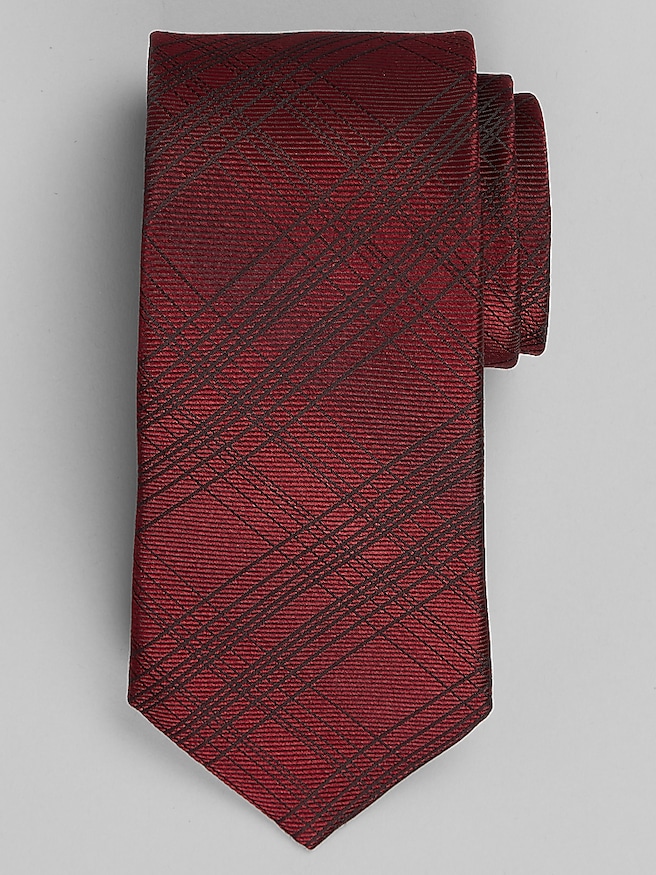
Good care helps preserve both the shape and the clarity of a green plaid tie, especially when it becomes a regular part of a work or occasion wardrobe. At the end of the day, loosen the knot gently and reverse the tying steps instead of pulling the narrow end through a tight knot. Leaving a tie knotted between wears can encourage persistent creases and place unnecessary strain on the fabric. After untying it, allow the tie to relax on a suitable hanger or store it loosely rolled, without packing it tightly into a drawer. Follow the care label before attempting any cleaning, since silk, wool, and blended fabrics can respond differently to moisture, heat, and cleaning solutions. Blot spills promptly with a clean cloth rather than rubbing them into the weave, and avoid treating a delicate fabric with an untested household cleaner. For stubborn marks, a cleaner experienced with neckwear can assess the fabric and internal construction. Direct ironing can flatten texture or leave a shine, so any pressing or steaming should follow the manufacturer’s guidance. During travel, a tie case or a loose roll placed where it will not be crushed can help protect the blade and tip. These small habits matter for a tie worn to weekly meetings as much as one saved for important celebrations. As a gift, green plaid works especially well for someone who already wears navy or charcoal tailoring and appreciates a pattern with more character than a solid. Think about the recipient’s usual collar shapes, preferred tie width, and tendency toward quiet or bold accessories. Someone who favors pale blue shirts may enjoy a green-and-navy check, while a wearer drawn to brown jackets may prefer earthy accent threads. For a contrasting color direction, Red Plaid Ties offer another way to bring intersecting checks into a tailored wardrobe. In either color, a well-proportioned pattern, comfortable knot, and considered fabric make the tie easier to wear with confidence.