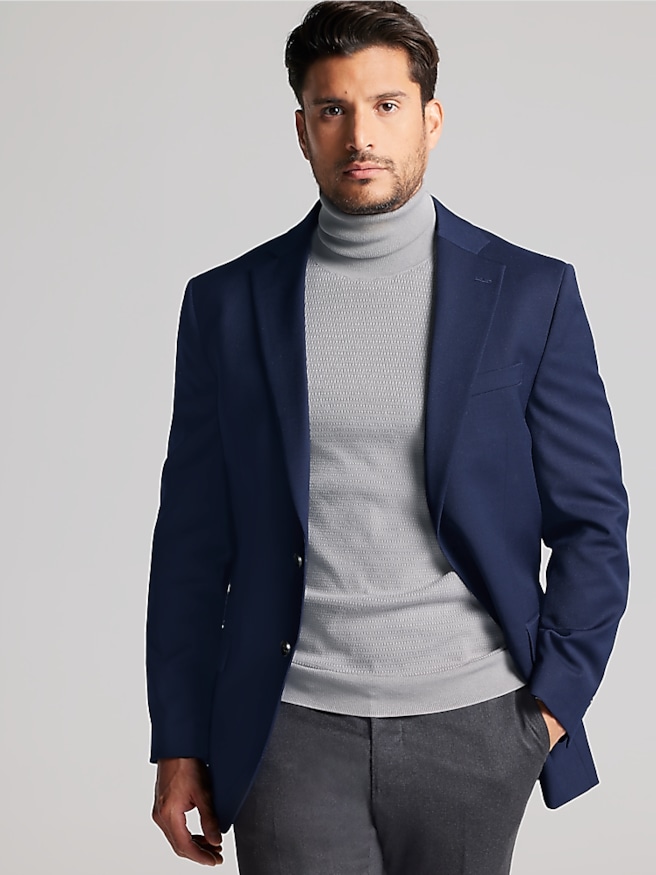
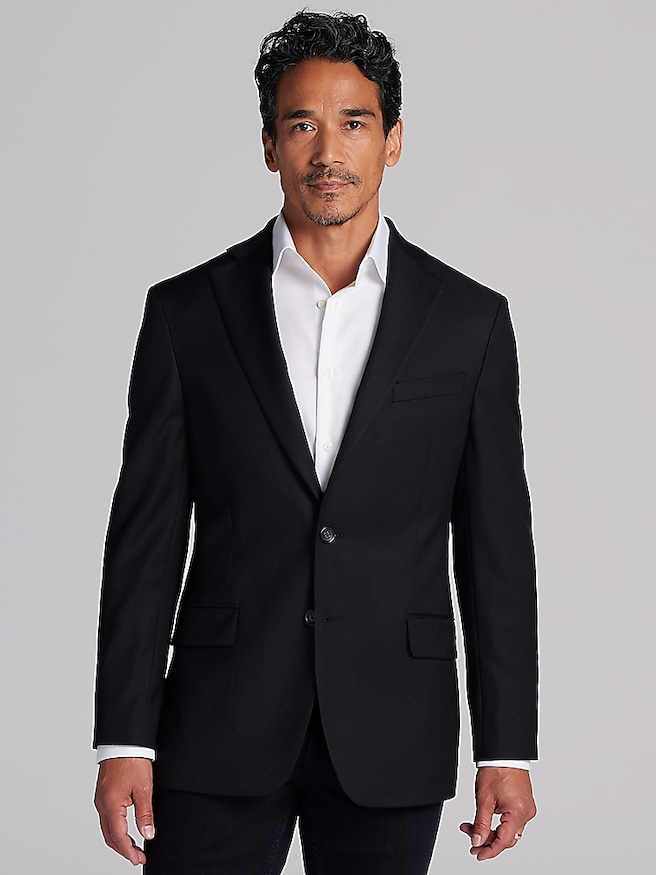
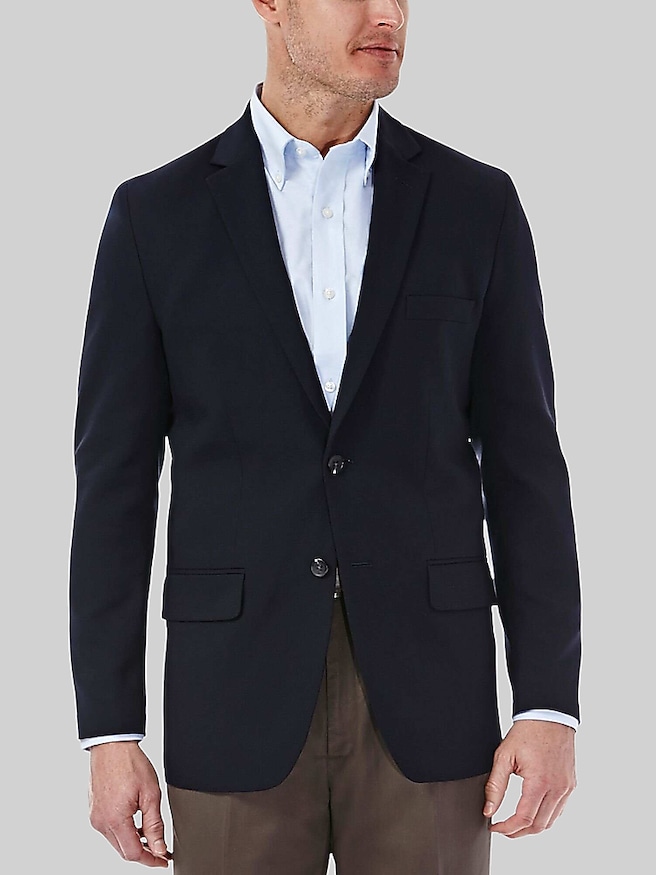
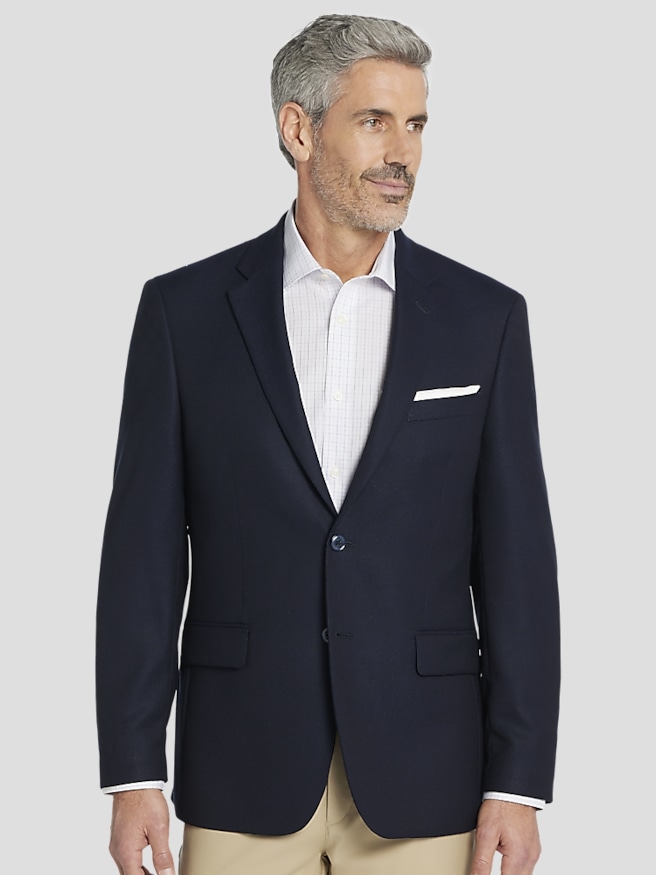
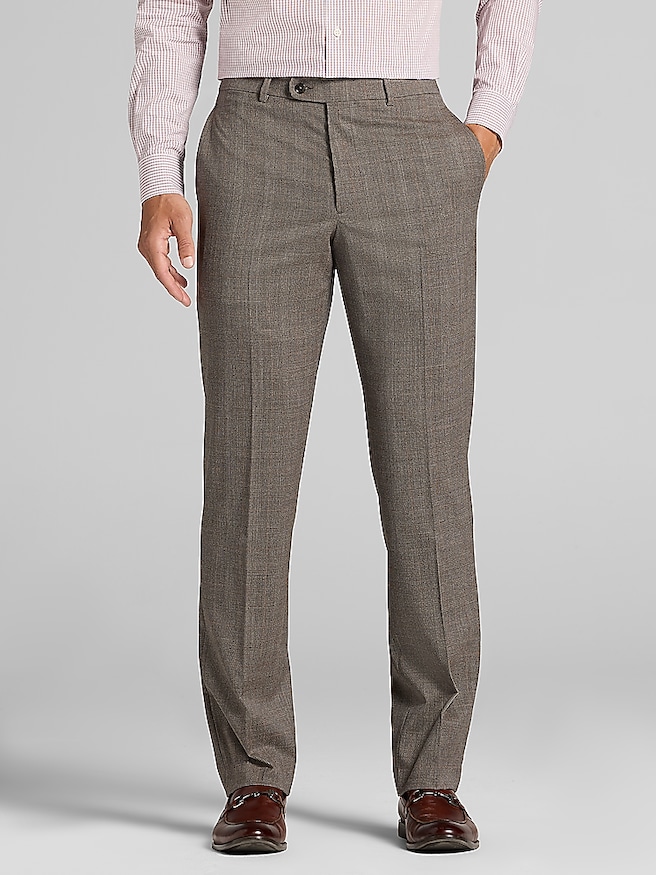
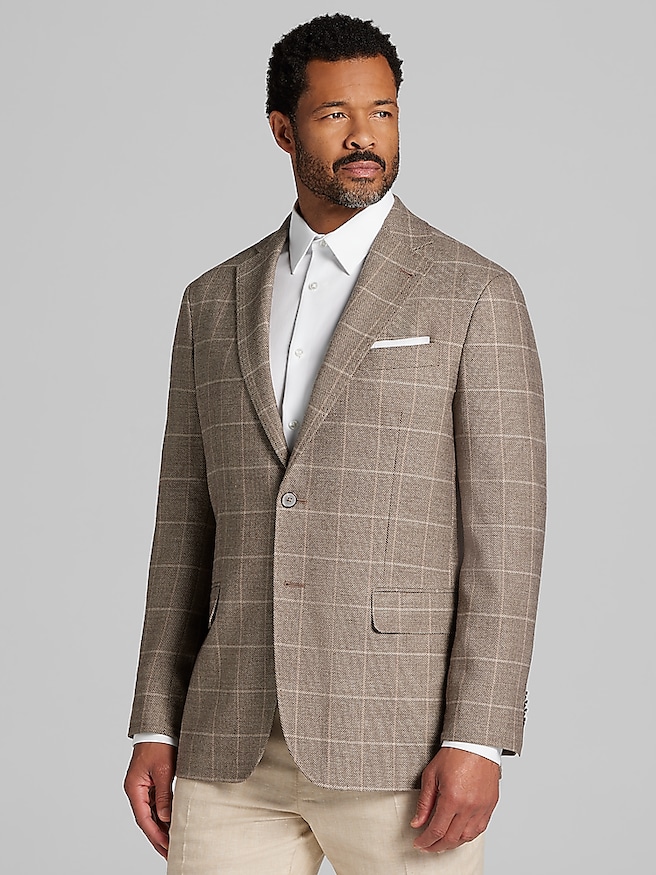
Formal tweed sport coats bring together the substance of traditional wool tailoring and the polish expected from formal dressing. Their textured surface gives an outfit visual depth, while the structured shape of a sport coat creates a cleaner, more refined silhouette than a casual jacket. This combination makes tweed especially useful during the cooler months, when heavier layers feel natural and the rich character of the fabric complements the season. Herringbone, houndstooth, windowpane, and subtle checked patterns each create a different impression: herringbone has a quiet heritage feel, houndstooth adds contrast, windowpane lines look more modern, and understated checks offer an easy middle ground for frequent wear. Earthy brown, charcoal, olive, navy, and gray tones pair naturally with the darker, layered colors often found in a fall and winter wardrobe, while lighter or blue-based tweeds can brighten a formal look without losing the fabric’s substantial character. When comparing options, pay attention to the weight and texture of the wool, the quality of the lining, the shape of the shoulders, and the ease through the chest and waist. A well-fitting jacket should allow comfortable movement when buttoned, sit smoothly across the shoulders, and end around the middle of the seat. The sleeve should leave enough shirt cuff visible to frame the hand, and the jacket length should balance the wearer’s proportions rather than appearing cropped or overly long. For more inspiration across coordinated seasonal dressing, explore Tweed Formal Wear.
A formal tweed sport coat can cover a wide range of occasions without looking overworked. Worn with a crisp white or pale blue dress shirt, gray flannel trousers, and polished leather Oxfords, it has the presence of a traditional tailored ensemble suited to a reception, dinner, professional gathering, or evening celebration. A grenadine, knit, or subtly patterned silk tie adds texture without competing with the jacket, while a solid shirt keeps a more active tweed pattern in balance. For a complete three-piece impression, add a waistcoat in a complementary shade or a closely related fabric; this creates a strong choice for weddings, formal family photographs, and ceremonies where a jacket alone may feel slightly incomplete. On colder days, a thin V-neck sweater can fit beneath the coat, provided the layers remain smooth through the shoulders and sleeves. Dark wool trousers make patterned tweed look more formal, while tailored chinos can soften the outfit for a daytime gathering or a smart-casual office. Footwear helps set the tone: brogues emphasize the jacket’s traditional character, plain-toe derbies offer a streamlined finish, and sleek Oxfords are a natural choice when the occasion calls for greater formality. Accessories should be considered with the same restraint. A leather belt that coordinates with the shoes, a simple pocket square, and a classic watch can complete the look without distracting from the weave and pattern that make tweed distinctive. Because tweed has a memorable texture, it is often most effective when the rest of the outfit is clean, well pressed, and quietly coordinated.
These jackets can also make thoughtful gifts for a man who appreciates clothing with a sense of history or who is building a versatile wardrobe for cooler-weather events. A tweed sport coat is particularly practical for someone attending weddings, business dinners, holiday gatherings, alumni events, or special celebrations where a full suit is not required but a casual jacket would feel too relaxed. It can serve a recent graduate, a new professional, a father of the bride or groom, or anyone who enjoys combining traditional details with modern tailoring. If choosing one as a gift, consider the recipient’s existing wardrobe and daily habits. A charcoal, navy, or medium-gray style is generally easy to coordinate, while brown, olive, or a pronounced check may suit someone who already owns several neutral jackets and enjoys a more distinctive look. Fit is the most important consideration, so knowing the wearer’s jacket size, preferred cut, and usual shirt size can make the selection more successful; if those details are uncertain, an exchange-friendly purchase and professional alterations provide useful flexibility. Small adjustments to sleeve length, jacket waist, or trouser break can transform an acceptable fit into one that looks made for the wearer. Between uses, allow a tweed coat to air on a broad hanger rather than placing it immediately in a crowded closet, and use a soft clothes brush to remove surface lint and dust. Avoid over-cleaning, direct heat, and thin wire hangers that can distort the shoulders. With thoughtful pairing and basic care, a formal tweed sport coat can move easily from a crisp daytime ceremony to a warmly lit dinner, retaining the comfortable, composed character that makes textured tailoring so enduring.