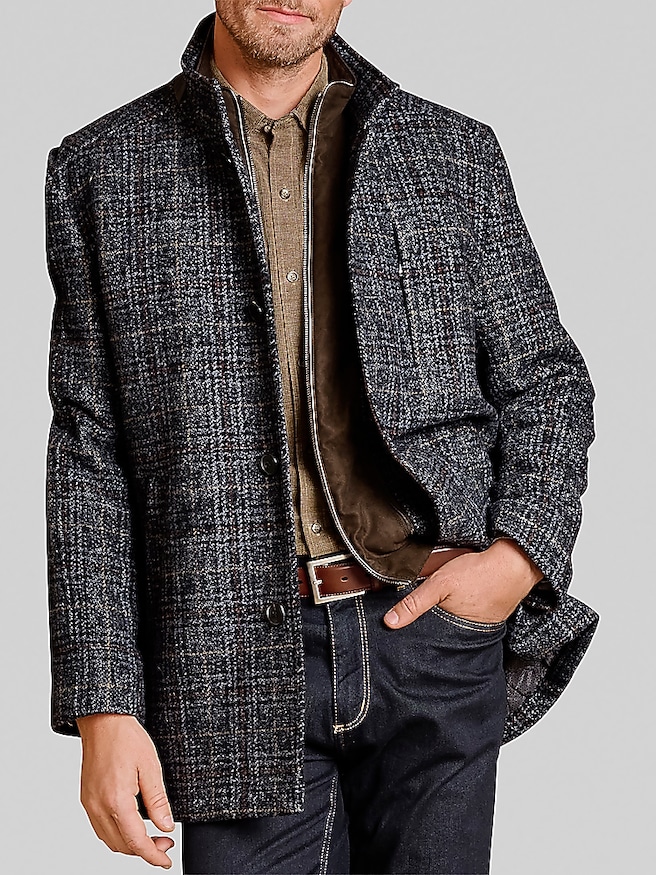
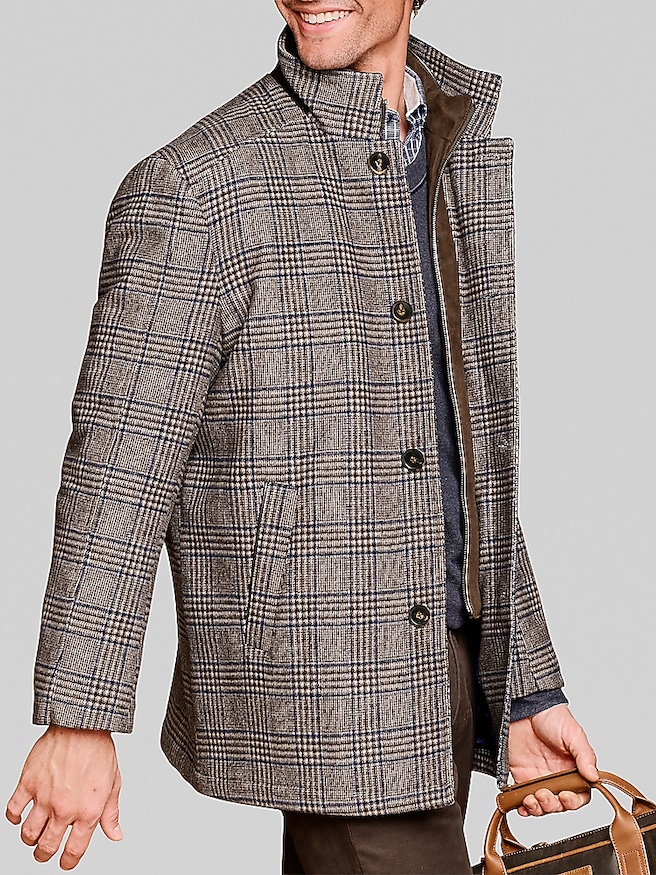
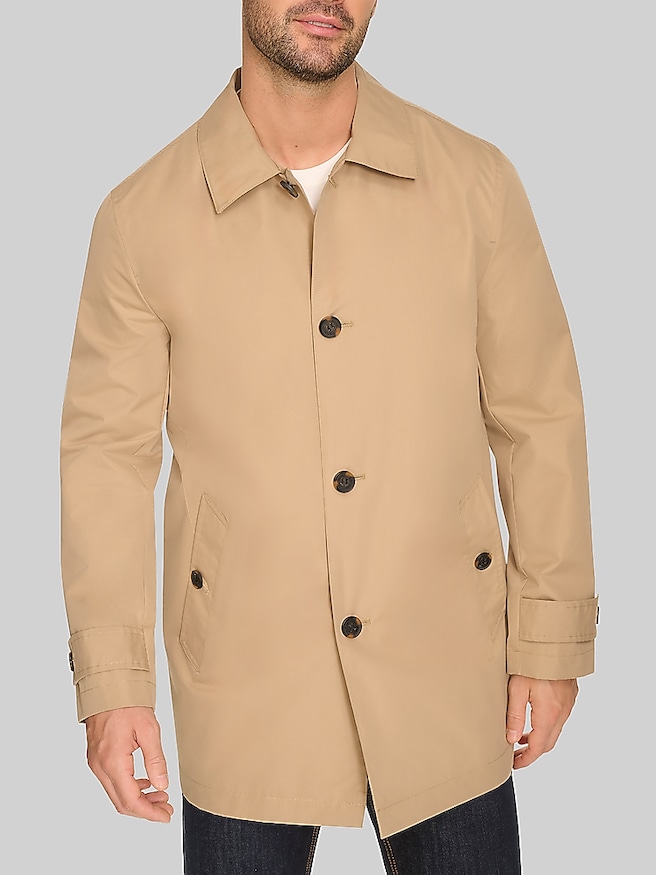
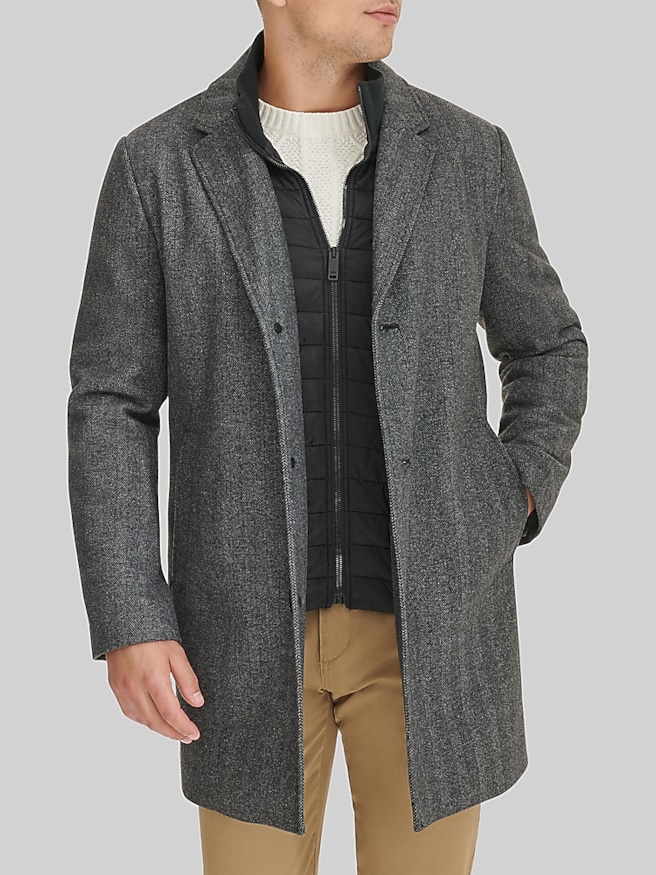
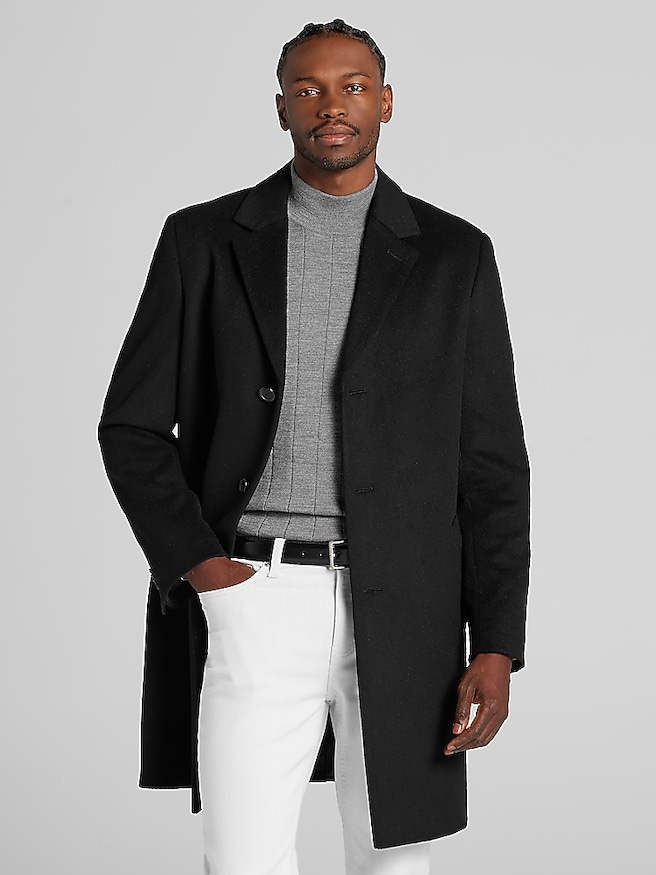
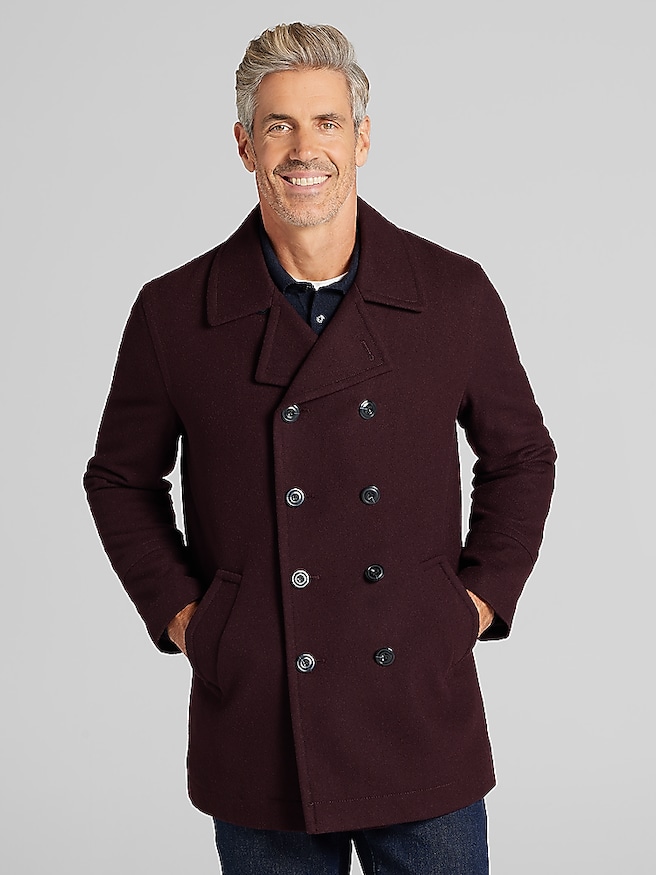
Formal peacoats bring the substantial feel of traditional cold-weather outerwear to a more polished wardrobe. A peacoat is typically a double-breasted coat with broad lapels, a substantial collar, and a shorter silhouette than a full-length overcoat. Its roots in naval clothing explain the overlapping front and practical shape, while tailored proportions make it a natural companion to dress trousers, fine-gauge sweaters, and many business outfits. In a dressier setting, the distinction comes from the details: a smooth fabric surface, restrained buttons, clean pocket openings, and a shape that follows the body without pulling across it. Navy, charcoal, and black work especially well because they sit comfortably alongside common suiting colors and let a shirt collar or textured scarf provide contrast. Formal peacoats are best understood as polished outerwear rather than the most traditional choice for evening dress. Their shorter length feels at home on a morning commute, outside a restaurant, or on the walk from a parking garage to an office reception. For occasions involving a tuxedo, a long suit jacket, or a stricter dress code, formal overcoats provide a useful comparison, with longer silhouettes that generally offer more jacket coverage. A peacoat worn over tailoring should still cover the jacket beneath it; a jacket hem extending below the coat interrupts an otherwise neat outfit. Length varies by design and body proportions, so the same coat can feel compact on a taller frame and more enveloping on a shorter one. That balance matters as much as color or lapel shape. A well-proportioned peacoat frames the shoulders, lies smoothly through the torso, and adds warmth without hiding the shape of the clothing underneath. During the cooler months, it can give everyday business clothing a finished appearance while remaining relaxed enough for dinner plans that do not call for a suit. Its appeal lies in that middle ground: structured enough to look intentional, practical enough to become part of a regular routine.
Fabric determines much of a formal peacoat’s appearance, warmth, and feel. Wool is a traditional choice because its natural crimp helps trap insulating air, while a densely woven or felted surface gives the coat body. Wool melton, often associated with classic peacoats, has a compact finish that supports crisp lapels and helps limit drafts. Fabric weight and construction matter alongside fiber content; a high wool percentage alone does not establish how warm a coat will feel on a windy sidewalk. Wool blends may incorporate fibers chosen to improve abrasion resistance, reduce overall weight, or create a softer hand. A wool-and-cashmere blend can feel particularly soft at the collar, though a soft surface still benefits from protection against repeated friction from shoulder straps. Smooth linings help sleeves move over a blazer or sweater, making the coat easier to put on without bunching the layers beneath it. Additional insulation can increase warmth, but it also changes the amount of room needed through the chest and upper arms. The most useful fit reflects the clothing that will actually be worn underneath. Over a suit, the shoulders should sit cleanly without compressing the jacket, and the front should button without radiating creases from the fastening points. There should be enough room to reach forward, hold a stair rail, or carry a briefcase without the back feeling strained. Excess fabric is not a substitute for comfortable movement: a coat that hangs loosely through the waist can lose the tailored appearance that makes the style appealing. Sleeves should cover the clothing beneath them while leaving the hands free, and the collar should rest comfortably rather than press against the neck. A higher armhole or shaped waist may create a sharper outline, but those details work only when they suit the wearer’s build. For someone moving between heated buildings and outdoor walks, a moderately substantial coat with space for a removable scarf may be more practical than a very heavy construction. Longer periods outdoors call for closer attention to insulation, coverage, and the protection offered by the overlapping front.
The strongest styling combinations let a formal peacoat’s structure do most of the work. Over a charcoal suit and a pale dress shirt, a dark peacoat creates an understated line that suits business appointments and evening reservations. With tailored trousers, a merino sweater, and leather boots, the same general silhouette feels less ceremonial while still looking considered. A scarf tucked neatly inside the lapels adds warmth without obscuring the front, and gloves are useful when standing outside a theater or waiting for transportation. The broad collar can provide extra shelter when turned up outdoors, then settle back into place indoors. Although dense wool can handle brief exposure to light moisture, a peacoat should not be assumed waterproof; prolonged rain and wet snow call for suitable weather protection. Durability depends on both construction and regular care. Secure buttons, tidy seams, a stable lining, and pocket openings that lie flat all contribute to a coat that holds its shape through repeated wear. Heavy objects left in the pockets can distort the front, while a narrow hanger may leave unwanted pressure points at the shoulders. A broad, supportive hanger gives the coat a better resting shape between outings. Gentle brushing with a clothing brush helps lift surface dust, and airing the coat in a ventilated space can refresh it without unnecessary cleaning. The sewn-in care label remains the authority for cleaning methods, since wool fabrics, blends, linings, and internal structure may have distinct requirements. When professional cleaning is specified, it helps protect the coat’s finish and shape. A damp coat should dry naturally away from direct heat before being stored. These habits are especially worthwhile for outerwear worn several times a week. As a gift, a formal peacoat can suit someone starting an office-based role, building a tailored wardrobe, or spending more time at dressier gatherings, provided the size and layering needs are known. A familiar neutral color and balanced cut make it easier to integrate into an established wardrobe, giving the recipient a useful layer for workdays, dinners, and other occasions when warmth and a polished appearance matter together.