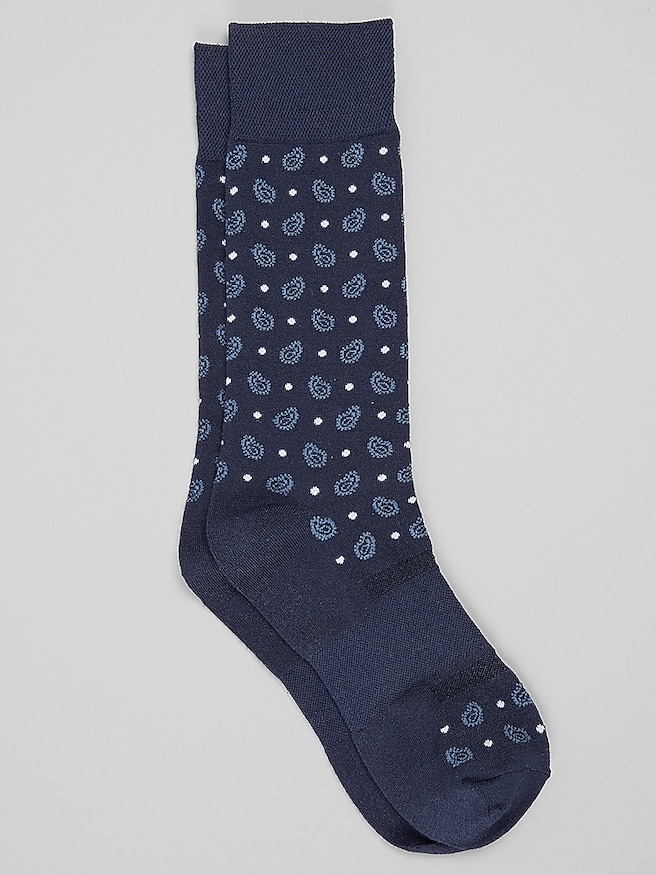
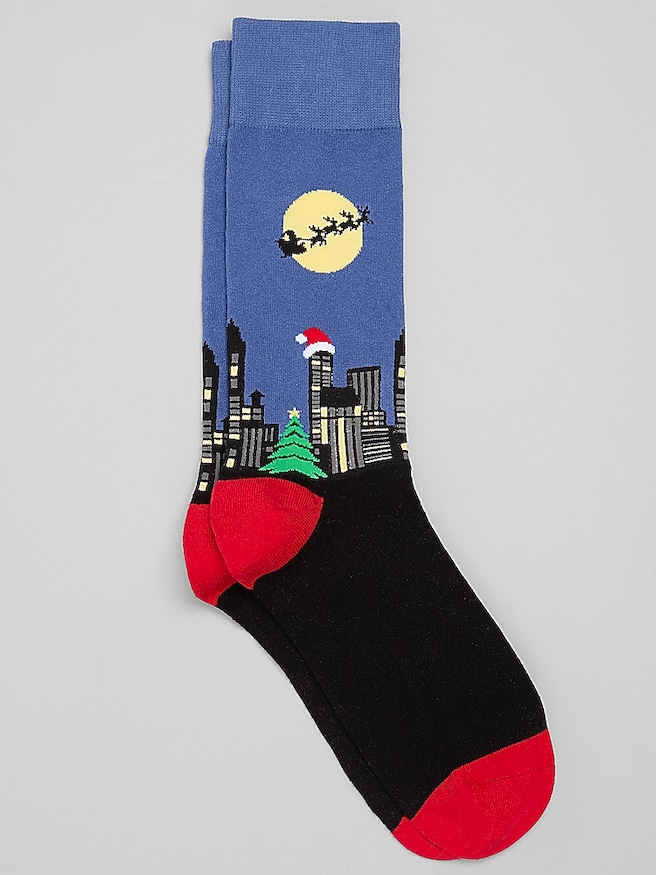
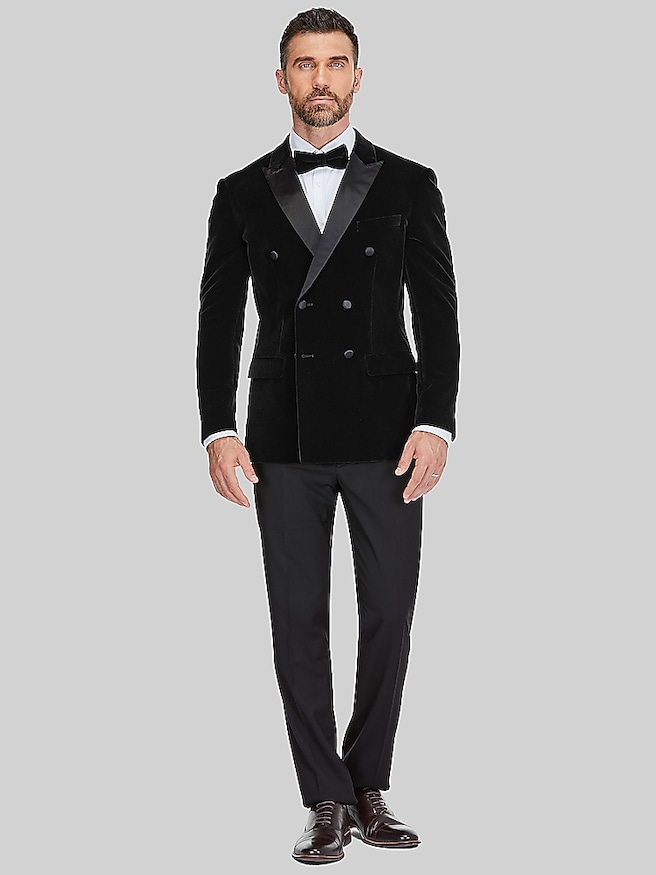
Formal party socks complement suits, tuxedos, and other polished event attire, adding a finishing detail that becomes especially noticeable when someone sits down, crosses a leg, or steps onto the dance floor. Their appeal ranges from understated solids that continue the line of tailored trousers to small patterns that bring personality to a celebration. At a traditional black-tie event, fine black dress socks are the customary companion to black tuxedo trousers and polished formal shoes. A smooth texture and restrained finish keep the outfit cohesive without drawing attention away from the tailoring. For a wedding reception, anniversary dinner, or dressy cocktail party, navy, charcoal, burgundy, and subtle patterned socks offer more room for individual expression, depending on the dress code. Matching socks closely to the trousers rather than the shoes generally creates a continuous line through the leg, particularly when the trouser hem lifts while seated. A contrasting shade makes the socks more visible and works best when that contrast feels deliberate. A small dot, narrow stripe, or compact geometric pattern can echo a tie or pocket square without repeating its design exactly. Larger motifs and brighter colors have a more playful effect and tend to suit celebrations with a less traditional atmosphere. The distinction matters: socks that add character to a relaxed reception may feel distracting at a strictly formal ceremony. For festive gatherings that welcome more expressive details, Holiday Party Socks offer a related direction for building an outfit around the occasion. Across these settings, dress socks work best as part of the whole look, balancing the trousers, shoes, and level of formality. The most convincing combination does not need every accessory to match; it needs the colors, textures, and proportions to look comfortable together. Even a brief glimpse of a well-chosen sock can make a tailored outfit feel more personal without changing its overall character.
Material and construction influence how formal party socks look inside dress shoes and how they feel through a ceremony, dinner, and several hours of standing or dancing. Fine cotton provides a soft feel and a familiar, often matte appearance, while combed cotton uses fibers processed to remove shorter strands for a smoother yarn. Fine-gauge merino wool can help manage moisture and feels less bulky than its name might suggest; the thickness of the knit matters more than the fiber name alone when pairing socks with close-fitting shoes. Silk has a smooth surface and subtle luster associated with traditional formal dressing, although its care requirements deserve attention. Blends may combine these fibers with nylon for added strength and elastane for stretch and recovery. Fiber percentages, knit density, and finishing all affect the result, so two pairs with the same main material can feel quite distinct. A thin, even knit usually fits more comfortably in fitted leather dress shoes than thick cushioning, which can crowd the toes or put pressure across the top of the foot. Smooth toe seams are another useful detail, especially for an event that involves considerable walking. Fit should feel secure at the heel and relaxed through the toes, with no bunching under the arch or fabric folding inside the shoe. Sock sizing varies, making the stated shoe-size range more useful than assuming every pair fits alike. Length also changes the appearance and feel. Over-the-calf dress socks provide extended coverage when trousers rise while seated, while mid-calf styles can work well when their length and fit keep the leg covered. A cuff should hold its position without digging in, and adequate stretch through the leg helps the fabric lie smoothly. These practical details make a difference during the ordinary moments of a formal event: waiting through photographs, standing for a toast, or moving between dinner tables. Comfort depends on the relationship between the sock, the foot, and the shoe, not simply on how soft the fabric feels in the hand.
Good care helps formal party socks retain their shape, color, and finish between occasions. The care label should determine the washing method, particularly for silk, wool, and delicate blends. For pairs labeled machine washable, turning them inside out and using a gentle cycle can reduce surface friction; a mesh laundry bag also helps keep fine socks from catching on zippers or other hardware. Mild detergent and the recommended water temperature are sensible starting points, while bleach and excessive dryer heat can damage fibers or affect stretch. Air-drying is often a gentle option when permitted by the label, and socks should be fully dry before being folded and stored. Folding pairs together rather than stretching one cuff tightly over the other avoids keeping the elastic under unnecessary tension. Durability depends on both the fabric and the construction. Reinforced heels and toes can help at high-friction areas, while resilient yarns and secure stitching support repeated wear. Even a sturdy pair can develop thin spots if it rubs against a rough shoe lining or fits so loosely that it shifts with every step. Checking the heel, toe, and cuff before an important event helps prevent an uncomfortable surprise after the shoes are on. Formal party socks also make practical gifts for someone who regularly wears tailored clothing or has a milestone celebration ahead. A groom, best man, graduate, or frequent gala guest may appreciate a pair selected with the outfit and occasion in mind. Coordinated socks can give a wedding party a shared detail without requiring every accessory to be identical, while an understated color is often easier to wear again after the photographs are finished. For a recipient whose preferences are less familiar, a smooth texture, restrained pattern, and verified size range make the gift more considered. The lasting value is in the small details: a cuff that stays comfortably in place, a toe seam that does not distract, and a fabric that complements polished shoes throughout the event.