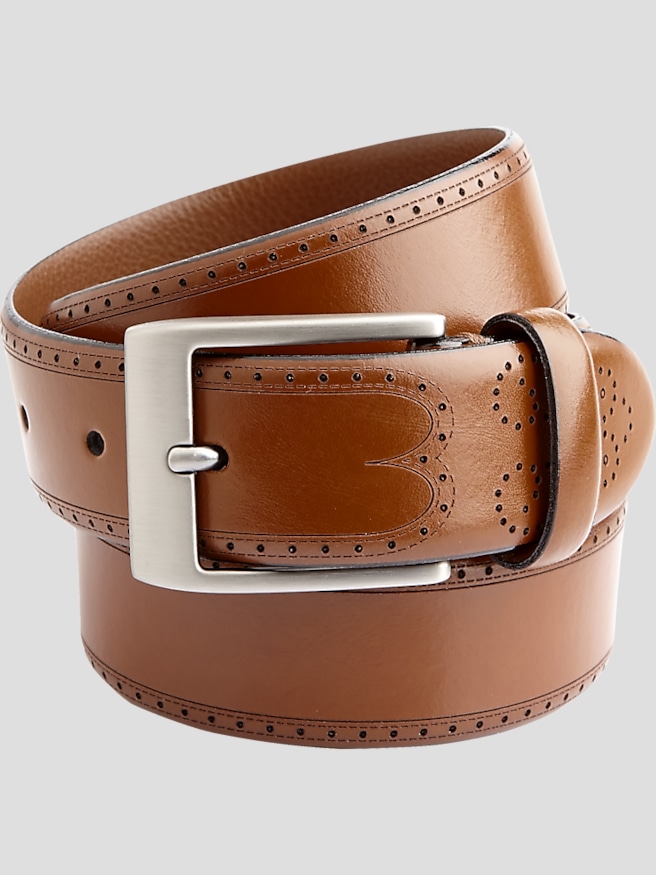
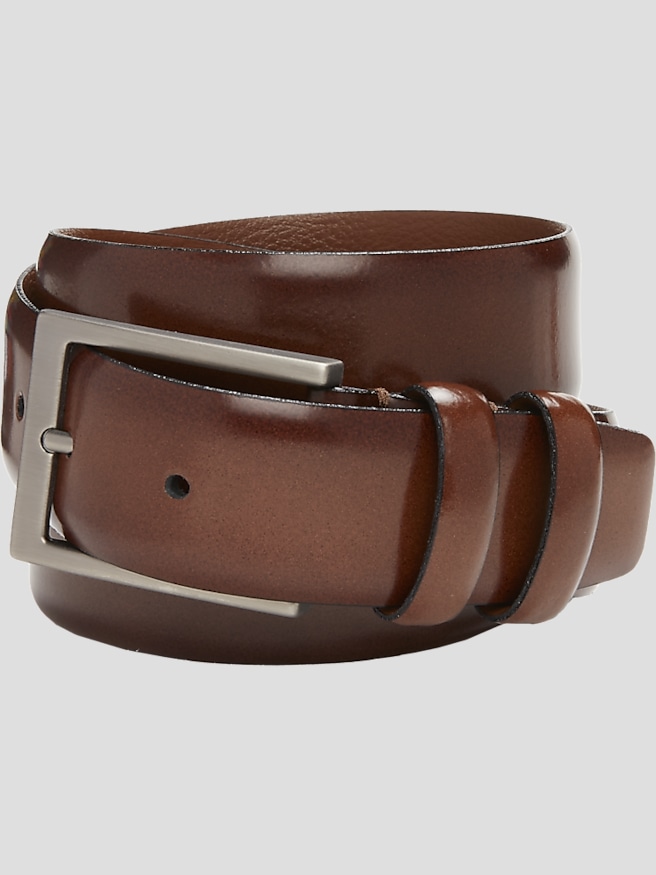
Formal belts are streamlined dress accessories designed to complement tailored trousers, suits, and dress shoes without drawing attention away from the outfit. A typical formal belt measures about 1 to 1⅜ inches wide, with a smooth surface, a neatly finished edge, and an understated buckle. That narrower profile sits comfortably within most dress trouser loops and keeps the waistline looking clean beneath a tucked-in shirt or suit jacket. Smooth leather is a traditional choice because its subtle sheen works naturally with polished footwear and finely woven suiting. Full-grain leather retains the hide’s natural surface, while top-grain leather has been refined for a more uniform appearance; either can suit a dress wardrobe when the construction and finish are appropriate. Calfskin is valued for its fine grain and supple feel. Material descriptions matter, since a leather surface alone does not explain the composition of the backing or the layers beneath it. A well-made formal belt balances flexibility with enough structure to maintain its shape through repeated wear. Even stitching, secure buckle attachment, and smooth edges contribute to a finished appearance, particularly where the belt bends around the waist. Excessively thick leather, prominent contrast stitching, oversized hardware, and rugged textures generally read as casual rather than formal. A simple frame buckle in silver-tone or gold-tone metal provides a restrained finishing touch, while a low-profile plate buckle can create a similarly polished effect. The buckle should lie close to the body rather than project noticeably beneath a jacket. These details make formal belts useful for office wardrobes, wedding guest attire, graduation ceremonies, and important presentations. At a seated dinner or across a conference table, a smooth belt and quiet buckle help the shirt, trousers, and jacket look like parts of the same outfit. The overall effect is deliberate but unobtrusive: an accessory that completes the outfit rather than becoming its focal point.
The right fit allows a formal belt to fasten comfortably without pulling the waistband into folds or leaving a long tail extending around the hip. Belt sizing commonly refers to the distance from the buckle’s attachment point to a designated hole, often the center hole, rather than the belt’s full end-to-end length. A belt labeled about 2 inches larger than a familiar trouser waist size is a common starting point; for example, someone wearing size 34 trousers may wear a size 36 belt. Sizing conventions vary, however, so the relevant size chart and measurements are more dependable than the label alone. Measuring a comfortable existing belt from the buckle attachment to the hole used most often can provide a useful comparison. Fastening near the middle of the adjustment range leaves room for small changes in fit and helps the tip sit neatly through the first trouser loop. The belt should feel secure while standing and remain comfortable while sitting, with enough flexibility to follow the waist rather than press into it. Trousers should already fit reasonably well; tightening a belt to compensate for an oversized waistband can create bunching beneath a jacket. Color coordination is equally important to a polished result. Black leather pairs naturally with black dress shoes, while brown belts work best with brown footwear of a similar depth and undertone. An exact dye match is not necessary, but a light tan belt can look disconnected from very dark brown shoes. Finish also influences the pairing: softly polished leather tends to sit comfortably alongside similarly finished footwear, while a highly glossy belt can appear conspicuous against matte shoes. Buckle color can echo a watch case or cufflinks, although subtle coordination matters more than matching every metal surface perfectly. For outfits that extend beyond traditional tailoring, Stylish Belts provides another point of reference for a broader accessory wardrobe. Keeping proportion, leather tone, and hardware in balance makes the transition from a business suit to dress trousers and a sport coat feel natural.
Formal belts work best when the trousers and the occasion call for them. A suit with belt loops usually benefits from a restrained leather belt, particularly when the jacket may come off during a reception or a long workday. Trousers designed with side adjusters create a finished waistline without one, and traditional tuxedo trousers are generally worn without a belt. Suspenders serve a separate purpose and are ordinarily worn instead of a belt, not alongside it. That distinction helps preserve the clean lines expected of more formal evening attire. For someone building a dress wardrobe, black and versatile brown leather can cover many combinations of shoes and tailoring without requiring a large accessory collection. A formal belt can also make a practical gift for a graduate, a new professional, a partner, or a family member who regularly attends dressier events. Knowing the recipient’s belt measurement, usual shoe color, and preference for subtle hardware makes that gift more personal and easier to wear. Long-term appearance depends on care as much as initial construction. Leather benefits from being kept away from prolonged moisture, direct heat, and repeated sharp folding. After wear, a soft, dry cloth can remove surface dust; any cleaner or conditioner should be appropriate for the particular leather finish and used according to its directions. Too much conditioner can darken some leathers or leave residue, so occasional, light treatment is generally more suitable than heavy application. A damp belt should air-dry naturally rather than beside a heater. Hanging it by the buckle or storing it in a loose coil helps avoid hard creases, while fastening without yanking reduces stress around the holes and buckle attachment. Some softening and surface character are normal with use, but splitting edges, separating layers, or badly stretched holes can compromise both appearance and function. With suitable fit, thoughtful coordination, and gentle care, a formal belt remains a dependable finishing detail for occasions when presentation matters.