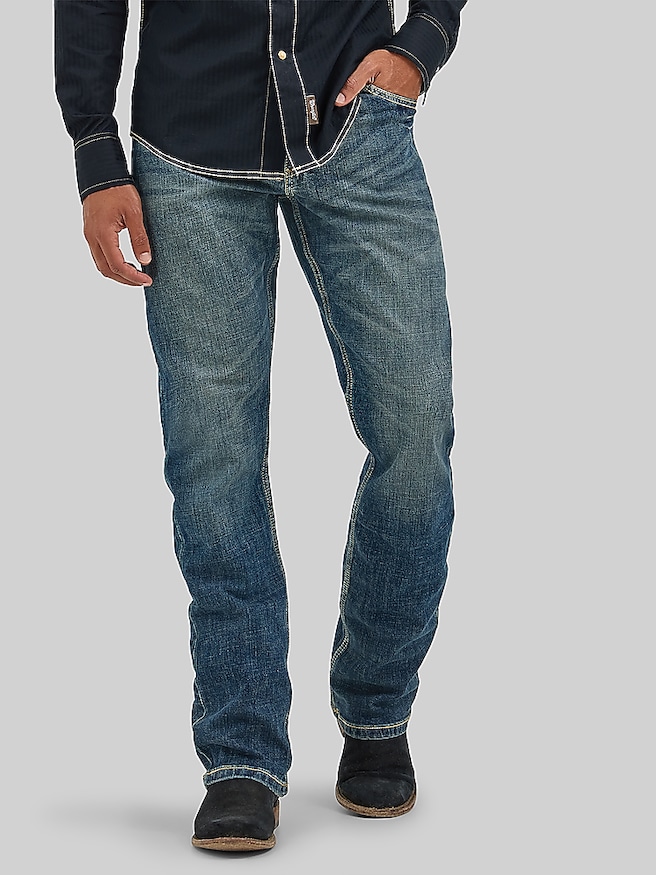
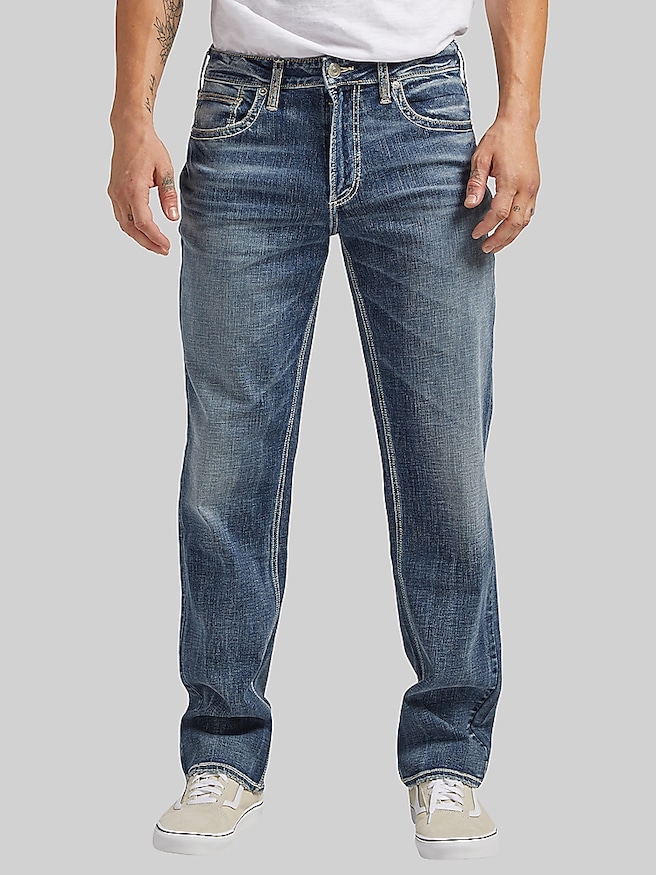
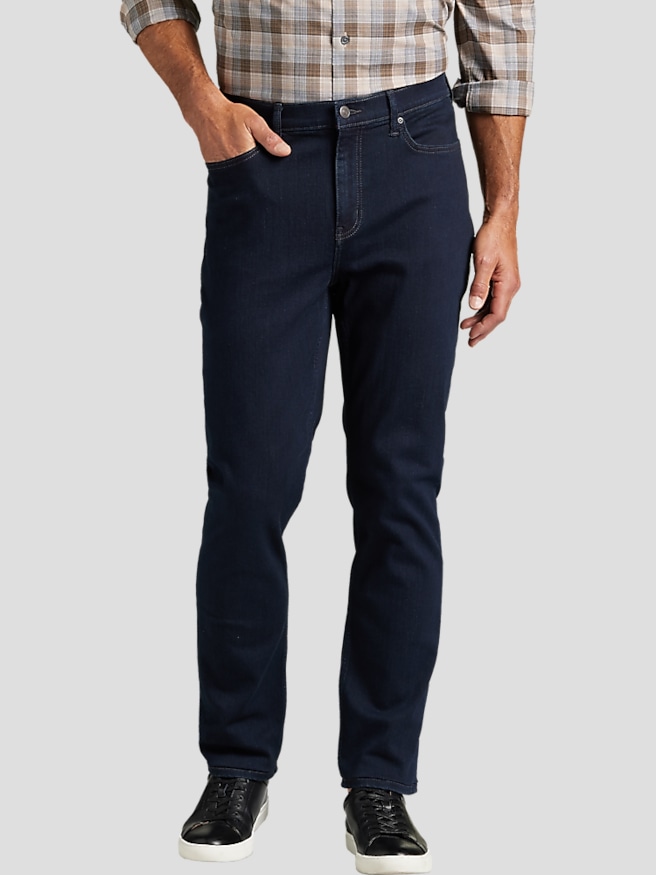
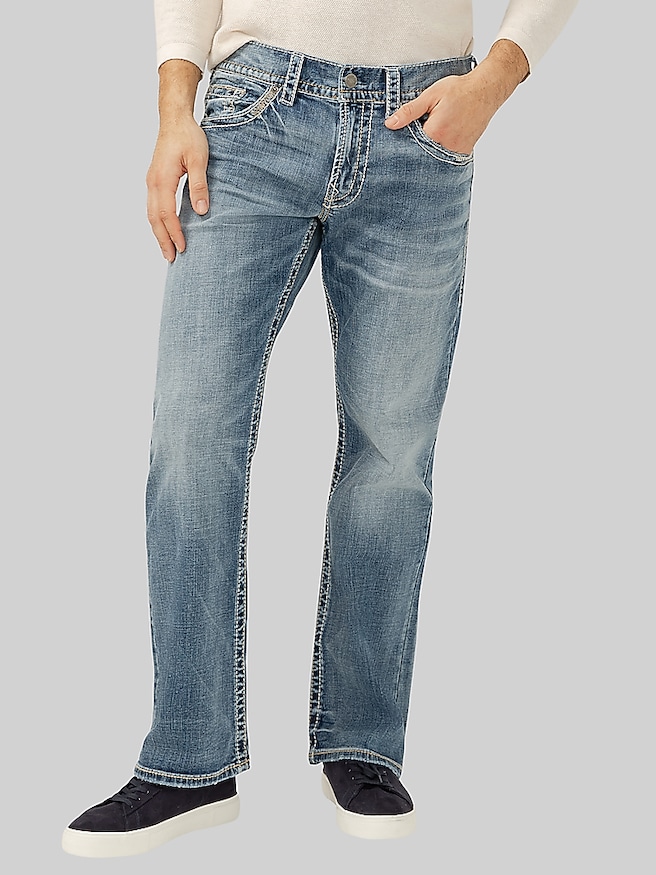
Flattering jeans balance the waist, seat, and leg for a clean silhouette without restricting movement. The most flattering fit depends on body proportions, preferred rise, and how closely the denim follows the body, rather than on a single cut that works for everyone. Straight-leg jeans offer an even line from the knee to the hem, making them a versatile choice for men who prefer a balanced shape. Slim jeans sit closer through the leg for a more tailored appearance, while athletic fits typically provide additional room through the seat and thighs before narrowing toward the ankle. Relaxed fits allow more space throughout, and bootcut shapes open slightly below the knee to accommodate boots. For someone with muscular thighs, enough room above the knee can create a smoother outline than a narrower cut that pulls across the front. For a leaner build, a slim or gently tapered leg can reduce excess fabric without looking tight. Rise matters just as much as leg shape: a mid-rise waist often creates familiar, easy proportions, while a higher rise can visually lengthen the legs and provide more coverage when sitting. A lower rise sits farther down the hips and changes how a tucked shirt or shorter jacket frames the body. The waistband should rest comfortably at its intended position rather than needing a tightly cinched belt to stay in place. Across the seat, denim should follow the body without sagging or creating pronounced tension lines. Pockets that sit proportionately within the seat can also contribute to a balanced rear view. Inseam completes the picture. A hem with little or no break gives sneakers and loafers a crisp finish, while a modest break can sit naturally over boots. Excess length that piles around the ankles may interrupt an otherwise clean line. Well-proportioned jeans feel comfortable at a restaurant table, during a commute, and while walking, not just when standing in front of a mirror.
Denim fabric and finish influence both the appearance and the feel of flattering jeans. Traditional all-cotton denim has a structured character that can soften and develop individual wear patterns over time. Denim blended with a small amount of elastane or another stretch fiber offers added flexibility, which can be especially welcome when bending, climbing stairs, or spending much of the day seated. Fiber percentages tell only part of the story; fabric construction and recovery also affect whether jeans hold their shape after repeated movement. A pair that feels soft immediately may drape differently from one made with firmer denim, even when both have the same labeled fit. Medium-weight fabric often provides a useful balance of structure and flexibility, while heavier denim tends to feel more substantial and lighter fabric generally falls more easily against the leg. Neither weight is inherently more flattering. The useful distinction is whether the material hangs smoothly in the chosen cut. Wash and color add another layer of definition. Dark, evenly colored denim creates a continuous line and pairs easily with dressier casual clothing. Mid-blue washes bring out the familiar texture of denim, and lighter washes give an outfit a more relaxed appearance. Whiskering, fading, and contrast stitching draw attention to particular areas, so their placement can change the visual effect of the same silhouette. For a classic denim palette, stylish blue jeans complement everything from a plain crewneck to a softly structured sport coat. Tonal stitching and minimal distressing keep the look understated, while more visible fading adds character. Details such as sturdy pocket construction, neatly finished seams, and a smooth-working zipper contribute to everyday usefulness and durability. Comfortable pocket placement matters, too: a phone or wallet should not create unnecessary bulk or make sitting awkward. The strongest combination is fabric with the right amount of structure, a wash that suits the intended setting, and enough ease for the jeans to keep their shape without clinging.
Flattering jeans earn their place in a wardrobe by working with the clothes and shoes already worn most often. A straight or tapered pair with a polo and leather sneakers feels put together for lunch, an informal gathering, or a day of errands. Dark denim with a button-down shirt and an unstructured jacket can suit a casual dinner or an office where jeans are appropriate; denim still remains casual clothing, even in its cleanest finish. A relaxed leg works well with a substantial shoe and a shirt that has some ease through the body, while a narrower leg often sits neatly above a lower-profile sneaker or loafer. Balance comes from the whole outfit rather than from making every piece close-fitting. A tucked shirt reveals the waistband and emphasizes the rise, whereas an untucked shirt changes the apparent length of the torso depending on where its hem falls. Jeans can also make a practical gift for someone whose waist size, inseam, and preferred fit are known, though those measurements may not translate identically across every cut. Familiar preferences such as stretch versus rigid denim or a straight versus tapered leg are often more useful than choosing by color alone. Once jeans become part of a regular rotation, thoughtful care helps preserve their fit and finish. The garment’s care label is the best starting point because fiber blends, dyes, and finishing treatments can require different handling. Turning jeans inside out, washing with similar colors, and using a gentle cycle when permitted can reduce surface abrasion and help limit fading. High dryer heat may cause shrinkage or affect stretch fibers, so air-drying or a lower-heat setting is preferable when the label allows it. Deep indigo can transfer onto light upholstery or footwear, particularly before the first few washes. Prompt attention to a loose seam or a thinning pocket can keep a small repair from becoming a larger problem. With suitable care and a comfortable, balanced cut, denim can develop character through regular wear while retaining the shape that made it flattering in the first place.