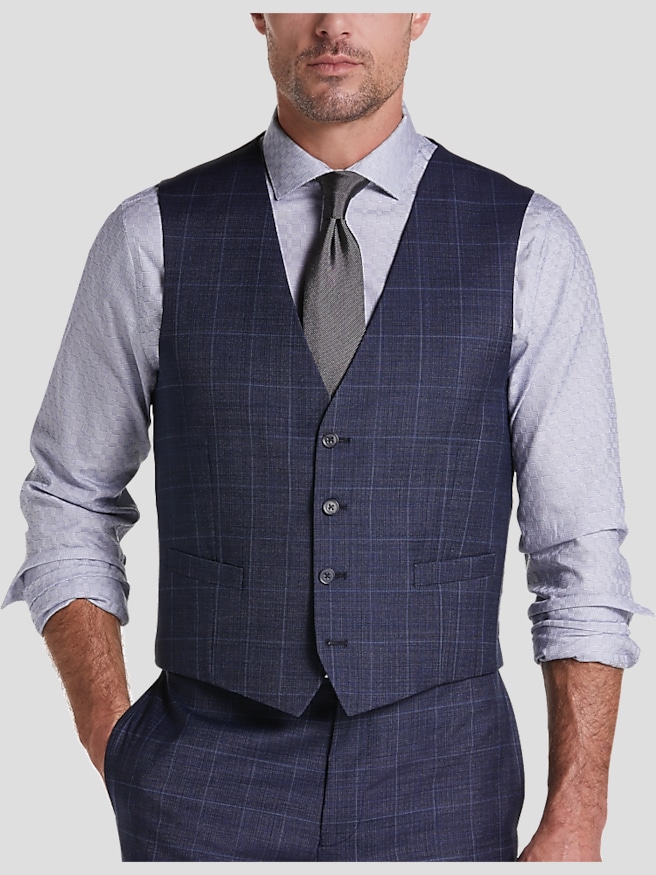
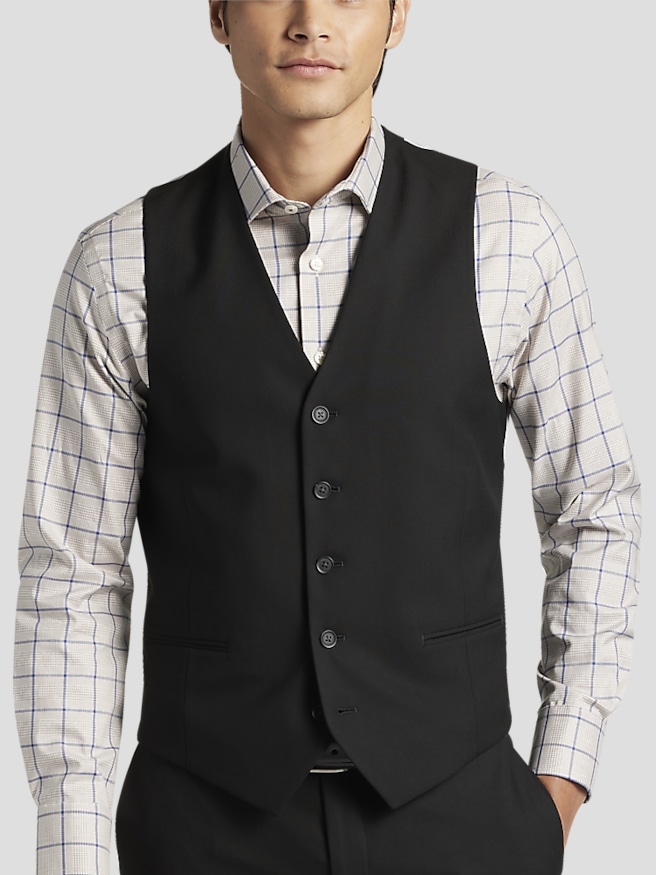
Fitted vests are tailored, sleeveless layers designed to sit close to the torso, adding definition through the chest and waist without restricting movement. Often called waistcoats, they bring a finished look to dress shirts and trousers, whether worn beneath a suit jacket or as the main tailored element of an outfit. Their appeal is partly visual and partly practical: a shaped front creates a clean line, while the absence of sleeves leaves room for comfortable movement at a desk, across a reception floor, or through a full day of meetings. A fitted silhouette should follow the body rather than squeeze it. The front lies smoothly when buttoned, the shoulders rest flat, and the armholes allow the shirt underneath to move without bunching. Pulling around the buttons, pronounced diagonal creases, or a front that lifts away from the waistband can indicate that the proportions need adjustment. Length matters as much as width. The front should generally cover the trouser waistband when standing, keeping a strip of shirt from interrupting the outfit. Higher-rise dress trousers often make that connection easier, particularly with a shorter, traditionally cut waistcoat. An adjustable back strap can refine the waist, but it cannot correct an overly narrow chest or an unsuitable overall length. Fitted and slim fit are also not interchangeable promises of the same shape; the relationship between chest, waist, and torso length determines how a vest actually sits. Someone with broad shoulders may need room through the upper body even when seeking a tapered waist. Comfort becomes especially noticeable when sitting, reaching forward, or fastening a jacket over the vest. A close fit that accommodates those everyday movements looks more composed than one that is simply tight. Depending on the cut, leaving the lowest button undone follows traditional waistcoat styling and can help the front drape naturally over the hips. A smooth neckline and balanced shoulder width also help the vest look intentional without a jacket, rather than like an unfinished part of a suit.
Fabric gives fitted vests much of their character, influencing everything from surface texture to how neatly they hold their shape. Wool is a familiar choice for tailored dressing because of its drape, resilience, and ability to recover from minor creasing. Fine worsted weaves create a smooth, understated surface that works easily with a dress shirt and polished trousers, while more textured weaves lend depth to an outfit built around solid colors. Wool blends can balance those qualities with added strength or easier maintenance, depending on their composition. Cotton offers a more relaxed appearance and a firmer hand in some weaves, though visible creasing can become part of its character. Linen brings an irregular texture and a less rigid finish; its natural wrinkles suit outfits that do not depend on a perfectly smooth surface. Synthetic fibers may contribute abrasion resistance or shape retention, and a small amount of stretch can add flexibility, but neither replaces a well-proportioned cut. The lining and back panel deserve attention, too. A smooth lining helps the vest settle over a shirt, while a fabric back can create a more consistent appearance when the vest is worn without a jacket. Construction details make a difference over repeated wear: secure buttons, neatly finished seams, even stitching, and pocket openings that lie flat all support a tidy silhouette. Overfilled pockets can distort a close-fitting front, so a vest generally looks best without bulky objects weighing it down. Care should follow the garment label rather than assumptions about its appearance. Some fabrics require professional cleaning, while others permit gentler at-home methods. Between cleanings, airing the garment, removing surface lint with an appropriate brush, and storing it on a supportive hanger can help preserve its finish. Any steaming or pressing should suit the fabric and lining, with particular care around shaped seams and textured surfaces. A vest also benefits from enough closet space to hang freely instead of being compressed between heavier garments, which can leave creases across the front.
The most useful fitted vest is one whose level of formality matches the occasions it will actually serve. For business settings, a restrained color and subtle weave can add polish to a collared shirt without drawing attention away from the person wearing it. Navy, charcoal, and medium gray are easy foundations for coordinating trousers, ties, and jackets, while a small check or quiet herringbone introduces detail without dominating the outfit. At a wedding, a vest can help maintain a dressed appearance after the jacket comes off for dinner or dancing. Matching fabric creates the continuity associated with a three-piece suit; a contrasting vest makes the separation more noticeable and works best when its color and texture relate clearly to the rest of the clothing. Even fabrics described with the same color name can differ in shade, sheen, and weave, so an intentional contrast often looks better than an almost-match. Collections such as Designer Vests offer another way to explore how details such as neckline depth, button placement, and pocket styling influence the overall impression. A higher neckline shows more of the vest beneath an open jacket, while a deeper opening gives a tie and shirt front more space. For a relaxed dinner, a textured waistcoat with an open-collar shirt and tailored trousers can feel considered without requiring a full suit. Smooth shirt fabric is especially helpful beneath a close-fitting vest because excess material has little room to disappear. Formal evening dressing has its own proportions, and a suit vest is not automatically a substitute for a waistcoat designed to coordinate with a tuxedo. The neckline, front coverage, and fabric finish should belong to the same level of dress as the surrounding pieces. As a gift, a fitted vest is most personal when the recipient’s measurements, preferred trouser rise, and usual occasions are already known. Those details matter more than choosing a familiar size alone. Whether intended for regular office wear, celebrations, or occasional dressed-up evenings, a well-chosen vest brings structure through thoughtful proportions rather than unnecessary bulk.