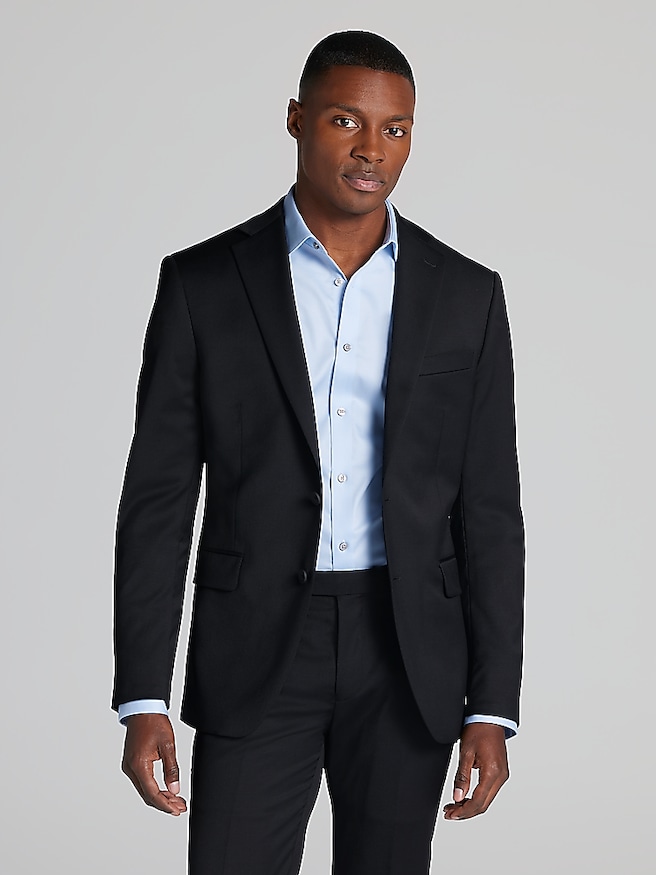
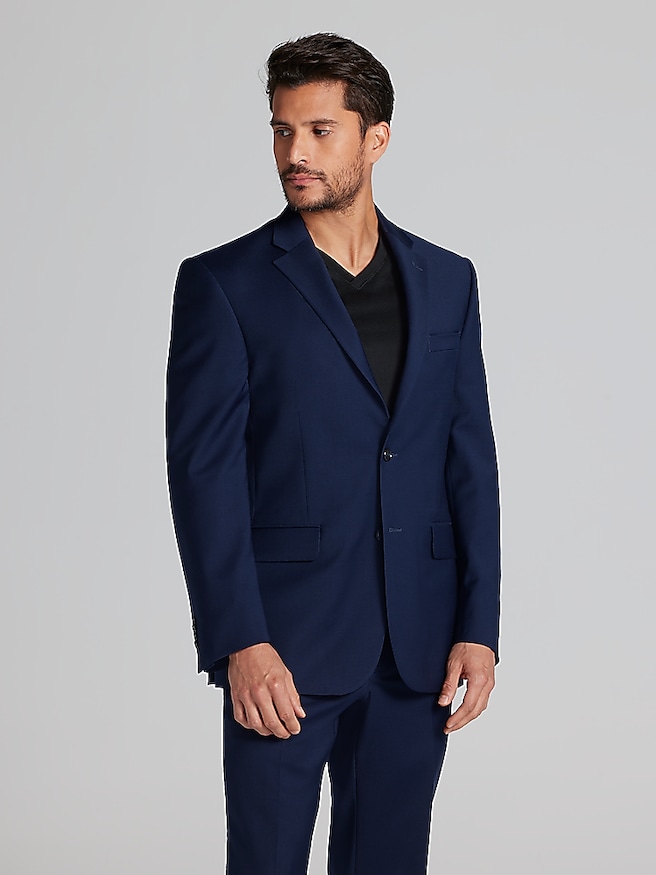
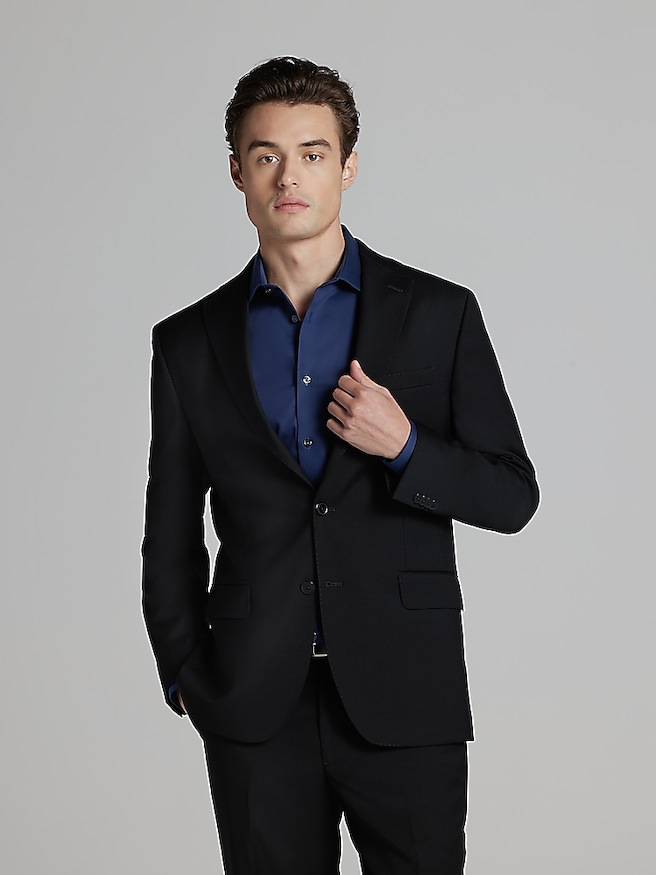
Fancy jackets for men bring a more expressive finish to tailored dressing through rich textures, distinctive patterns, elegant lapels, and carefully placed embellishment. The category includes velvet dinner jackets, patterned blazers, jacquard designs, and dress jackets accented with satin, embroidery, or subtle sparkle. Some make their impression through color alone: deep burgundy, midnight blue, and emerald can feel distinctive without relying on elaborate decoration. Others use tonal patterns that become more noticeable up close, giving an outfit visual depth without dominating it. These jackets suit occasions where everyday tailoring might feel too restrained, including wedding receptions, galas, milestone birthdays, proms, and evening celebrations. The invitation still sets the level of formality; an expressive blazer is not automatically a substitute for a tuxedo when black tie is required. Fabric plays a large part in how a dressy jacket looks and feels. Cotton velvet has a soft pile that catches light, creating areas of depth and sheen as the wearer moves. Wool and wool-blend fabrics can provide structure with a fluid drape, while silk blends may contribute a subtle luster. Jacquard describes a pattern woven into the fabric rather than printed onto its surface, with effects ranging from restrained geometric motifs to elaborate floral designs. Synthetic blends can contribute resilience and shape retention, although comfort and wrinkle resistance also depend on the weave, lining, and construction. A smooth satin lapel creates contrast against a matte body, while a self-fabric lapel gives texture or pattern more room to stand out. Embroidered details, decorative buttons, and embellished lapels offer another way to distinguish a jacket without covering the entire garment. For a wedding guest who wants something memorable in photographs or a host greeting friends at an evening reception, the right balance often comes from one defining feature rather than several competing effects. A black velvet jacket with a clean silhouette, for example, can make as clear an impression as a brighter design with an intricate woven pattern.
Fit gives a fancy jacket its polish, regardless of how striking the fabric may be. The shoulder line should sit close to the natural shoulder without extending into a pronounced ledge, and the collar should rest against the shirt collar rather than pulling away from it. Across the chest, a smooth front generally looks more refined than fabric that strains into an X around the fastening button. Slim fits follow the torso more closely, classic fits offer additional room, and relaxed silhouettes create a less fitted outline; none should prevent comfortable movement. A jacket that looks sharp while standing also needs to feel manageable during a seated dinner, a handshake, or a turn on the dance floor. Sleeve length, overall jacket length, and balance through the waist all influence the finished appearance. A small amount of visible shirt cuff creates a deliberate transition at the wrist, while sleeves that cover much of the hand can make an otherwise elegant jacket look oversized. Tailoring can refine certain areas, but substantial shoulder changes are more involved than a straightforward sleeve or waist adjustment. The construction matters, too: vents allow movement through the back, lining affects how easily the jacket slips over a shirt, and interior pockets provide practical space without interrupting the exterior design. Styling works best when the rest of the outfit gives the jacket room to lead. A richly patterned blazer often pairs naturally with solid dress pants and a crisp shirt, while a restrained jacket leaves more room for an expressive tie or pocket square. Coordinating colors does not require matching every accessory exactly; a small shared tone can connect the outfit without making it feel overly planned. For occasions centered on more conventional tailoring, Stylish Mens Suit Jackets offer a related direction. The distinction is useful when choosing between an outfit built around a statement jacket and one intended to read as a cohesive suit. Polished shoes and a well-maintained shirt support either approach without adding unnecessary visual competition.
Long-term satisfaction depends as much on care and construction as on the first impression. Sound seams, securely attached buttons, neatly finished buttonholes, and a lining that lies smoothly all contribute to a jacket that feels considered. Decorative details deserve particular attention because raised embroidery, beading, and textured surfaces may catch on jewelry, rough chair backs, or the edges of a crowded coat rack. Velvet needs care that preserves its pile; pressure and direct ironing can flatten the surface or leave unwanted shine. Any cleaning or steaming should follow the garment’s care label, and a professional cleaner should know about delicate trim or mixed materials before treatment. Some tailored jackets require dry cleaning, but frequent cleaning is not a substitute for routine care. Airing a jacket after wear, addressing marks promptly according to the care instructions, and storing it on a broad, supportive hanger can help preserve its appearance. Pockets kept free of heavy objects are less likely to stretch or distort, and enough space in the closet helps prevent lapels and embellishments from being crushed. A breathable garment bag can protect against dust during longer periods between occasions. These details matter for jackets worn repeatedly to celebrations as well as those reserved for a few significant events. Durability is not simply a matter of choosing the heaviest fabric; a delicate decorative jacket may serve its purpose well with thoughtful handling, while a more substantial woven design may better suit frequent wear. As a gift, a dressy jacket can mark a graduation, a milestone birthday, or another achievement, particularly for someone who enjoys dressing for special occasions. Familiarity with the recipient’s measurements, preferred fit, and comfort with bold colors makes the choice more personal. For someone building a formal wardrobe, an understated texture may have broader use than extensive ornamentation. For an experienced dresser, an unusual lapel treatment or richly patterned fabric can add something genuinely distinctive. The most rewarding choice feels expressive without feeling like a costume, with enough comfort and versatility to earn another invitation out.