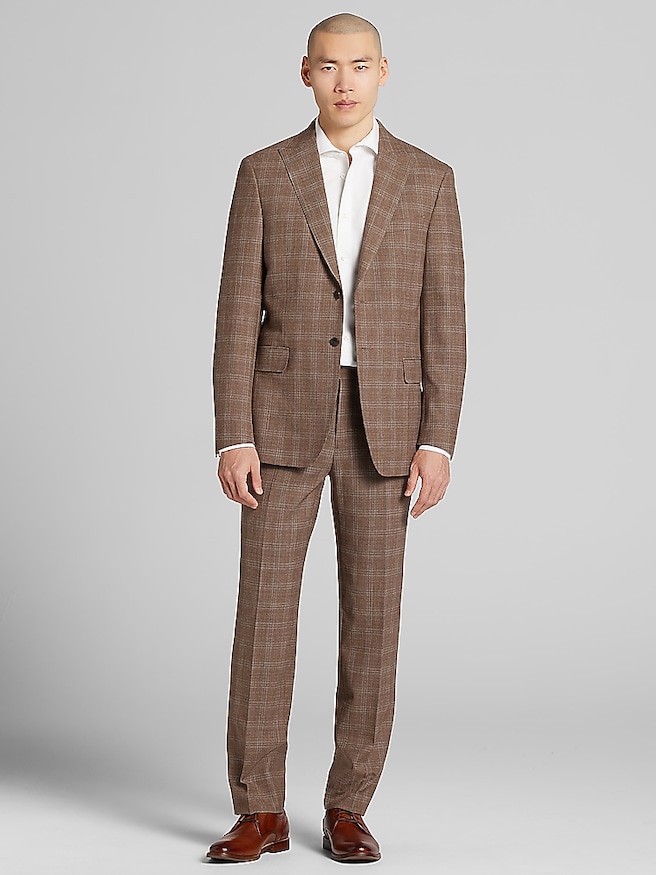
Fall outdoor wedding attire for men typically centers on a well-fitted suit or tailored jacket in medium-weight wool, flannel, or a textured wool blend, with the invitation’s dress code determining the level of formality. These fabrics give an outfit structure and some insulation without requiring the bulk of heavy outerwear throughout the celebration. Wool is especially versatile because it can feel comfortable across a range of temperatures, while wool flannel adds a softly brushed surface that works naturally with autumn colors. Tweed brings a more pronounced texture and a rustic character, making it better suited to relaxed estate, orchard, or countryside settings than a black-tie reception. Navy, charcoal, deep brown, and muted olive offer a grounded palette; burgundy, rust, and forest green can appear in smaller accents without overwhelming the outfit. The setting adds context, but it does not replace the dress code: a ceremony beneath oak trees can still call for a tuxedo, while an informal vineyard gathering may allow a sport coat and dress trousers. Black tie calls for a tuxedo, typically in black or midnight blue, rather than a casual interpretation built around earthy colors. Cocktail and semi-formal celebrations generally favor tailored suits, with room for texture and personality through shirts, ties, and pocket squares. For a groom or wedding party, coordinated fabric weights and complementary colors create a cohesive appearance without requiring every detail to match. Guests can echo the character of the venue while leaving distinctive wedding-party styling to the people taking part in the ceremony. A weathered timber backdrop, gravel walkway, or reception overlooking open fields often makes subtle texture feel more at home than a glossy finish. For celebrations with that rustic character, Men's Fall Wedding Barn Wedding Attire offers a closely related way to explore the occasion. Across these settings, the strongest outfits balance the formality of the event with the practical demands of spending time outdoors.
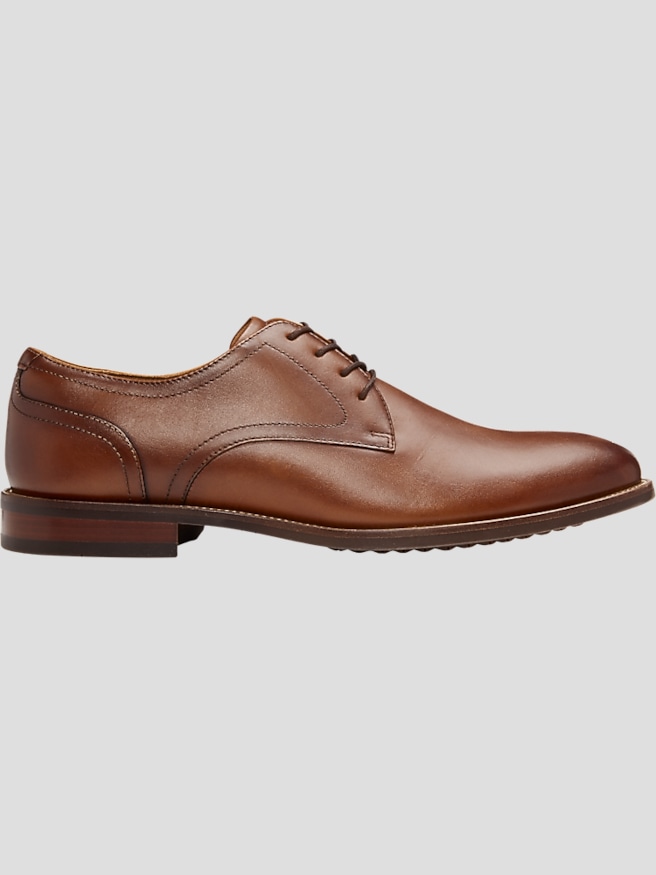
Fit becomes especially important when an outfit needs to move comfortably from a lawn ceremony to dinner and dancing. A suit jacket should sit cleanly at the shoulders, lie smoothly across the upper back, and fasten without pronounced pulling through the front. The collar should rest close to the shirt collar rather than standing away from the neck. Slim, tailored, and classic silhouettes can all look polished; the right choice depends on body shape, preferred proportions, and enough room to sit, reach, and move naturally. Trousers need comfortable space through the seat and thighs, with a hem that falls neatly over the shoes instead of collecting dirt or moisture along the ground. A little room for movement is more useful than an extremely close fit, particularly during a long reception. Layering also benefits from attention to proportion. A dress shirt in cotton or a breathable cotton blend provides a smooth foundation, while a vest adds coverage through the torso without covering the jacket’s shape. Fine-gauge knitwear can work beneath a sport coat when the dress code permits, but thick sweaters may crowd the sleeves and distort the shoulders. For an exposed ceremony site, a tailored overcoat offers a cleaner finish over formal clothing than a bulky casual jacket. Medium-weight suiting can handle a mild afternoon, though an open lawn after sunset may call for that additional layer. Wool provides insulation, not waterproof protection, so covered walkways and a place to keep outerwear matter when rain is possible. Footwear should reflect both the invitation and the terrain. Leather dress shoes suit many wedding settings, while understated dress boots may work for less formal events. Secure footing matters on damp grass, uneven stone, and gravel; a discreet rubber sole can offer practical traction without making the outfit look overly casual. Newly worn footwear is best broken in before a day that includes standing for photographs, walking between venues, and dancing.
The finishing details give fall wedding clothing its individual character while keeping the overall impression composed. A crisp white shirt offers clear contrast against navy, charcoal, or brown, while light blue provides a softer alternative for many suit colors. Shirt fabrics with a subtle weave can complement textured tailoring, although several strong patterns together may compete in photographs. A patterned tie against a solid shirt, or a textured solid tie with a restrained stripe, creates interest without making every piece demand attention. Pocket squares work best as a complement rather than an exact duplicate of the tie, and a small amount of color is often enough. For a groom, attendant, or guest who prefers understated clothing, the distinction can come from the fabric itself: the soft surface of flannel, the depth of a heathered weave, or the crisp line of well-fitted trousers. Accessories can also make thoughtful gifts for a groom or wedding-party member when selected around the planned colors and dress code. A tie, pocket square, or pair of dress socks offers a personal touch without requiring the precise measurements of tailored clothing. Durability and care are equally relevant for garments intended to serve beyond one celebration. An even weave, neatly finished seams, a smooth lining, and securely attached buttons are useful details to assess, along with how comfortably the garment moves. Care instructions vary by fabric and construction, so the label should determine whether a piece requires professional cleaning or can be washed at home. After wear, emptying pockets, gently brushing away surface dust, and airing a jacket before storage help keep it ready for another occasion. A supportive hanger preserves the shoulders, while prompt attention to mud or food marks can prevent more difficult cleanup later. Versatile colors and balanced proportions also extend the usefulness of wedding clothing: a navy or charcoal suit can move into other formal occasions, and a textured jacket may work with dress trousers for a dinner or celebration. The result is attire that feels appropriate against an autumn landscape while remaining comfortable, considered, and useful long after the final photograph.