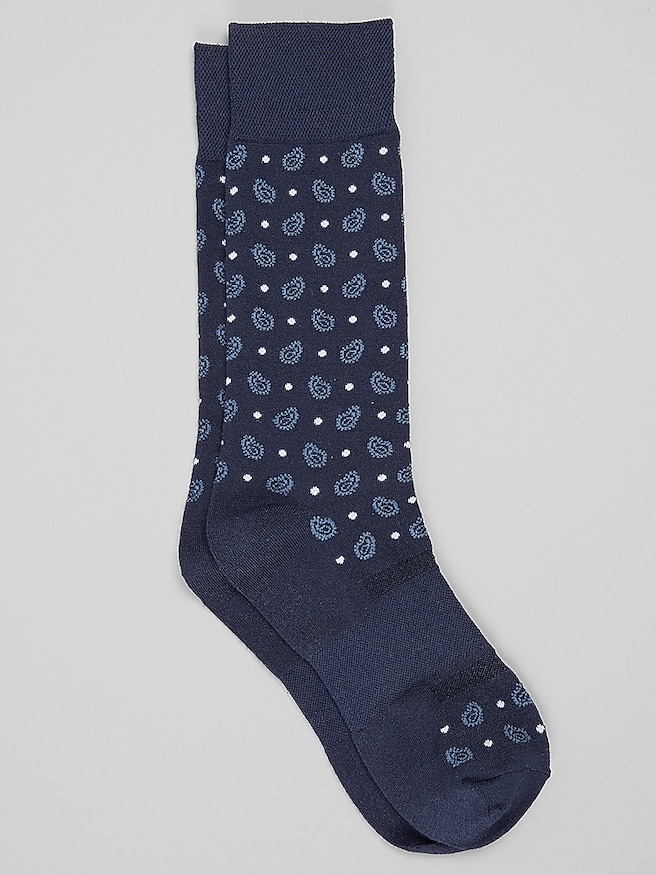
Fall dress socks for men combine autumn-inspired colors, a refined profile, and comfortable coverage for wear with dress shoes, trousers, and suits. Wine, burgundy, chocolate brown, charcoal, and muted olive bring depth to an outfit without competing with a jacket or tie. Navy and black remain useful foundations, especially when the goal is a quiet transition between the trouser hem and the shoe. A navy sock beneath navy trousers creates a continuous line, while a burgundy pair can introduce a restrained accent between charcoal pants and dark brown leather shoes. Patterns offer another way to work seasonal character into dressed-up clothing: fine herringbone, small dots, narrow stripes, and subtle geometric designs provide visual interest in the brief glimpse of fabric that appears when someone sits or crosses a leg. The scale matters as much as the color. Small, closely spaced patterns tend to blend into tailored outfits, while larger contrasts make socks a more noticeable part of the look. Dress socks bring a finishing touch to Fall Dress Clothes for Men, connecting the deeper tones and textured fabrics associated with fall dressing. With flannel trousers, a lightly textured sock can echo the fabric without making the outfit feel heavy. With a smooth worsted suit, a fine-gauge sock maintains a cleaner appearance. These details suit office days, client dinners, wedding celebrations, and other occasions that call for more polish than an athletic sock provides. A man who spends the morning in a meeting and the evening at a restaurant benefits from socks that look composed in both settings. Seasonal color does not have to limit their usefulness, either. Brown, wine, and charcoal remain easy to coordinate beyond fall, making them practical additions to a wardrobe built around familiar tailored pieces. The strongest combinations feel intentional rather than exact: a sock can pick up a small color in a tie or shirt without matching every accessory.
Material and construction determine how fall dress socks feel over the course of a day. Merino wool is valued for its fine fibers, insulation, and ability to absorb moisture vapor, making it a useful option for someone moving between a brisk outdoor walk and a heated office. A fine merino blend can provide warmth without the thickness of a hiking sock, an important distinction when wearing closely fitted dress shoes. Cotton offers a familiar, soft feel, and cotton blends can balance that comfort with added stretch and resilience. Mercerized cotton has been treated to give the yarn a smoother appearance and a subtle luster, which works especially well with polished leather footwear and tailored clothing. Fiber content alone does not tell the whole story, however. Knit density, yarn weight, and cushioning also affect warmth, breathability, and the amount of room a sock takes up inside a shoe. Nylon can contribute abrasion resistance, while elastane supplies stretch that helps the sock follow the foot and maintain its shape. Reinforcement at the heel and toe supports durability in areas exposed to repeated friction. A smooth toe seam is particularly welcome during a long day in oxfords, where even a small ridge can become distracting. Mid-calf and over-the-calf lengths serve slightly different preferences. Mid-calf dress socks offer familiar coverage and can work well for everyday office wear when the cuff stays comfortably in place. Over-the-calf socks extend higher on the leg and help keep skin covered when trousers rise while seated, making them a useful choice for suits and more formal settings. Neither length should require constant adjustment or leave an uncomfortably tight band around the leg. A well-fitting heel sits where it belongs, the toe has enough space to lie smoothly, and extra fabric does not bunch beneath the arch. Shoe size ranges provide a starting point, but foot width, calf shape, and the stretch of the knit also influence comfort. Added cushioning can soften pressure underfoot, provided it does not make a dress shoe feel cramped.
The intended use of fall dress socks often comes down to the rhythm of the day. For a commuter walking several blocks before spending hours at a desk, a breathable knit, secure cuff, and smooth interior can matter more than a bold pattern. For a celebration involving photographs, a seated dinner, and time on a dance floor, comfortable coverage helps the outfit stay polished through movement. Loafers reveal more of the sock than some lace-up shoes, giving a textured brown or understated patterned knit a larger role in the overall appearance. Dress boots call for attention to the same fit details, particularly around the ankle, where loose fabric can gather. Durability depends on both construction and care. Repeated rubbing at the back of a shoe, rough toenail edges, and excessive stretching can shorten a sock’s useful life, even when the fabric initially feels substantial. Following the care label helps protect the fibers and elastic; recommended washing temperatures and drying methods can vary between wool blends and cotton blends. Gentle washing, when permitted by the label, reduces unnecessary friction, and avoiding excessive heat helps preserve fit. Socks should be fully dry before they are folded and put away. Pairing them without tightly stretching one cuff over the other reduces strain on the opening, while rotating several pairs allows each to be washed and dried properly between wears. Fall dress socks also make a thoughtful gift for a father, brother, partner, graduate, or colleague who regularly wears tailored clothing. Familiar colors are easy to incorporate into an established wardrobe, while a subtle pattern can offer something more personal without requiring a major change in style. Knowing the recipient’s shoe size, preferred sock height, and sensitivity to particular fibers makes the choice more considered. For everyday wear or a special occasion, the appeal lies in small details that earn their place: comfortable materials, dependable fit, thoughtful color, and a neat appearance from the first step to the last.