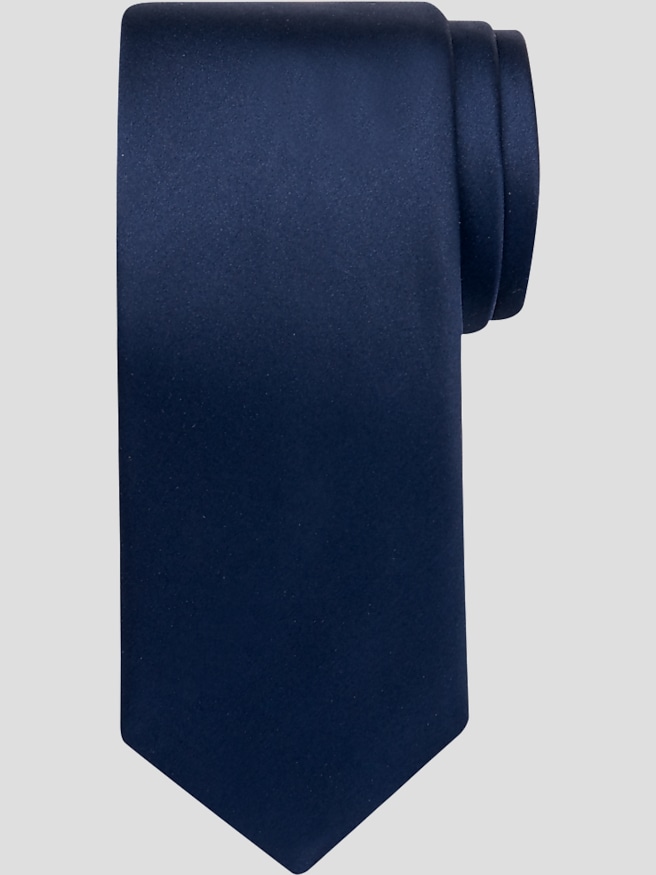
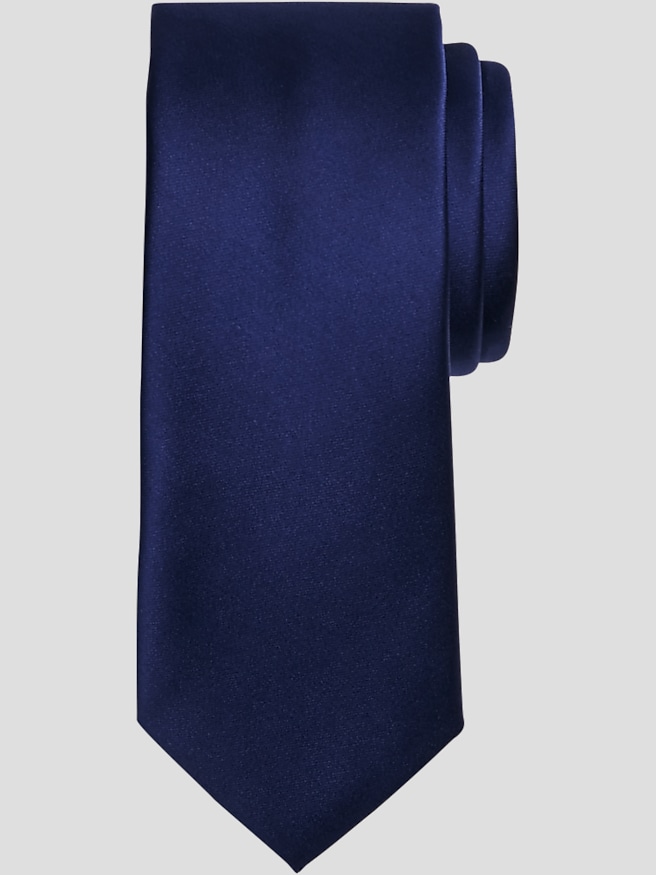
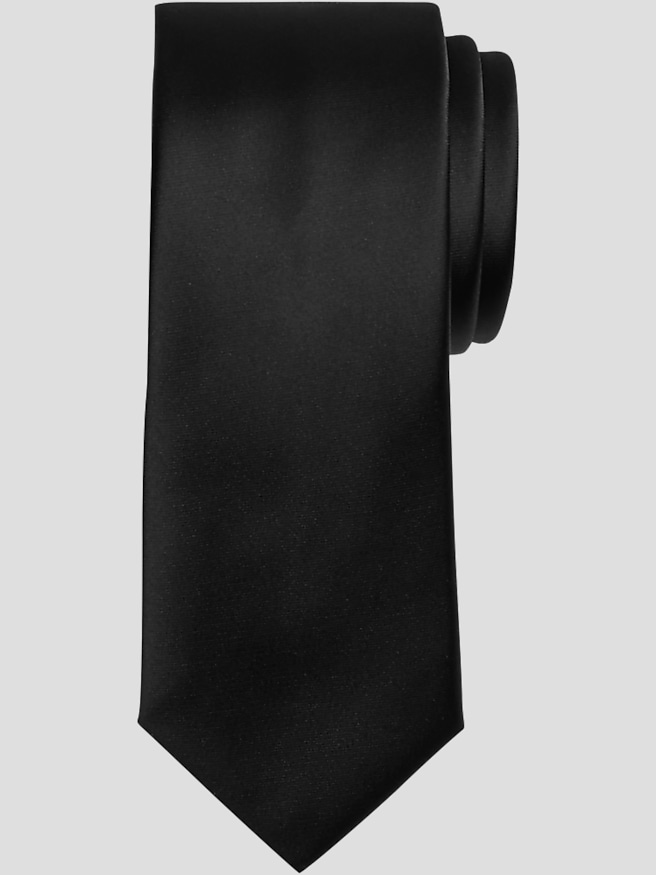
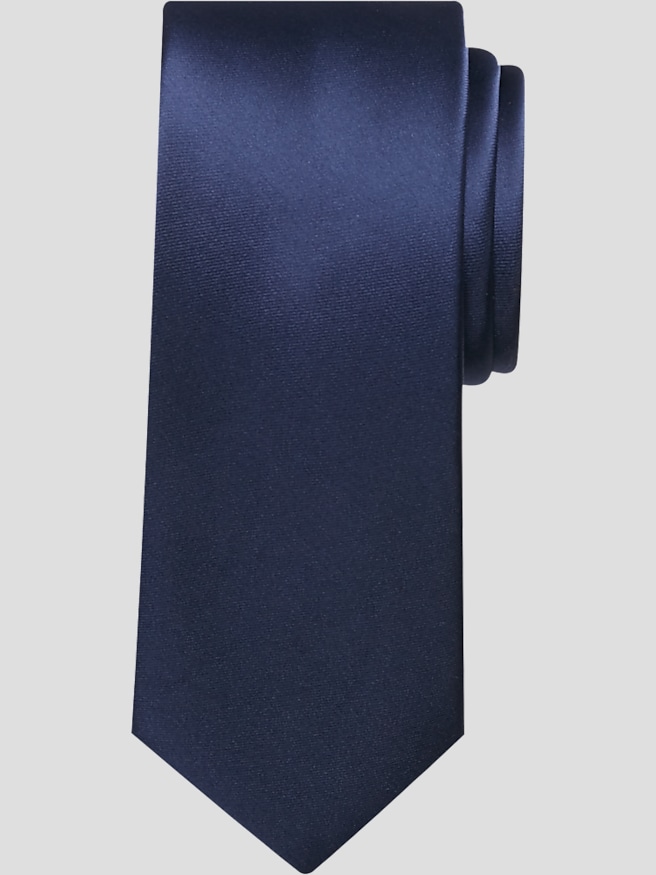
Extra long skinny ties combine added length with a narrow blade, giving taller wearers and those who need more room at the collar a slim, balanced finishing touch. They typically measure about 63 to 66 inches long and approximately 2 to 2.75 inches wide, though dimensions vary by style. Those two measurements serve separate purposes: length determines how much fabric is available to travel around the neck and form the knot, while width establishes the tie’s visual proportion against a shirt and jacket. An extra long tie is not necessarily a wide tie, making this shape useful for someone who needs additional reach without a broader silhouette. A taller person wearing a narrow-lapel suit, for example, may find that a standard-length tie leaves the front blade sitting too high once the knot is secured. Added length can help the tip reach approximately the middle of the belt buckle or waistband while leaving enough of the narrow end to tuck through the keeper loop on the back. Height alone does not determine the right length; neck size, torso length, trouser rise, and knot choice all affect where a tie finishes. Someone with a larger neck measurement may benefit from extra length even without an especially tall frame. The result should look intentional rather than simply longer, with the front blade lying flat against the shirt and the narrow tail concealed behind it. This combination works well for office attire, wedding outfits, graduation ceremonies, and other occasions that call for a necktie with a streamlined profile. It also offers a practical option for a gift recipient whose usual ties consistently finish above the waistband. Knowing the recipient’s preferred tie width and the length of a tie that already fits can make the choice more personal than relying on height alone. The most useful proportions are those that support the wearer’s build and clothing rather than a rigid rule about who can wear a skinny tie.
Fabric and construction influence how an extra long skinny tie drapes, how substantial the knot looks, and how the surface catches light. Silk can offer a soft hand, rich color, and fluid movement, with finishes ranging from a quiet matte texture to a noticeable sheen. Polyester can provide consistent color and practical resistance to everyday wear, although care requirements still depend on the fabric and construction. Woven blends bring their own balance of texture, body, and drape. Satin describes a weave rather than a fiber, so a satin-finish tie may be made from silk, polyester, or another material. Its smooth, reflective face creates a more polished effect than a heavily textured weave, particularly against a crisp dress shirt. For business settings, a restrained surface and a small repeating pattern can add interest without becoming the focal point of the outfit. For a wedding party, consistent width, finish, and color help create a coordinated appearance even when individual wearers need varying tie lengths. Solid colors emphasize the tie’s clean outline, while fine stripes, small dots, and subtle geometric patterns introduce detail within the narrow shape. Pattern scale matters: a compact design often remains easier to read across a slim blade than a large motif that is cut off at the edges. For a dark, understated option, black skinny ties pair naturally with white shirts and charcoal tailoring, with the fabric’s sheen determining whether the effect feels more restrained or more dressed up. Beneath the outer fabric, interlining contributes body and helps the tie hold its shape. A thicker construction can produce a fuller knot, while a lighter one may sit flatter against the collar. Smooth edges, even stitching, and a securely attached keeper loop are useful details to consider for repeated wear. A tie that hangs straight without twisting lets its narrow proportions remain the focus, whether worn under a buttoned jacket or visible against a shirt through a full day of meetings.
The relationship between tie width, collar shape, and jacket lapels gives extra long skinny ties their finished character. Narrow or moderately sized lapels often complement a slim blade, while a collar with a smaller opening can frame a compact knot without leaving excessive space on either side. A four-in-hand knot generally suits this proportion because it creates a relatively narrow, slightly asymmetrical shape and uses less fabric than a full Windsor. A larger knot consumes more length and can look substantial against a skinny blade, so the finished balance depends on both the tie’s construction and the shirt collar. The added inches offer flexibility, but they do not eliminate the need to account for the knot. With the collar fastened comfortably, the tie should sit securely at the neck without being cinched so tightly that the fabric puckers. A small dimple below the knot can give a smooth tie a little depth, while the blade itself should fall cleanly toward the waistband. If a tie bar is part of the outfit, a shorter bar that stays within the blade’s width keeps the accessory in proportion; fastening it to the shirt placket also helps control movement. These details matter during presentations, photographs, and seated dinners, when a tie is especially visible. Care between wears helps preserve that appearance. Untying the knot by reversing the tying steps, rather than pulling the narrow end through a tightened knot, reduces unnecessary strain on the fabric and seams. Leaving a tie knotted can set creases and compress the material. Smooth ties generally benefit from hanging on a suitable rack or being loosely rolled for storage, with enough space to prevent crushing. Always follow the care label, since a durable synthetic fabric does not automatically make a constructed tie machine washable. Blot spills promptly without rubbing, and seek appropriate professional cleaning when needed. Thoughtful storage, gentle handling, and attention to fit help an extra long skinny tie remain a dependable part of a polished wardrobe.