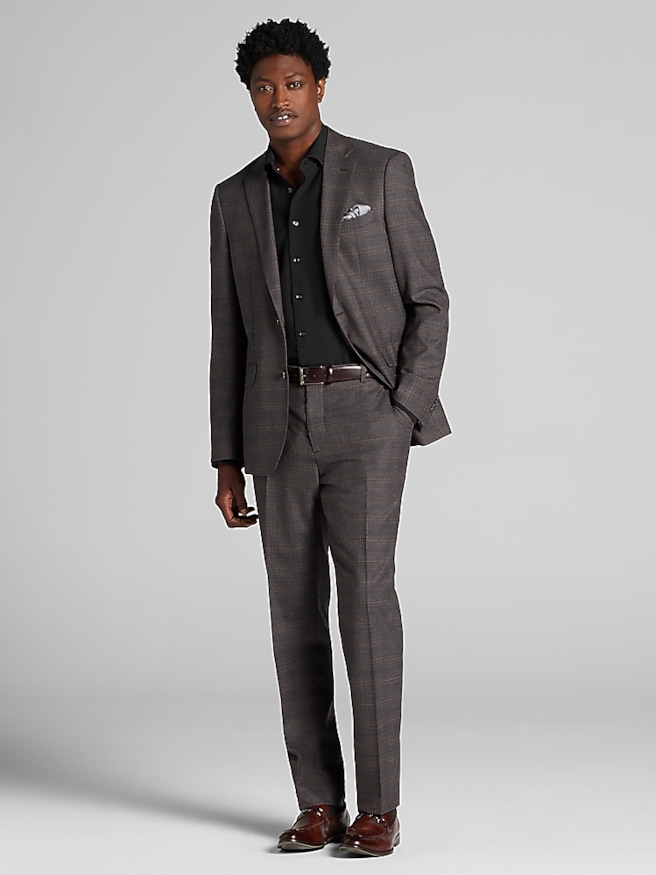
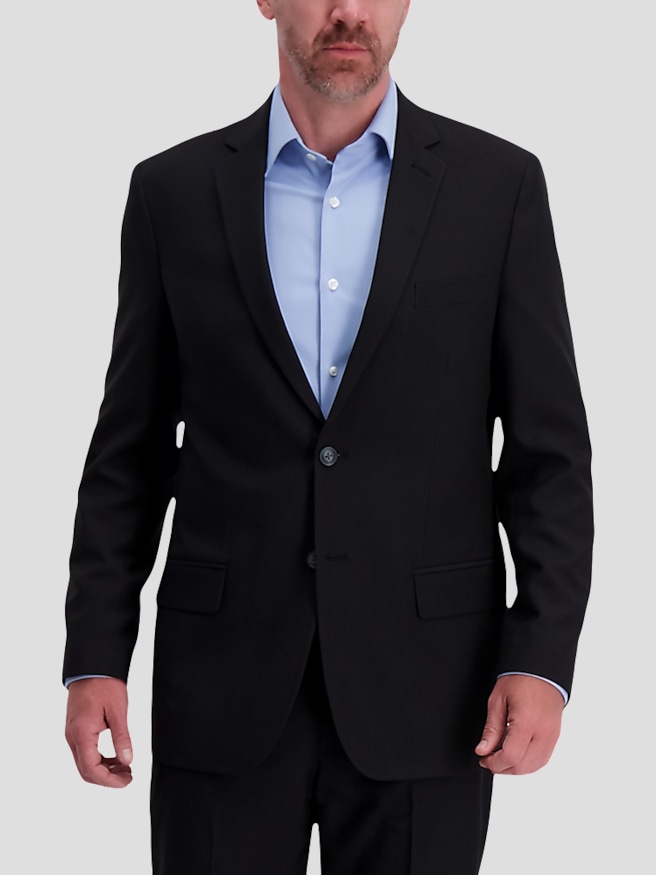
Evening wedding suits bring a sense of occasion to ceremonies and receptions that unfold beneath chandeliers, across candlelit tables, or against a city skyline after sunset. Dark colors, clean proportions, and softly textured fabrics suit these settings particularly well, giving the groom, wedding party, and guests a polished presence without competing with the celebration. Black, midnight blue, deep navy, and charcoal are classic choices, each with a slightly distinct character. Black has a crisp, graphic quality beside a white shirt; midnight blue offers depth under indoor lighting; and charcoal provides a softer contrast while remaining appropriately dressy. The invitation sets the level of formality: a dark suit is often appropriate for cocktail or formal wedding attire, while a black-tie dress code traditionally calls for a tuxedo. Unlike a conventional suit, a tuxedo typically has satin or grosgrain facing on the lapels and coordinating trim along the trouser seams. For celebrations with that expectation, the Black Tie Evening Suit page offers a related focus on formal evening dressing. A suit with matching jacket and trousers creates a cohesive foundation for many other evening wedding settings, from an intimate restaurant reception to a large ballroom gathering. Single-breasted jackets with notch lapels have broad versatility, while peak lapels add a more pronounced formal character. A double-breasted silhouette can also bring structure and presence, especially when its proportions complement the wearer’s frame. Waistcoats add another layer of finish and help maintain a composed appearance when the jacket comes off later in the reception. For a groom, subtle distinctions in lapel shape, fabric texture, or accessories can establish a focal point without requiring a dramatic color. Wedding party members benefit from coordinated tones and a consistent level of formality, even when individual fits vary. Guests can take their cues from the dress code and venue, choosing an evening wedding suit that looks respectful in ceremony photographs and feels natural over dinner and dancing.
Fabric and fit determine how an evening wedding suit performs through the full celebration, not just how it looks in the first photograph. Wool is a dependable starting point because its natural resilience helps it recover from light creasing, while its breathability supports comfort in a busy reception room. Smooth worsted wool offers a clean surface and a fluid drape that work well for dressier settings. Wool blends can balance softness, structure, and ease of wear, although the fiber composition and fabric construction influence how any individual suit feels. A small amount of stretch may help with movement, but it cannot compensate for a jacket that pulls across the back or trousers that bind when seated. During the cooler months, a slightly more substantial cloth can feel comfortable for an outdoor arrival without looking bulky indoors. Heavily brushed textures tend to read less formal than smooth cloth, while velvet brings a rich surface to a dinner jacket when the invitation allows that expression. Lining also matters: a fully lined jacket provides a smooth interior over a dress shirt, while lighter lining construction may feel less insulating in a warm venue. Across these materials, a good fit begins with shoulders that sit cleanly and a collar that rests close to the shirt collar. Jacket fronts should lie smoothly when fastened, without pronounced pulling around the button, and sleeves should allow a modest glimpse of shirt cuff. Slim, tailored, and classic fits describe general silhouettes rather than a hierarchy of polish; the strongest choice follows the wearer’s proportions with enough ease to move naturally. Trousers should sit securely at the waist, drape cleanly through the seat and thighs, and meet the shoes with an intentional amount of break. A short walk, a seated pause, and a comfortable reach forward reveal more than standing still in front of a mirror. Those details become especially noticeable during a long toast, a crowded group portrait, or the first turn on the dance floor.
The finishing pieces give evening wedding suits their final level of formality, with the shirt creating the clearest contrast near the face. Crisp white cotton is a traditional choice that looks clean beside dark suiting and works across many wedding dress codes. A smooth, opaque fabric keeps the effect composed under bright photography lighting, while a collar that sits neatly beneath the jacket lapels helps the whole outfit look settled. French cuffs add ceremony and provide a place for restrained cuff links, though well-fitted barrel cuffs are also appropriate with many suits. For a conventional evening suit, a silk necktie in a deep solid shade or a quiet pattern adds texture without overwhelming the jacket. A tuxedo is traditionally paired with a bow tie and an appropriate formal shirt, with the other details kept consistent with the dress code. Pocket squares work best as a complement rather than an exact duplicate of the tie; a simple white fold offers a particularly understated finish. Polished black leather lace-ups, especially oxfords, are a reliable match for dark evening suits, while formal tuxedo dressing may call for highly polished calfskin or patent leather footwear. Socks that harmonize with the trousers help preserve a continuous line when seated. A dress overcoat protects the suit on the way to the venue and keeps the arrival as considered as the outfit underneath. After the celebration, thoughtful care supports both appearance and longevity. A broad, shaped hanger helps preserve the jacket’s shoulders, and neatly hung trousers are less likely to develop unwanted folds. Let the suit air out before placing it in a breathable garment bag, brush away surface dust gently, and follow the care label for pressing and professional cleaning. Stains deserve prompt professional attention rather than vigorous rubbing, particularly on delicate wool or decorative lapel fabrics. Cleaning only as needed, instead of automatically after every brief wear, can limit unnecessary treatment. Sound stitching, secure buttons, and fabric that suits the intended frequency of wear also contribute to durability. With appropriate care and fresh shirt-and-tie combinations, a dark wedding suit can continue to serve at anniversary dinners, formal receptions, and other occasions that call for a composed evening appearance.