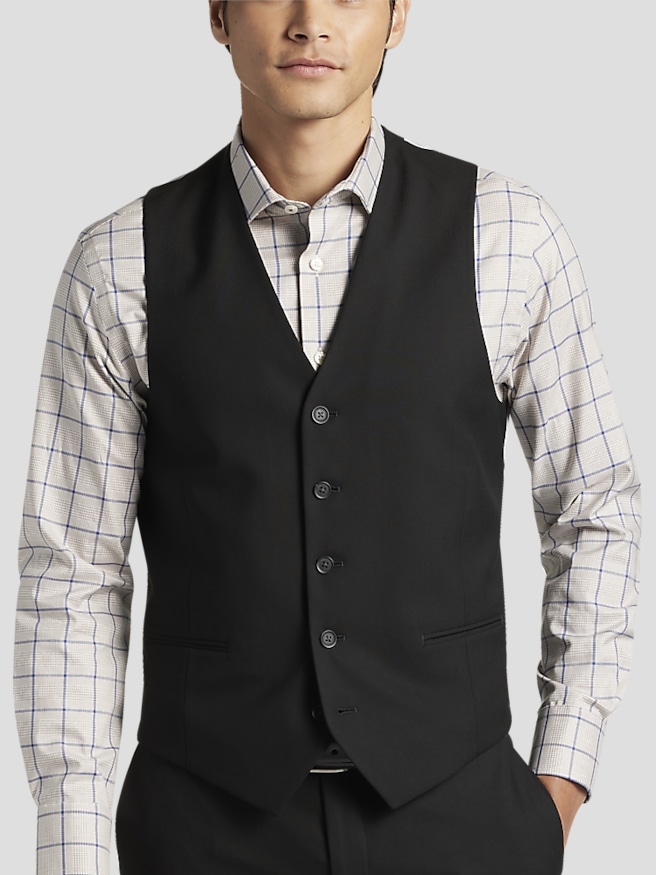
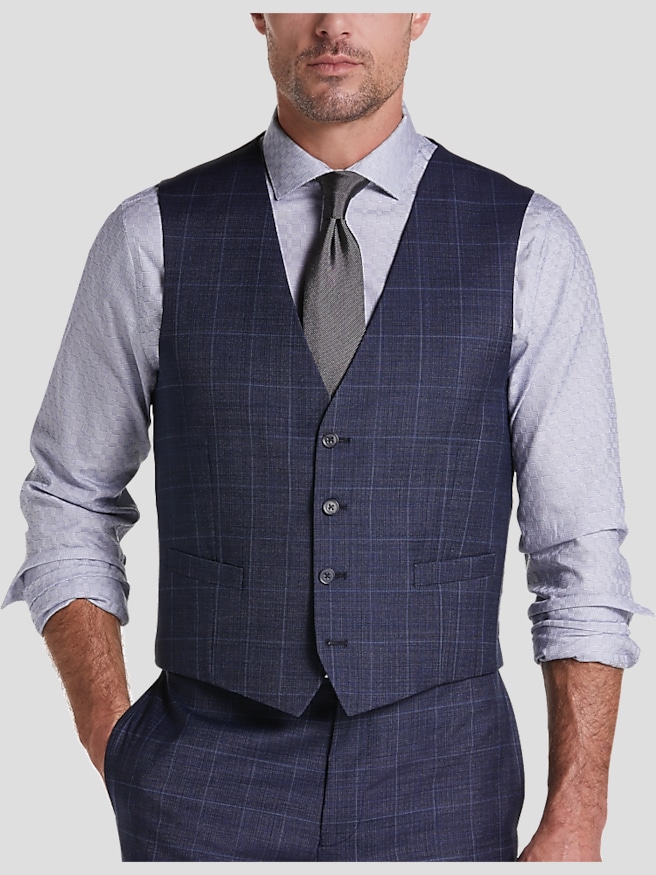
Elegant vests are tailored, sleeveless garments that add definition to dress shirts, suits, and formal outfits without covering the arms. Often called waistcoats, these pieces create a clean line through the torso and give an outfit a finished appearance, even when the jacket comes off. A matching vest turns a two-piece suit into a coordinated three-piece look, while a contrasting vest introduces depth through color, texture, or pattern. The distinction matters at occasions such as weddings, anniversary dinners, business receptions, and dressier evenings out: matching fabrics tend to feel more unified and formal, while a complementary shade can make the same suit feel more individual. Charcoal, navy, and black provide understated foundations; lighter neutrals create a softer contrast against darker trousers and jackets. Single-breasted vests typically have a straightforward button front and a V-shaped opening that frames the shirt and tie. Double-breasted waistcoats overlap at the front, creating a broader, more structured appearance that works especially well with carefully balanced tailoring. A neckline without lapels keeps the focus on the shirt, while shawl or peaked lapels bring additional visual emphasis to the chest. For tuxedo dressing, an evening vest has a different role from an everyday suit vest: its neckline and finish should complement the tuxedo and the event’s dress expectations rather than compete with them. A low-cut front, for example, leaves more of the formal shirt visible beneath a bow tie. At an office presentation or client dinner, a matte vest over a crisp dress shirt can add polish without the sheen associated with evening attire. For a wedding party, consistent fabric, neckline, and button placement help create a cohesive appearance in photographs, even when each person needs a different size. The most convincing elegant vest looks like part of the outfit, not an extra piece added at the last minute; its proportions, color, and level of formality belong with everything around it.
Fabric gives a dress vest much of its character. Fine wool and wool blends can provide a smooth surface, natural drape, and enough structure to maintain a tailored silhouette through repeated wear. Cotton offers a comparatively matte appearance, while linen brings a visible woven texture and a more relaxed interpretation of elegance; its tendency to crease is part of that character rather than a sign of poor quality. Stretch suiting fabrics allow some flexibility, although stretch does not replace a properly proportioned cut. Silk and silk blends can lend subtle luster, satin creates a smoother reflective finish, and velvet adds a plush surface with pronounced depth of color. Jacquard fabrics weave patterns into the material itself, producing interest that may become more noticeable when the wearer moves or the light changes. A restrained textured vest can be especially effective with a plain shirt and solid tie, where the fabric has room to stand out. Lining also influences how a vest feels over a shirt, helping the garment slide into place rather than catch against the layer underneath. Some waistcoats have a contrasting back panel designed primarily for wear beneath a jacket; others carry the main fabric around the back for a more consistent appearance when worn alone. Fit is equally important. The shoulder sections should sit flat, the neckline should lie close without gaping, and the front should follow the torso without pulling into horizontal lines around the buttons. The lower edge generally needs to cover the trouser waistband so that a strip of shirt does not interrupt the outfit when the wearer stands naturally. Higher-rise dress trousers can make that relationship easier to achieve. Arm openings need enough room for comfortable movement without exposing excessive shirt fabric at the sides. A back adjuster can refine the waist, but it cannot correct a vest that is too narrow across the chest or too short through the body. Comfort while seated matters, too: a vest should remain composed at a dinner table without pressing tightly across the stomach or causing the button front to bow.
Thoughtful construction and care help an elegant vest retain its shape beyond a single occasion. Even stitching, securely attached buttons, tidy buttonholes, and smoothly finished seams support durability, particularly around closures and pocket openings that receive regular handling. Pockets contribute to the traditional waistcoat silhouette, but bulky contents can distort the front; a slim pocket watch or a small essential is less disruptive than an overfilled pocket. The care label determines the appropriate cleaning method, since wool, silk, velvet, and blended fabrics can require different treatment. Professional cleaning may be specified, while some washable materials permit gentler at-home care. Frequent cleaning is not automatically better: airing a vest after wear and addressing marks promptly according to its care instructions can reduce unnecessary handling. Storage on a suitable hanger helps preserve the shoulder line, and fastening the garment neatly before putting it away can keep the front from folding awkwardly. Pressing and steaming also depend on the fabric. Direct heat may flatten velvet’s pile or affect delicate finishes, so treatment needs to respect the material rather than follow a single routine for every waistcoat. These practical details matter for someone who wears tailored clothing regularly, but they are just as useful for a groom, wedding guest, graduate, or performer preparing for an important appearance. A vest can also make a thoughtful gift for a father, partner, or friend who enjoys dressing well, especially when the recipient’s measurements, preferred colors, and usual occasions are known. Familiarity with the recipient’s shirts and suits helps distinguish a versatile wardrobe addition from a piece that is difficult to coordinate. For wardrobes that include both tailored dress pieces and other layering options, Stylish Winter Vests is a related collection to explore. An elegant waistcoat earns its place through balanced proportions, comfortable movement, and a finish that feels appropriate to the occasion, whether worn beneath a suit jacket or as the defining layer over a carefully chosen shirt.