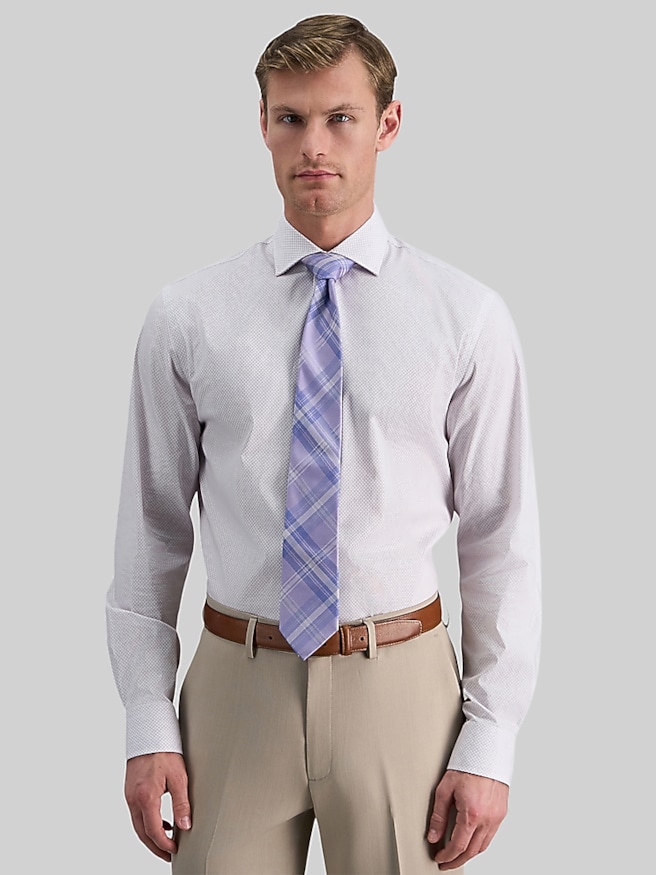
Easycare shirts are designed to reduce wrinkling and simplify routine upkeep, helping a collared shirt look neat with less ironing than a comparable untreated fabric. Common materials include cotton-polyester blends and cotton finished for wrinkle resistance, though performance depends on the fabric, construction, and care method. Easy care describes how a shirt is maintained, not one particular fiber or weave. A cotton-rich blend can offer a familiar, soft feel with the shape retention of polyester, while treated cotton can preserve the feel of a natural fiber with fewer creases after laundering. Some fabrics also include a small amount of stretch for easier movement at a desk, behind the wheel, or through a full day of appointments. Stretch supports comfort, but it does not replace a fit that leaves enough room through the shoulders and chest. The weave also shapes the shirt’s appearance: poplin generally has a smooth, even surface, twill has a subtle diagonal texture, and Oxford cloth brings a more noticeable woven character. Fabric weight and opacity matter as much as softness, especially for a light-colored shirt worn without a jacket under bright office lighting. Wrinkle-resistant, easy-iron, and non-iron descriptions refer to related maintenance benefits, but they should not be treated as interchangeable promises. An easycare shirt may still need a brief touch-up around the collar, cuffs, or button placket, particularly after it has been packed tightly or left in the dryer. Shrink resistance also varies; an easycare label alone does not mean a shirt cannot shrink. The practical appeal is a smoother transition from laundry day to getting dressed, with less effort spent restoring a crisp appearance. For a wardrobe built around collared shirts, that can mean fewer interruptions between a morning commute, a client meeting, and dinner afterward. The result is convenience grounded in fabric performance rather than a promise that every shirt will stay perfectly crease-free through every activity.
Fit gives easycare shirts their finished appearance, whether the setting calls for a suit and tie or an open collar with chinos. Shoulder seams that sit near the shoulder’s edge help the sleeves hang cleanly, while enough space across the upper back makes reaching forward feel natural. A trim silhouette can look sharp without pulling at the buttons; extra tension through the chest or waist creates folds that wrinkle-resistant fabric cannot correct. A roomier cut offers more ease through the torso and can suit anyone who prefers a less fitted outline. For a tucked-in shirt, sufficient length helps the hem stay in place when sitting, stretching, or lifting an arm. Shirts intended to be worn untucked generally have a shorter hem and proportions that finish neatly rather than extending too far below the hips. Sleeve length deserves similar attention: cuffs should reach the wrist without covering the hand, and a jacket should leave a modest glimpse of shirt cuff. A collar worn with a tie needs enough space to fasten comfortably without a large gap, while an open collar should sit cleanly instead of collapsing into the neckline. These details are especially noticeable during presentations, interviews, and occasions when a jacket comes off. Color and pattern influence versatility, too. White and light blue create a straightforward foundation for tailored clothing, while fine stripes and small checks add detail without dominating an outfit. Solid shirts make it easier to combine a patterned tie or textured jacket; a patterned shirt often works best with simpler surrounding pieces. Easycare construction can be useful across these looks, from polished business clothing to a relaxed button-down worn with dark denim. For commuters, frequent travelers, and anyone who wears a collared shirt several days a week, the benefit is less about looking unusually formal and more about maintaining a consistent, put-together appearance. A comfortable shirt that sits correctly is also less likely to need repeated adjusting throughout the day.
Care requirements remain important even when a shirt is designed for easier maintenance. Many easycare shirts are machine washable, but the care label determines the appropriate wash cycle, drying method, and ironing setting for each fabric and finish. Excessive heat can contribute to shrinkage, affect stretch fibers, or wear down a finish, so the hottest setting is not automatically the best route to a smoother shirt. A loosely filled washer and dryer give garments more room to move than a tightly packed load, which can press creases into the fabric. Removing a shirt promptly after drying, smoothing the placket and cuffs by hand, and placing it on a hanger can help preserve its appearance. If ironing is needed and permitted by the label, a brief touch-up may be enough rather than a full pressing. The related Mens Easy Iron Shirts category is relevant for shoppers who prefer simpler pressing while still expecting some hands-on finishing. For travel, careful folding and unpacking upon arrival can reduce deep creases, although no fabric treatment makes a shirt immune to compression inside a suitcase. Durability depends on more than wrinkle resistance: secure buttons, even stitching, stable seams, and cuffs that retain their shape all contribute to repeated wear. Collars and cuffs receive frequent handling and contact, making them useful places to assess a shirt’s condition over time. Prompt attention to marks, care that matches the label, and a rotation of shirts can help reduce concentrated wear on a single garment. These practical qualities also make easycare shirts a thoughtful gift for someone starting an office job, building a professional wardrobe, or traveling regularly for work. Familiarity with the recipient’s neck size, sleeve length, preferred fit, and usual dress code makes the choice more personal and useful. For everyday wear or an important appointment, the strongest combination is straightforward: a suitable fabric, comfortable proportions, and maintenance requirements that fit naturally into an established routine.