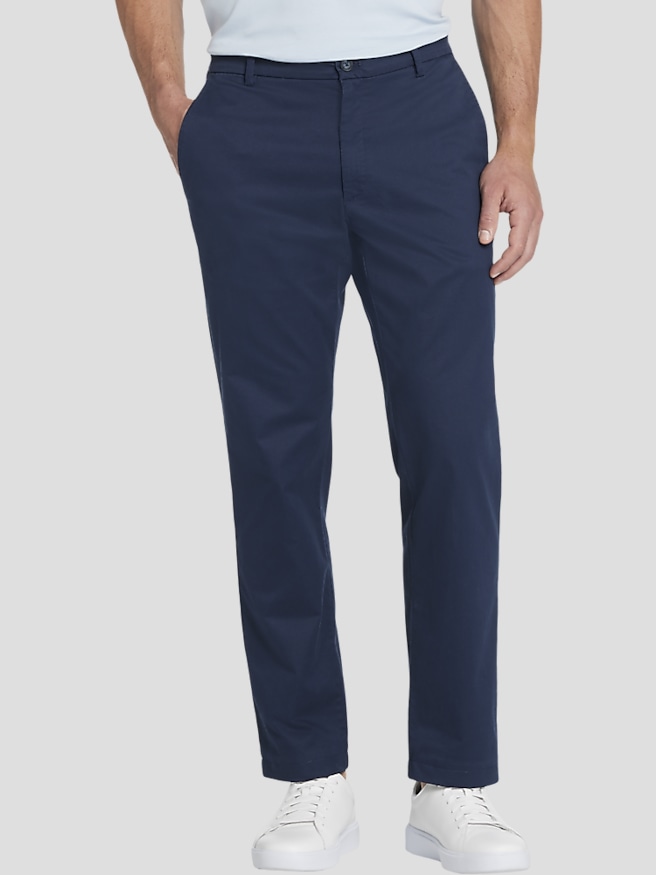
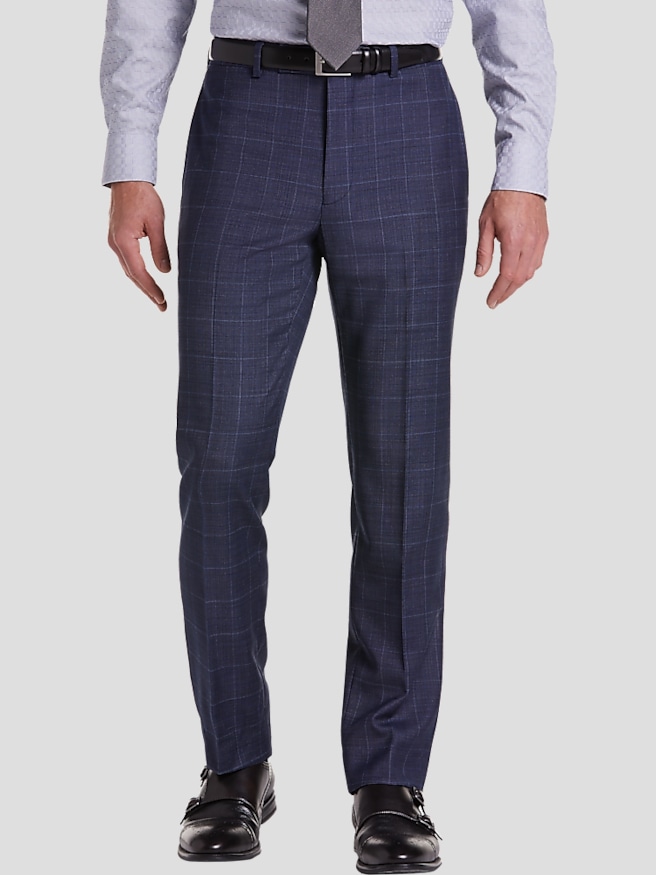
Easy-fit trousers are men's pants designed to provide comfortable room through the seat and thighs while maintaining a neat, structured appearance. They offer a less restrictive alternative to closely cut pants without necessarily creating a loose or oversized silhouette. That balance makes them useful for office days, dinner plans, travel, and everyday occasions when a polished outfit still needs to feel comfortable after several hours of wear. The defining feature is ease through the upper leg, but the shape below the knee can vary: a straight leg maintains a consistent line, while a tapered leg narrows toward the ankle. Within the broader category of Men's Fit Pants, an easy fit describes how the garment accommodates the body, not a single fabric, waistband construction, or level of formality. Stretch may add flexibility, but extra room and elastic fibers serve separate purposes; a well-proportioned pair can feel comfortable even without a stretchy fabric. A waistband should sit securely at its intended position without digging in when seated, and the fabric across the front should lie relatively smooth rather than pull into pronounced horizontal lines. Through the seat, enough space for sitting and walking matters more than excess fabric that sags or bunches. Rise also affects the feel: the distance between the waistband and crotch influences where the pants sit and how easily they move with the body. For someone who spends the morning at a desk and the afternoon walking between appointments, these details can matter as much as the waist measurement. The hem completes the proportions. A slight break over dress shoes creates a traditional finish, while a shorter, clean hem can work with loafers or understated sneakers. Easy fit is most successful when the trousers follow the body's shape without clinging, leaving room to move while still looking intentional from waist to hem.
Fabric gives easy-fit trousers much of their character, influencing how they drape, feel, and hold their shape throughout the day. Wool and wool-blend fabrics can create a fluid line that works naturally with dress shirts, sport coats, and more polished footwear. Cotton twill generally has a more casual character, with a textured surface and enough structure to pair comfortably with an Oxford shirt or a knit polo. Fabrics blended with polyester or other synthetic fibers may offer improved wrinkle resistance or shape retention, depending on their composition and construction. A small amount of elastane can help the material flex at the knees and hips, particularly during long periods of sitting, although fabric weight and garment cut remain important to overall comfort. A lighter, softly draping cloth will hang differently from a substantial twill, even when the measurements are similar. Surface finish matters, too: smooth, refined fabrics tend to read as dressier, while visibly textured weaves feel more relaxed. Pleats can provide additional space through the front, opening slightly with movement, whereas a flat front creates a simpler, uninterrupted appearance. Neither detail alone determines whether the fit will be comfortable. Pocket construction, lining, waistband structure, and seam placement all contribute to how the trousers feel in use. Pockets that lie flat preserve a cleaner outline; overloaded pockets can distort even a well-cut pair. Durability depends on more than fabric thickness. Secure stitching, reinforced stress points, and a weave suited to regular wear help trousers withstand the repeated movement of commuting, sitting, and standing. For frequent travel, resistance to creasing and the ability to recover after being folded can be practical advantages. For a dressier workplace or an evening celebration, a fabric with an even drape and a restrained finish may be the stronger match. These differences allow the same general fit concept to support distinct routines without making every pair appropriate for every occasion.
Easy-fit trousers bring the most versatility to a wardrobe when their proportions work with the clothing already worn most often. A tucked-in button-down and a leather belt can establish a straightforward office outfit, while a fine-gauge sweater or a knit polo keeps the effect relaxed without looking unfinished. A sport coat pairs best when the trousers have enough structure and refinement to complement it; a casual cotton fabric creates a different impression from a smooth dress fabric. Fuller pants do not require an oversized shirt. A top that fits cleanly at the shoulders and sits neatly around the waist helps preserve balance, especially when the trousers have generous room through the thigh. Footwear changes the overall impression just as noticeably. Oxfords and polished loafers emphasize a tailored look, while simple sneakers suit less formal combinations. Care helps preserve both the fabric and the intended fit. The garment's care label should determine whether laundering or professional cleaning is appropriate, since two pairs with similar appearances can require very different treatment. For washable fabrics, following the recommended water temperature and drying method helps limit shrinkage, fading, and unnecessary stress on stretch fibers. Removing trousers promptly after drying can reduce stubborn creases, while suitable pressing or steaming can restore a neat finish when the care instructions permit it. Hanging trousers properly between wears helps maintain their line; rotating pairs also gives each garment a break from repeated friction at the seat and knees. Alterations can refine length and, in some cases, waist placement, but they cannot always correct a fundamentally unsuitable rise or seat shape. For gifting, a reliable waist and inseam measurement is a useful starting point, along with knowledge of the recipient's preferred silhouette and usual dress expectations. Someone who wears tailored clothing daily may appreciate a refined fabric, while someone building a smart-casual wardrobe may get more use from a versatile twill. The enduring appeal of easy-fit trousers is practical: a composed appearance, comfortable proportions, and enough flexibility in styling to earn regular wear.