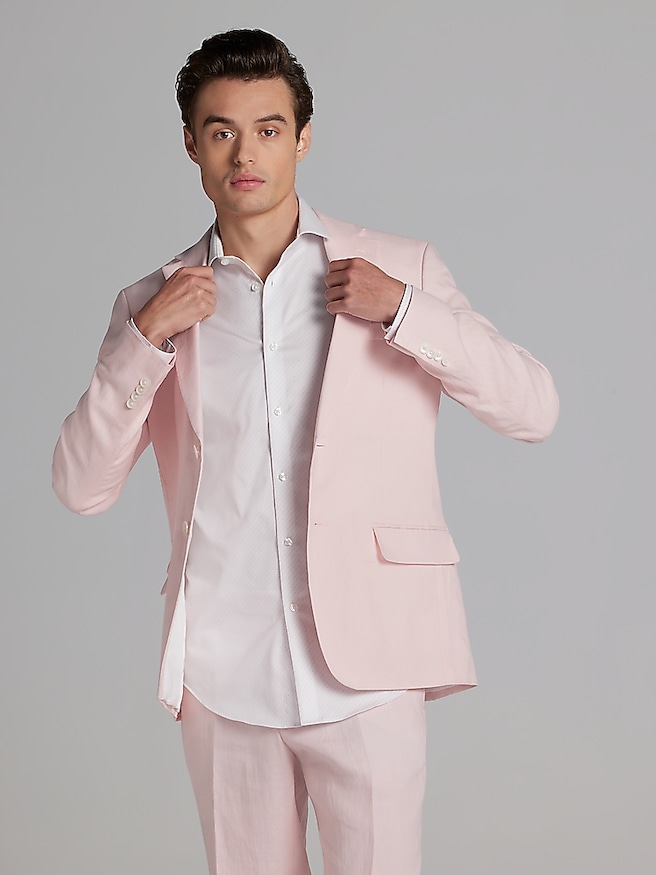
Dusty rose prom suits for men bring a softer color into formalwear without losing the clean lines and structure that make a suit feel occasion-ready. The shade generally combines pink with muted gray or earthy undertones, creating a look that feels less vivid than bright pink and more distinctive than a neutral suit. Depending on the fabric, dusty rose can lean toward mauve, warm blush, or a slightly brownish pink. That variation gives the color depth: a matte fabric may look understated in group pictures, while a smoother finish can catch the light and make the same general shade appear richer. Against a white dress shirt, dusty rose looks crisp and clearly defined; beside ivory, it takes on a warmer character. Its appeal for prom comes from that balance of personality and polish, whether the setting is a decorated school ballroom or a formal dinner before the dance. A two-piece suit keeps the outline simple, while a coordinating vest adds another layer of structure and maintains a dressed-up appearance when the jacket comes off. Lapel shape also influences the overall effect. Notch lapels have a familiar tailored feel, while peak lapels create a more pronounced line across the chest. Satin detailing moves the look toward tuxedo styling, though the event’s dress requirements still matter when distinguishing a suit from a tuxedo. Compared with the paler shades associated with Light Pink Prom Suits, dusty rose typically has a more subdued, grounded character. It works especially well for someone who wants color to be the focal point without relying on a bold pattern or a high-shine finish. The result can feel expressive in a portrait and composed in a room full of traditional dark formalwear.
Fit determines how comfortably that color carries through an entire prom evening. A close-cut silhouette emphasizes the waist and creates a narrow line through the trousers, but a polished fit still needs enough room for sitting through dinner, stepping into a car, and moving on the dance floor. Slim fits generally follow the body without as much room as a classic cut, while skinny fits tend to narrow further through the jacket and legs; exact proportions vary by maker. The most useful details are visible in the way the suit rests on the body. Shoulder seams should sit near the natural shoulder, the collar should lie smoothly against the shirt, and the jacket front should close without strong pulling around the button. Trousers look cleaner when the pockets stay flat and the fabric falls smoothly through the thigh. A slight break at the shoe offers a traditional finish, while a shorter hem creates a sharper outline with less fabric gathering at the ankle. Alterations can refine sleeve and trouser length, but a sound fit through the shoulders and torso provides the foundation. Fabric contributes just as much to the experience. Wool and wool-blend suiting can offer a balanced drape and natural resilience, while polyester blends are often valued for wrinkle resistance and shape retention. Viscose in a blend can lend softness and fluidity, and a small amount of stretch may make movement easier, depending on the construction. Fiber content alone does not tell the whole story: weave, fabric weight, lining, and seam quality all affect comfort and durability. A lightly textured surface gives dusty rose visual depth, whereas a smooth weave creates a more uniform field of color. For an evening that includes photographs, a seated meal, and several hours of activity, fabric that drapes cleanly without feeling restrictive helps the suit remain part of the celebration rather than a distraction. Secure buttons, neat stitching, and well-finished seams also support repeated wear beyond a single occasion.
Dusty rose leaves plenty of room for personal styling, but the strongest combinations usually give the suit enough space to stand on its own. A white shirt creates a clear contrast, particularly with a dark tie, while ivory softens the transition between the shirt and jacket. Burgundy can echo the depth of the pink without attempting an exact match, and navy adds definition without the starkness of black. A subtle floral tie can bring several of those colors together, especially when its pattern stays small enough not to compete with the suit. A pocket square looks more considered when it picks up one supporting shade rather than duplicating the tie exactly. Smooth leather dress shoes keep the overall impression formal: black adds crisp contrast, dark brown brings warmth, and burgundy can connect naturally with the suit’s rosy undertones. A belt, when needed, generally looks most cohesive in a similar leather tone to the shoes. For coordinated prom outfits, a shared accent can be more effective than trying to make every fabric identical. A tie that reflects a partner’s outfit, or a boutonniere with a related pink note, creates a connection while allowing each look its own character. Dusty rose also has uses beyond prom, including wedding celebrations, milestone birthdays, and dressed-up dinners where colorful tailoring suits the occasion. The jacket can take on a more relaxed role with neutral trousers, while the full suit retains its statement-making effect. For a suit given as a gift, accurate measurements and an understanding of the wearer’s preferred fit are more useful than guessing from casual clothing sizes. Care supports that longer life. The garment’s care label should determine the cleaning method, particularly for structured jackets with linings and internal shaping. Airing the suit after wear, treating spills promptly according to the fabric’s care instructions, and avoiding unnecessary cleaning can help preserve its appearance. A broad, shaped hanger supports the jacket’s shoulders, while properly hung trousers are less likely to develop unwanted creases. Breathable storage and a garment bag during travel help protect the finish, keeping the suit ready for another occasion worth dressing up for.