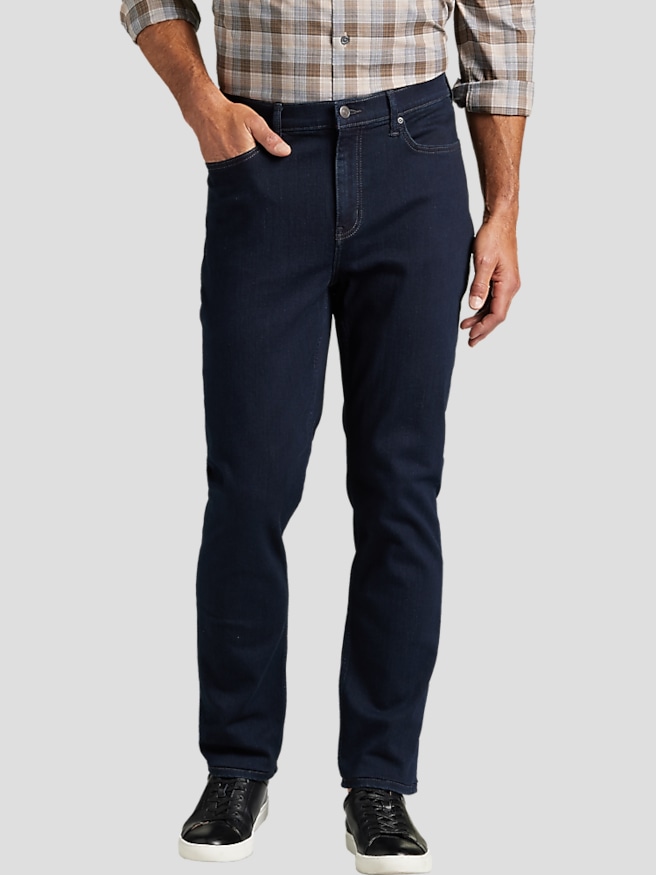
Dressy jeans bring the familiar feel of denim to outfits that call for a cleaner, more polished finish. Dark washes, an even surface, and a well-proportioned fit distinguish them from jeans meant for strictly casual wear. Deep indigo and black are especially versatile because their consistent color puts the focus on the silhouette rather than on fading or decorative details. Minimal whiskering, discreet stitching, and an absence of rips help denim sit comfortably alongside button-down shirts, fine-gauge sweaters, and softly structured jackets. The result is still recognizably jeans, not a substitute for formal trousers, but with enough refinement for a relaxed office, a restaurant dinner, or an evening gathering where denim is welcome. For men who prefer straightforward clothing with several uses, that balance is the main appeal: one dependable style can look relaxed with a knit polo and more put together with a tucked shirt and leather shoes. Fit makes much of that difference. A waistband should stay comfortably in place without depending on a tightly cinched belt, while the seat and thighs need enough room for sitting and walking without pulling. Straight-leg jeans offer a balanced line from the knee to the hem; slim fits follow the leg more closely; tapered shapes narrow toward the ankle while potentially allowing more room above the knee. Those descriptions are useful starting points, though actual proportions vary by cut. A clean drape matters more than choosing the narrowest leg. Horizontal tension lines across the hips, pockets that flare open, or fabric that gathers heavily above the shoes can interrupt an otherwise polished outfit. Length deserves the same attention as waist size. A hem that meets the shoe with little excess fabric generally looks neater than a long stack at the ankle. The rise also affects how a tucked shirt sits and how comfortable the waistband feels through a long meal or an afternoon at a desk.
Fabric gives dressy denim its character, from the crisp appearance of a structured weave to the ease of a cotton blend with stretch. Cotton provides the familiar texture and substance associated with jeans, while small amounts of elastane or other stretch fibers can make bending, sitting, and moving feel less restrictive. Fiber percentages alone do not tell the whole story, however. The weave, fabric weight, and finishing process all influence how jeans hang and whether they maintain a smooth shape through repeated wear. Denim with some body can create a defined leg line, while a softer fabric may drape more closely around the body. Stretch is most useful when the fabric also recovers well, rather than becoming noticeably loose at the knees or seat. For a dressier appearance, an even finish and restrained hardware often matter more than elaborate construction details. Low-contrast seams, tidy pocket edges, and an unobtrusive back-pocket design help keep the overall effect understated. Durability depends on both construction and treatment: secure stitching at stress points and well-finished seams support frequent use, but even substantial denim benefits from thoughtful care. The care label should take priority, particularly for stretch blends and specially finished fabrics. When the label permits, washing dark jeans inside out in cold water with similar colors can help limit visible fading. Avoiding unnecessary washing and excessive dryer heat can also help preserve color, fit, and fiber performance. Dark indigo may transfer color, especially when new, so any dye-transfer warning deserves attention before contact with light upholstery or pale shoes. Prompt attention to small stains, gentle treatment around pocket edges, and drying as directed help maintain the clean finish that makes these jeans useful in polished outfits. If pressing is allowed, a light touch can smooth wrinkles without forcing denim into an exaggerated trouser crease. Consistent care helps preserve the understated appearance, not just the life of the fabric.
The intended setting determines how far dressy jeans can take an outfit. In workplaces that explicitly allow denim, a dark, undistressed pair with a collared shirt and polished loafers can feel appropriate without looking overly formal. A jacket adds definition through the shoulders, while a simple belt creates a finished transition between shirt and waistband. For an evening meal, black denim with a textured knit or an open-collar shirt offers a similarly considered look with fewer layers. The most convincing combinations keep the details in balance: a smooth leather shoe complements an uncluttered hem, and a jacket with a relaxed construction usually sits more naturally with denim than a highly formal suit jacket. Footwear changes the impression substantially. Loafers, understated lace-ups, and sleek leather boots can reinforce a dressier finish; clean, minimal sneakers keep the outfit more casual and depend on the setting. For gatherings at someone's home or a restaurant with a relaxed atmosphere, Casual Jeans For Dinner Party offers a related way to think about denim that feels comfortable without appearing careless. An invitation or stated dress code still takes precedence. Dark jeans are not equivalent to dress pants, and occasions requiring business formal clothing, cocktail attire, or black tie generally call for something else. Within denim-friendly settings, versatility comes from small choices rather than complicated styling. A tucked shirt exposes the waistband and makes fit more noticeable; an untucked shirt works best when its hem does not overwhelm the proportions of the jeans. A dark, even wash also provides a quiet background for patterned shirts or more textured jackets. As a gift, dressy jeans can suit someone who regularly wears denim but appreciates a sharper option for dinners, social plans, or a casual workplace. Familiarity with the recipient's preferred rise, leg shape, and usual measurements makes that choice more personal and practical. For everyday use or a thoughtful wardrobe addition, the strongest combination is straightforward: comfortable proportions, durable fabric, a restrained finish, and enough polish to feel intentional.